Business
Morocco-Japan: A 3.9 Billion Dirham Loan for Financing the Hydro-Agricultural Development of the Southeast Gharb Zone
This project aims to generalize water-saving irrigation techniques, particularly drip irrigation, to improve water resource management.

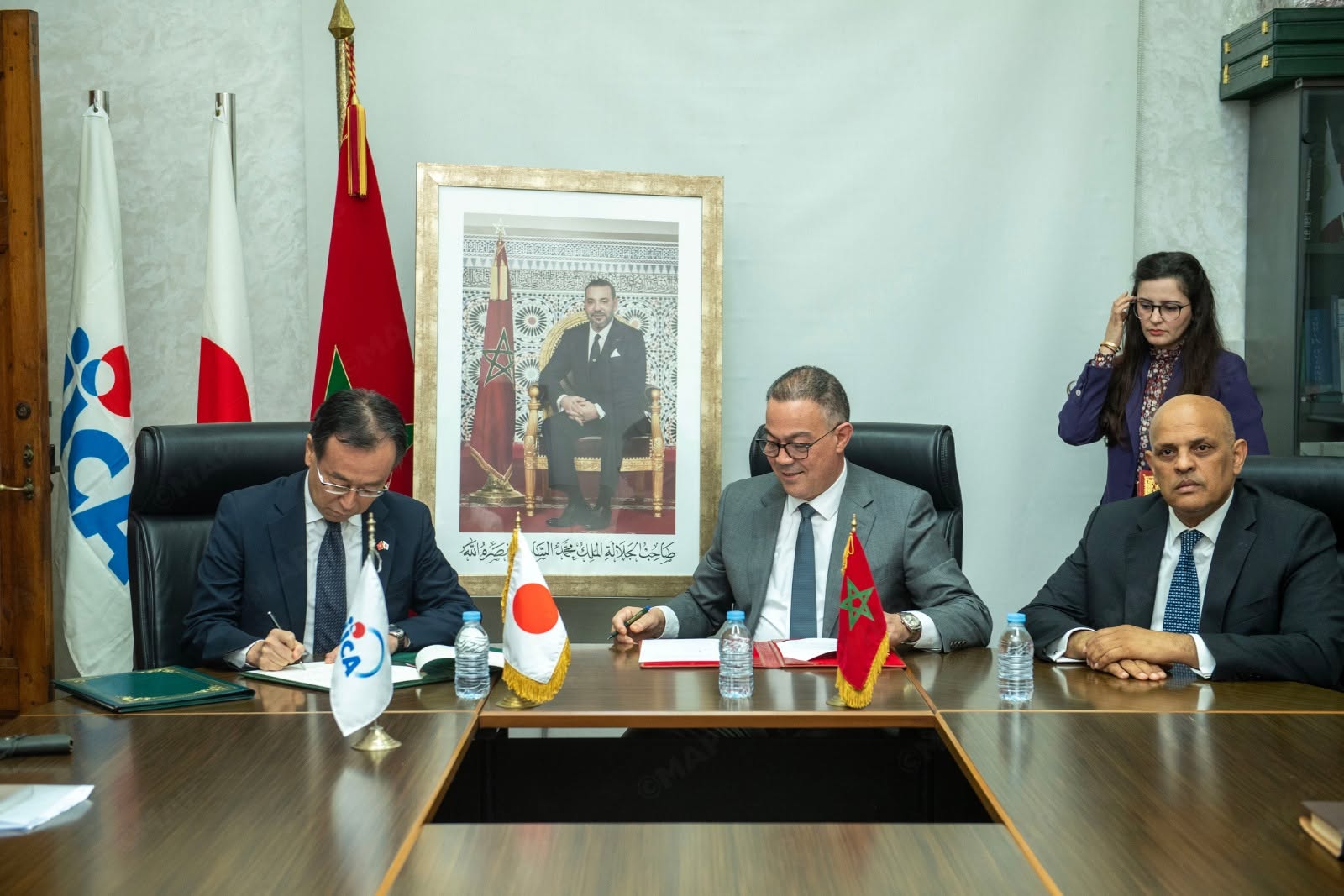
Morocco and Japan concluded this Thursday in Rabat an exchange of notes concerning a loan agreement of 64.577 billion Japanese yen, approximately 3.9 billion dirhams (MMDH), for financing the hydro-agricultural development project in the southeast zone of the Gharb plain.
This exchange was signed by the Delegate Minister in charge of the Budget, Fouzi Lekjaa, the Ambassador Extraordinary and Plenipotentiary of Japan to Morocco, Nakata Masahiro, and the Director General of the Middle East and Europe Department at JICA (Japan International Cooperation Agency), Toyama Kei, in the presence of the Minister of Agriculture, Fisheries, Rural Development, and Water and Forests, Ahmed El Bouari, and the Resident Representative of the JICA office in Morocco, Kawabata Tomoyuki.
Aligned with national guidelines for hydro-agricultural development, particularly the Green Generation 2020-2030 strategy and the National Program for Drinking Water Supply and Irrigation 2020-2027, this project aims to generalize water-saving irrigation techniques, particularly drip irrigation, to improve water resource management.
This financing supports a structuring project intended to increase water use efficiency and sustainably strengthen agricultural production over an area of 30,000 hectares in the Gharb plain. It also includes the construction of main hydro-agricultural canals, ancillary structures, and the securing of existing infrastructure.
In a statement to the press, Masahiro indicated that this signing constitutes a major milestone in cooperation between the two countries. He specified that this is the largest project jointly undertaken by the concerned parties to support irrigation in a region facing crucial water-related challenges.
The Ambassador emphasized that Morocco remains a key partner for Japan, highlighting the strength and friendly nature of bilateral relations. He noted that the Kingdom’s national priorities, particularly rational water management and the fight against certain illegal practices, benefit from the consistent commitment of the Japanese side, which is proud to support these strategic orientations.
Masahiro also praised Morocco’s recognized expertise in irrigation and expressed the satisfaction of the Japanese representatives regarding the level of cooperation achieved in this project.
For his part, Tomoyuki affirmed that this project constitutes a major advance in the modernization of irrigation in Morocco and addresses the growing challenges related to water scarcity.
By enhancing water efficiency, securing existing facilities, and introducing high-performance irrigation technologies, this initiative will contribute to increasing the resilience of the agricultural sector in the face of climate change effects, he argued.
He also highlighted Japan’s continuous commitment to supporting the Kingdom in its efforts to strengthen food security and promote sustainable and inclusive agricultural development. According to Tomoyuki, this operation illustrates the strength of Moroccan-Japanese cooperation and its direct contribution to national priorities in water resource management.
This initiative contributes to strengthening food security by expanding and securing irrigation in the Gharb plain, addressing increasing pressure on water resources, and mitigating the effects of droughts, while consolidating Moroccan-Japanese cooperation for sustainable and inclusive agricultural development.