Kingdom
Morocco is Moving at Full Speed!
A pillar of Moroccan industrialization and the leading exporting sector of the Kingdom, the automotive industry illustrates the rise of “Made in Morocco.” Between ambitions for increased production, growing local integration, and orientation towards international markets, the sector positions itself as a strategic engine of the Moroccan economy.

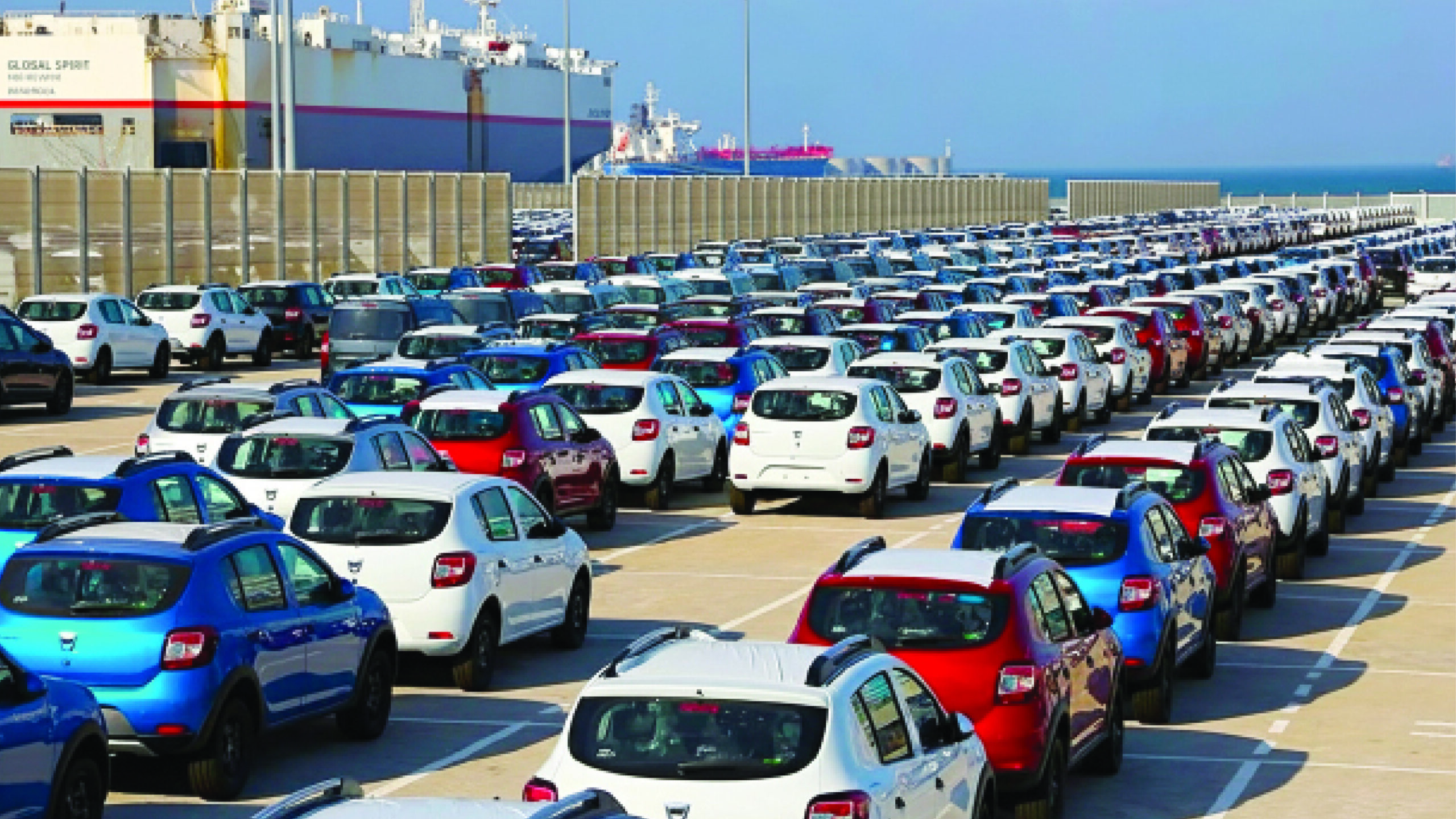
For more than a decade, the automotive industry has established itself as one of the major pillars of Morocco’s industrial policy.
The sector concentrates the state’s ambitions, captures the bulk of industrial investments, and occupies a central place in the official economic narrative. Integrated ecosystems, export platforms, a proclaimed move upmarket: the machinery seemed well-oiled.
But upon closer examination of foreign trade figures, the success story becomes more nuanced. Behind the export performance, imbalances persist and call into question the solidity of the model.
In 2024, the automotive sector remained the leading exporting sector of the Kingdom. According to the Office des Changes, foreign sales reached approximately 157 billion dirhams, durably surpassing phosphates and their derivatives, long the backbone of Moroccan exports.
A position acquired over the years, driven by the establishment of major manufacturers and the ramping up of production chains, but one that remains sensitive to cyclical effects and statistical variations from one year to the next.
This performance rests on an industrial structure now well-established. Nine ecosystems structure the sector: from vehicle manufacturing to wiring, through seats, metal stamping, engines, and batteries.
Around the Renault and Stellantis plants revolves a network of nearly 260 equipment manufacturers, including international groups like Delphi or Valeo. Morocco has thus established itself as a strong link in global value chains, capable of producing in volume and at controlled costs.
This industry operates primarily for export. Nearly 90% of national production is destined for export, with over 80% going to the European Union. An acknowledged dependence, which has allowed the Kingdom to rank among the top five exporters of vehicles to the European market, with over 500,000 units shipped each year.
Morocco thus asserts itself as a regional industrial hub, tightly connected to European demand.
“Difficult Year”
But the trajectory is not without jolts. The year 2025 served as a wake-up call. The supervising ministry acknowledged it bluntly: “2025 was very difficult” for the automotive sector.
The first months were marked by performances deemed modest, in a deteriorated international context. Slowing European demand for thermal vehicles, accelerated transition to electric, increasingly aggressive Asian competition, particularly Chinese: the lines shifted faster than anticipated.
Foreign trade figures reflect this braking. By the end of September 2025, automotive exports had fallen by approximately 2.7% compared to the same period the previous year, according to the Office des Changes. The decline was particularly visible in vehicle manufacturing, the core of the industrial setup, with a clear drop in exports of finished vehicles.
To this are added technical difficulties on certain locally produced models, complicating their marketing on European markets and accentuating the impact of the slowdown.
Nevertheless, the available indicators do not suggest a lasting decoupling. The data rather point to a gradual stabilization over the course of the year, with overall export levels broadly comparable to those observed in 2024.
It would therefore be less a structural reversal than a cyclical adjustment, in a global automotive sector undergoing full-scale restructuring, forced to adapt quickly to new technological and environmental requirements.
However, this optimistic reading clashes with another reality: that of imports.
In 2024, imports continued to rise, driven by capital goods, industrial inputs, and consumer products, including imported vehicles destined for the local market. As a result, the trade deficit widened further, exceeding 300 billion dirhams for the year, illustrating the persistent imbalance between the country’s export power and its appetite for imports.
The paradox is there. Morocco exports hundreds of thousands of vehicles, assembles for European markets, and establishes itself as an African industrial platform. But it remains dependent on imports for a significant share of its needs, whether it be new cars for domestic consumption or components essential to its own production.
The rise in industrial capacity has not yet been sufficient to reverse the logic of the trade balance.
Faced with this equation, the stated ambitions remain high. Automotive production capacity, already raised from 700,000 to nearly one million vehicles per year, must still ramp up.
The Ministry of Industry projects production between 1.3 and 1.4 million units by 2026-2028, with a target set at 2 million vehicles per year by 2030. Programmatic objectives, which reflect a strategy, but do not yet constitute an industrial reality.
The challenge, however, is not limited to volumes. It is also, and especially, played out on the field of local integration. This is progressing with the development of engine production, technological components, and, more recently, tires.
The agreement concluded with Stellantis illustrates this logic: increased production rates, expanded range, and an ambition for a local integration rate nearing 80%, despite the persistence of high-value-added components still imported.
Turning Point
The transition to electric is reshuffling the deck. In electric vehicles, value is concentrated in batteries, electronics, and management systems. Building a local ecosystem around these technologies represents a major strategic opportunity for Morocco, provided it captures the associated investments, expertise, and supply chains.
From this perspective, the revival of the tire industry, with the establishment of a unit in Tangier, fits into a logic of consolidating the value chain. Producing locally to supply both the domestic market and manufacturers based on site allows for reducing certain dependencies, without completely erasing them.
The automotive sector remains one of the most powerful engines of Moroccan industrialization and an indispensable pillar of its exports. But the showcase is no longer enough. Dependence on European markets, vulnerability to international cycles, structural weight of imports: the fragilities remain.
The challenge of the coming years will therefore not only be to produce and export more, but to produce differently, by capturing more value, to make the model more resilient in the face of the shocks of a global automotive sector in full transformation.