Kingdom
Moroccan textiles: the opportunities of a crisis… and its drawbacks
Caught between an early‑year downturn in exports and an influx of new orders driven by geopolitical tensions, the sector is operating in a state of fragile balance.

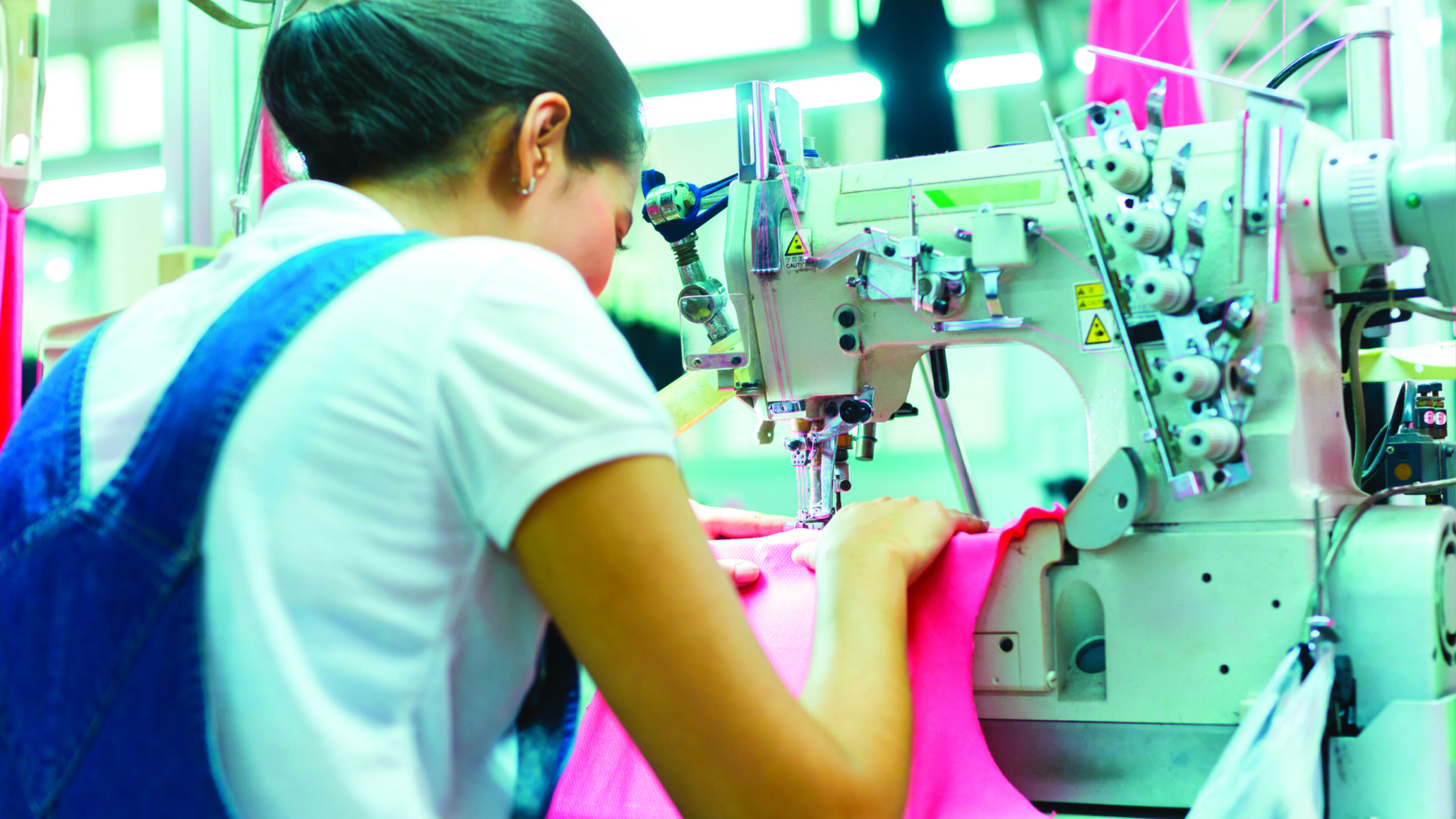
While Morocco is benefiting from a shift in international sourcing, rising logistics costs and competitive pressure—particularly from China—are tempering this momentum. A slow start to the year, which industry professionals are putting into perspective.
Statistics for January and February show a contraction in Moroccan textile exports. As of the end of February 2026, they had declined by 9.2%, reaching 6.4 billion MAD compared to 7.1 billion MAD during the same period last year.
This trend is mainly driven by declines in the clothing (-10%) and knitwear (-6%) segments. While this may seem concerning at first glance, the industry’s professional association urges a more nuanced view. “This is traditionally a slow period for our industry. Between year-end holidays and leave, activity slows down significantly. Business only really picks up between 5 and 10 January,” explains Anas Ansari, President of the Moroccan Association of Textile and Clothing Industries (AMITH).
As a result, there is a mechanical lag in export flows, with part of the activity only becoming visible in statistics from March onwards, he adds.
Professionals therefore downplay the export decline and describe a much stronger dynamic on the ground, pointing instead to a noticeable improvement in demand. The geopolitical crisis in the Middle East appears to be reshuffling global textile sourcing.
Several European buyers have begun shifting sourcing towards Morocco, seen as a more stable and geographically closer production base. “The impact of this context is tangible today, as order books are more than 80% full and industrial units are operating at full capacity, driven by international groups that have already redirected their sourcing to Morocco,” says Ansari.
This is notably the case of Swedish giant H&M, which has expanded its supplier base in Morocco by working with partners in Casablanca and Tangier—some of whom also collaborate with the Spanish group Inditex. Meanwhile, the Polish group LPP has relocated a significant share of its production to Moroccan manufacturers in Tangier and Fez.
A double-edged crisis
Beyond Europe, Moroccan operators have also initiated discussions with American groups. However, these clients have a clear requirement: working on finished products rather than simple subcontracting.
This positioning remains challenging for much of Morocco’s industrial fabric, which still suffers from a lack of integration (upstream textile production, raw materials, etc.). It is in this context that the Sunrise industrial project is attracting strong interest.
According to AMITH, such initiatives could strengthen “local integration and enable Morocco to capture more added value, position itself in new markets—particularly outside the EU—and counter increasingly aggressive Chinese competition in Europe.”
The factory is expected to begin operations by the end of 2026, and the group is currently recruiting Moroccan technicians who will undergo training in China.
While the international context opens certain opportunities, it also closes others. Industry professionals warn in particular of intensifying Chinese competition in the European market.
The current geopolitical crisis acts as an ambivalent driver for the Moroccan textile sector—what Ansari describes as “a double-edged sword.” On the one hand, it encourages a reallocation of sourcing towards the Kingdom, boosting industrial activity and short-term prospects; on the other, it weighs on overall competitiveness.
Rising logistics costs (fuel, maritime freight, insurance, etc.) are eroding margins in a context already marked by strong international competition.
At the same time, China—responding to US trade barriers—has been massively redirecting its exports towards the European Union since the end of 2025, increasing downward pressure on prices.
This situation is contributing to the erosion of Morocco’s market share in its main export destination. However, Morocco is not alone: its competitors have also been affected, notably Turkey (exports down 29.1%), Tunisia (18.5%), and Egypt, which has been slightly less impacted, with a decline of 8.5%.
Faced with these challenges, industry operators converge on a shared conclusion: the model primarily based on subcontracting has reached its limits.
The key challenge now is to accelerate the move upmarket and strengthen industrial integration in order to secure existing markets and capture new ones—particularly across the Atlantic.
For now, in an uncertain global context, Moroccan textiles are striking a delicate balance: capitalising on immediate opportunities while not losing sight of the structural transformations essential for long-term sustainability.