Kingdom
Moroccan Comics: The 9th Art on the Margins, but Standing Tall
Without a structured market and without real public policies, yet carried by a generation of women and men authors who refuse silence, comics remain standing—fragile but combative.

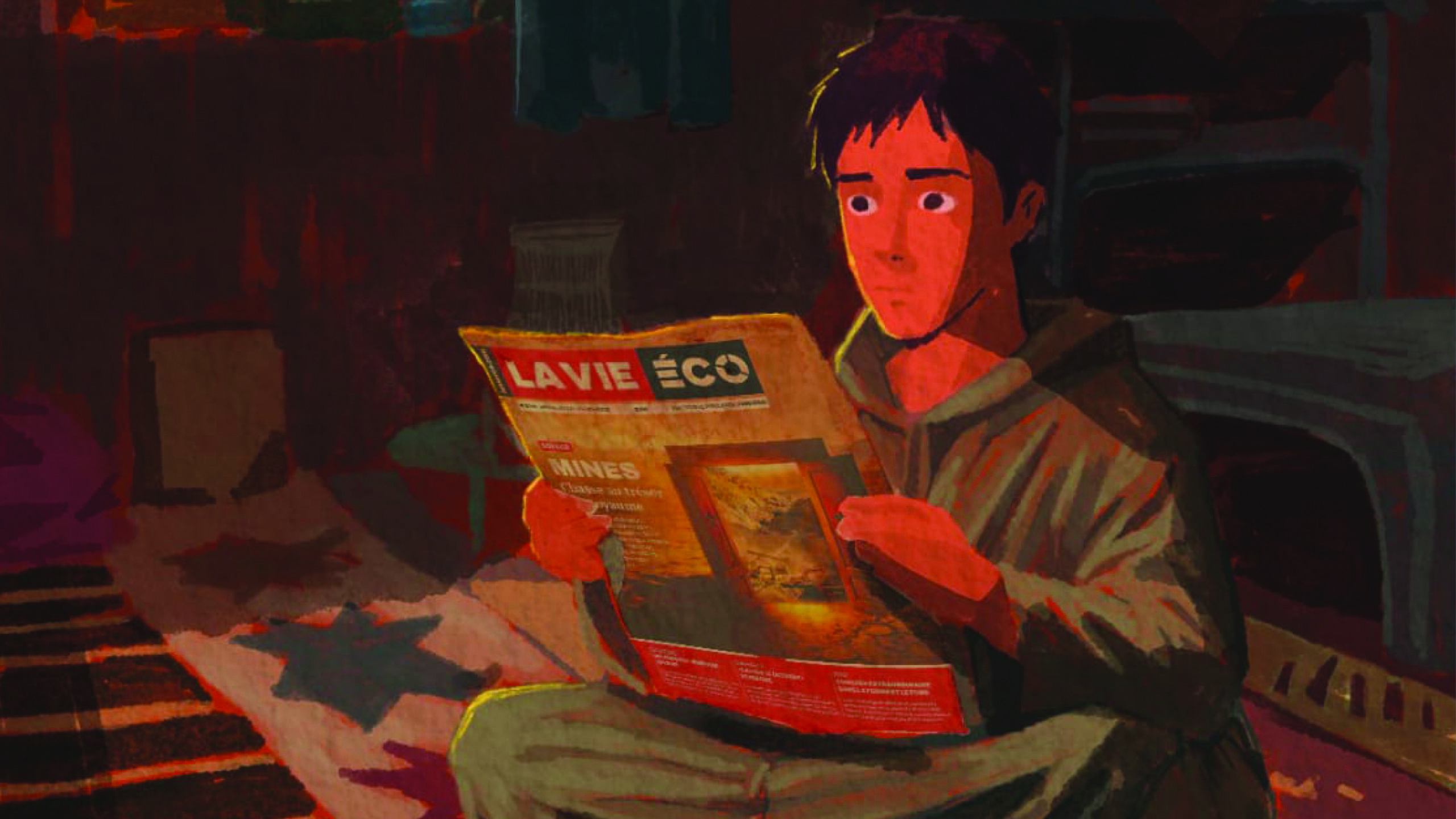
In Morocco, comics are everywhere and nowhere at once. They slip into school memories, activist fanzines, and a few albums that have become cult classics, yet they remain absent from bookstore shelves, sales figures, and any structured cultural policies.
“On this point, the observation is shared: comics occupied a paradoxical place, both present and absent. They existed in discourse, but struggled to establish themselves in concrete terms.
Their definition remained vague, their practice was not widely popularized, and their integration into cultural habits remained fragile,” stresses Zakaria Tmalah, author and researcher in narrative arts. The idea that comics are a minor art form, reserved for childhood, still weighs heavily.
Few readers, even fewer buyers, erratic distribution, tiny print runs, and an almost nonexistent economy: the diagnosis is well known.
Even before there was talk of a local scene, the landscape was saturated by magazines coming from the Middle East. “ ‘Majid’, Egyptian publications, ‘Bassim’ in Saudi Arabia, ‘Al-Arabi’ in Kuwait…
No fanzines, no margins: everything was calibrated to produce a single, almost normative figure: ‘the Arab child.’ These publications imposed a representation of childhood and, with it, an implicit definition of what comics are supposed to be,” explains Zakaria.
This abundance certainly shaped generations of readers, but it also locked comics into a strictly children’s register, delaying the emergence of works intended for adults.
To understand the scene, you have to go back to the 1970s. Ahmed Nouaiti and the Maazouzi brothers then publish History of Morocco in comic-strip form, taking on a national narrative that until then had been reserved for school textbooks.
A few years later, Abdelaziz Mouride upends the codes with Even Rats Are Starved, a chilling graphic testimony about the Years of Lead, turning comics into a space for memory and denunciation.
“Long before Mouride, there was Bouhali and other experiments almost erased from dominant accounts. Mouride published in Ila al-Amam, the magazine linked to Anfas/Souffles.
Then Even Rats Are Starved was published while he was still in prison, with the plates smuggled out clandestinely during visits by a relative or a supportive lawyer, circulating out of sight, panel by panel. After that came The Barber, an in-between work, somewhere between caricature and comics, assigned to social and political commentary,” Zakaria recalls.
In the 1980s–1990s, two logics coexisted without ever meeting. On one side, a highly political, French-language production aimed at an educated, activist readership; on the other, the massive arrival of Arabic youth magazines, with mass distribution and unbeatable prices. “The balance of power was unequal from the start.
From the mid-1990s, I used to buy Majid every Monday even though the magazine was supposed to come out on Wednesday. It was already being printed in Morocco, plugged into the local circuit with formidable efficiency.
How could you compete, under those conditions, with irregular publications that were economically fragile and intended for a limited audience?” Zakaria emphasizes. This fragmentation long fueled a feeling of emptiness among the younger generation in search of local references.
Yet for about the past ten years, hybrid profiles have been breathing new life into Moroccan comics. Trained abroad, shaped by Franco-Belgian culture, manga, and American comics, but deeply attached to local realities, these creators oscillate between global influences and local concerns.
Yassine Hejjamy, who attended Lycée Descartes in Rabat, mixes bittersweet irony and political disillusionment in Funny Revolutions, about the Arab Springs.
Aniss El Hamouri, born in Témara and based in Belgium, invents a distinctive graphic language far from expected codes. Oumaima El Gamraoui, a graduate of the INBA in Tétouan, chooses darija to tell stories of hrig and exile, giving a voice to those who are rarely spoken about.
Around these trajectories, a broader constellation is taking shape in which comics become a space of struggle and speaking out. Zainab Fasiki, an engineer by training and a comics artist by necessity, makes her drawings a direct tool against taboos related to the body and sexuality. With Hshouma, she establishes a feminist, political, unapologetic comic, praised internationally but often contested locally.
“The ‘new generation’ didn’t appear out of nowhere. Many had already started… The first graduating class of the INBA dates back to 2004, and that’s where the momentum took hold,” Zakaria recalls.
For Amine El Methane, comics artist and graphic designer-illustrator, the landscape remains fragile. “The comics industry in Morocco has no specialized publishing houses, and creative residencies are rare, except for those of the Hiba Foundation or the Tétouan Forum (formerly a festival). These structural gaps complicate the emergence of a real market and the appearance of collectives capable of bringing talent to light.”
He lays out the costs and stages of producing a professional album: writing, scripting, and research (2 to 3 months), pre-production (creating characters, settings, breakdown/storyboarding—3 months), then final production including drawing, inking, coloring, and printing (3 to 6 months), i.e., about a year of work for a complete project.
Two methods coexist: the traditional style on paper and the digital style on a tablet, often faster and better suited to printing.
The economic imbalance explains why many Moroccan comics artists are published, exhibited, and recognized abroad.
“Foreign collectives, like Toktok (Egypt, 2011), inspired many local artists. Initiatives like the Skefkef fanzine made an impression. Mohamed El Bellaoui, a.k.a. Rebel Spirit, with Casablanca Guide and his second book on El Madani, has established himself as one of the country’s best-known comics artists and popularizes the codes of comics through social media,” Zakaria adds.
Public subsidies, for their part, only began in 2013, making it possible for works like Loukanikos Was a Dog to be funded, although the procedure remains regulated and demanding: artist card, detailed budget, and precise planning for funding ranging between 100,000 and 200,000 dirhams.
In parallel, collectives and residencies try to make up for the shortcomings. The “Khaliya” program, led by the Hiba Foundation, offers residencies and support, while “Al’Khariqun” experiments with bold formats blending darija, mythology, science fiction, and social critique.
Digital publishing, with webtoons and online releases, also offers an alternative—less expensive and accessible to a connected youth—even if the economic model remains uncertain.
The central question remains: is there an identifiable Moroccan comics tradition, with its own style and its own way of telling the world from within the country? For now, the answer wavers between Western heritage, exoticism, and a desire for emancipation. But perhaps it is precisely in this hesitation that the strength of Moroccan comics lies: searching, groping forward, grappling with reality without an instruction manual, far from folklorized clichés and expected narratives.
Rabat’s designation as UNESCO World Book Capital 2026 could offer a window of opportunity—provided comics are fully integrated into reading policies, efforts to combat illiteracy, and support for creation.
At bottom, Moroccan comics are neither absent nor moribund. They are minoritarian, fragile, often invisible, but carried by a tenacious energy. As long as authors keep drawing against oblivion and telling what other formats leave unsaid, the 9th art will remain standing—on the margins, but very much alive.
Other voices in Moroccan comics
Beyond the figures already mentioned, the ninth-art scene is energized by creators who are helping structure a thriving milieu. Among them, Zineb Sbai El Idrissi, co-founder and director of “Alkhariqun” since 2020, coordinates collective projects such as “TRU’Story,” reinterpreting contemporary events in darija, and “O’Story: Moroccan myths between past and present,” revisiting oral narratives from a contemporary angle.
This dynamism is also seen in competitions and forums, notably Talents africains, organized by the INBA and the Chouf association. Young talents such as Mohamed Arbi, Yassine Hafili, Anass Elkho, Rihabe Benajiba, Fouad Khiad, Moussa El Biad, Taha Sabry, and Sara Naji—awarded at the international Tétouan competition—bear witness to a creative youth in search of recognition and a future.