Business
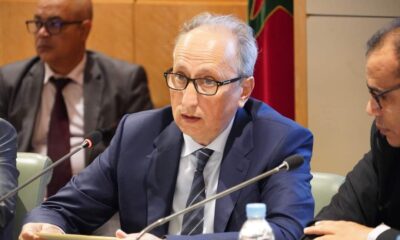
Mohamed Saad Berrada: “At the next school year start, one in two schools will be a pioneering school”
This is one of the most positive assessments of the progress of the 2024-2025 school year made by the Minister of National Education. In this interview, the government official reviews the achievements made while looking ahead to the 2025-2026 school year. With 2,000 new pioneering schools and 500 new pioneering middle schools planned for the next school year.

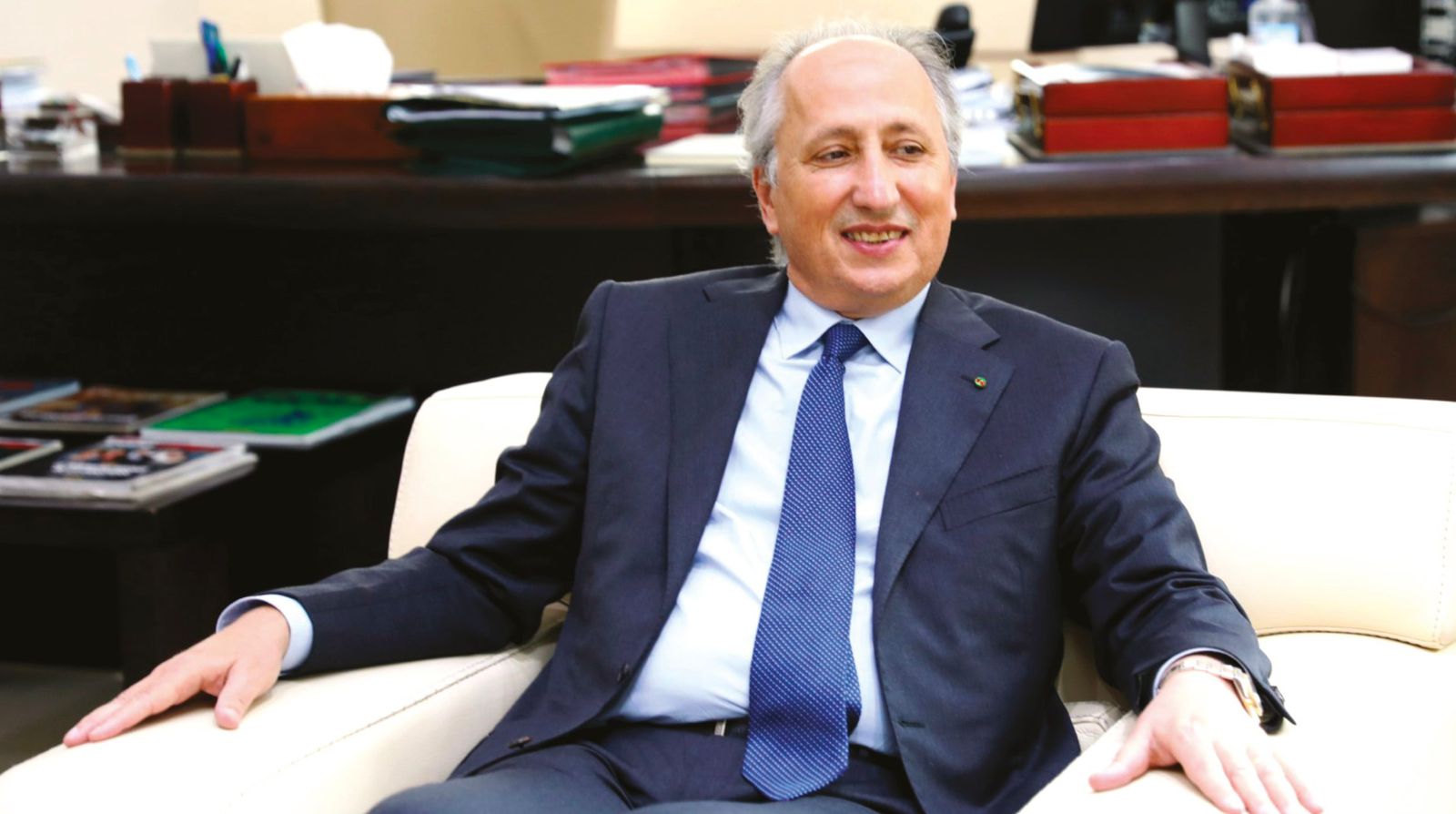
Taking over from his predecessor Chakib Benmoussa, the Minister of National Education, Preschool and Sports has set the goal of staying the course with the aim of accelerating the pace to consolidate achievements, especially at the level of pioneering educational institutions. Without losing sight of the imperative to maintain “a constructive social dialogue (…) based on trust and co-construction,” to quote his own words. On both fronts, the momentum is maintained. In the interview he gave to “La Vie éco,” the minister goes beyond the achievements by outlining his department’s priorities for the 2025-2026 school year.
What assessment do you make of the 2024-2025 school year? What were the most significant events?
The 2024-2025 school year is part of the continuity of the High Orientations of His Majesty King Mohammed VI, who calls for building a school of equity, quality, and social promotion.
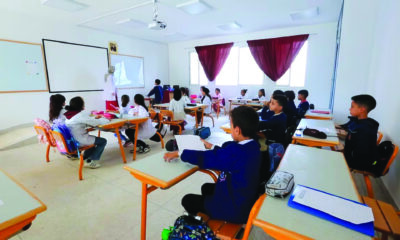
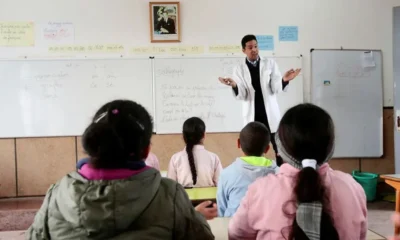
In this spirit, and in accordance with the objectives of framework law 51.17, the overall assessment is positive. Several major advances have been made within the framework of implementing the 2022-2026 roadmap, notably the expansion of the pioneering schools network, which now includes 2,626 institutions welcoming 1.3 million students, and the launch of the experimental project of 232 pioneering middle schools that will welcome more than 200,000 students.
These measures aim to strengthen fundamental learning, reduce school dropout, and offer students a stimulating and more equitable educational environment.
This personalized pedagogical approach shows concrete results. Regarding the primary learning remediation program, for example, school performance has quadrupled in mathematics, doubled in Arabic, and tripled in French.
Furthermore, national exams were organized under strengthened conditions of transparency and rigor. Pedagogical, cultural, and sports initiatives were deployed to promote student development and strengthen their sense of belonging to the school.
Finally, a constructive social dialogue was maintained throughout the year, based on trust and co-construction with the various components of the educational community.
The Higher Council of Education evaluated the pioneering schools project. What lessons do you draw from it?
The evaluation conducted by the Higher Council of Education, Training and Scientific Research examined how the project was implemented on the ground by analyzing the activities carried out, the resources used, and the difficulties encountered.
The results are much more than encouraging, with an overall compliance score of 79 out of 100. Notably, excellent performance was observed in pedagogical practices (86 points) and student support systems (87 points). These results reflect the direct impact of teacher mobilization and individualized support.
However, the report also highlights the existence of regional and intra-regional disparities. This encourages us to strengthen our approach based on differentiated targeting, territorial equity, and the strengthening of local capacities, in accordance with the royal vision and the spirit of the framework law, which places equality of opportunity as a central foundation of the reform.
The report of the National Evaluation Body (INE) allows measuring to what extent the implementation approach of the pioneering school model has significantly reduced the gaps between urban and rural schools. Indeed, regarding the overall result, the difference in performance between these two categories of schools does not exceed 2 points out of 100: 78 out of 100 for rural areas, 80 out of 100 for urban areas.
With hindsight, how do you evaluate the pioneering schools experience and what are the prospects for the next school year?
Today, we can affirm that the pioneering schools experience constitutes a structuring advance in the transformation process of our education system. It has allowed the deployment of an innovative model based on evidence, which primarily aims to consolidate mastery of fundamental learning before gradually introducing new skills, relying on effective teaching methods that ensure solid and sustainable student progress.
This model also values the role of Regional Academies of Education and Training and Provincial Directorates in designing and implementing the reform, in line with the spirit of advanced regionalization policy and administrative decentralization, as well as school autonomy and the accountability of educational teams.
The initial results are promising: improvement in student achievements, increased teacher engagement, and better involvement of educational communities. This faithfully reflects the royal vision of a modern, efficient, and student-centered education system.
For the 2025-2026 school year, our ambition is to gradually extend this model to 2,000 new primary schools to reach 50% of institutions and 500 new middle schools, or one-third, while strengthening support and implementation mechanisms, continuous training, evaluation, and local appropriation. The goal is to consolidate a sustainable dynamic of continuous improvement in the service of quality.
Where does the pioneering middle schools project stand? What are its orientations at this stage?
The pioneering middle schools project continues the pioneering schools initiative, with an adaptation to the specific challenges of the middle school cycle, notably preventing school dropout and supporting students during a critical phase of their personal and cognitive development.
Launched this year in several pilot institutions, the project is based on a clear triptych: strengthened fundamental learning, student development through extracurricular and sports activities, and individualized support for at-risk students.
Increased autonomy has been granted to institutions in implementing their integrated school project, and educational digital technology is mobilized as a lever for pedagogical modernization. Early feedback from the field is encouraging, both in terms of team mobilization and observable impacts on students.
We are currently working on rigorous capitalization of this experimental phase, with a view to progressive deployment based on adaptation to the local context and appropriation by educational communities.
What will be your department’s strategic priorities for the next school year?
Our priorities for the next school year fall within the accelerated implementation of the 2022-2026 roadmap, in accordance with framework law 51.17.
We will pursue four major axes. First, strengthening the quality of learning, with an emphasis on fundamental learning from the earliest years of schooling. Next, combating school dropout through targeted early detection mechanisms, personalized support, and pedagogical remediation.
Then, modernizing the school environment through the rehabilitation of institutions, expanding the network of pioneering schools and middle schools, and the strategic integration of educational digital technology. Lastly, strengthening results-based management by establishing and improving information systems and dashboards allowing rigorous and regular monitoring of key performance indicators.
All these priorities converge toward a common goal: building an equitable, inclusive, attractive Moroccan public school resolutely oriented toward the future, serving the sustainable human development of our country.