Kingdom
Akhannouch relies on digital tools to present the education sector’s achievements
The education system is undergoing a large-scale reform focused on improving the quality of teaching, reducing inequalities, and modernising pedagogical methods. From the “Pioneering Schools” programme to the generalisation of preschool and the revaluation of teachers, the Head of Government outlines the main directions of the education reform.

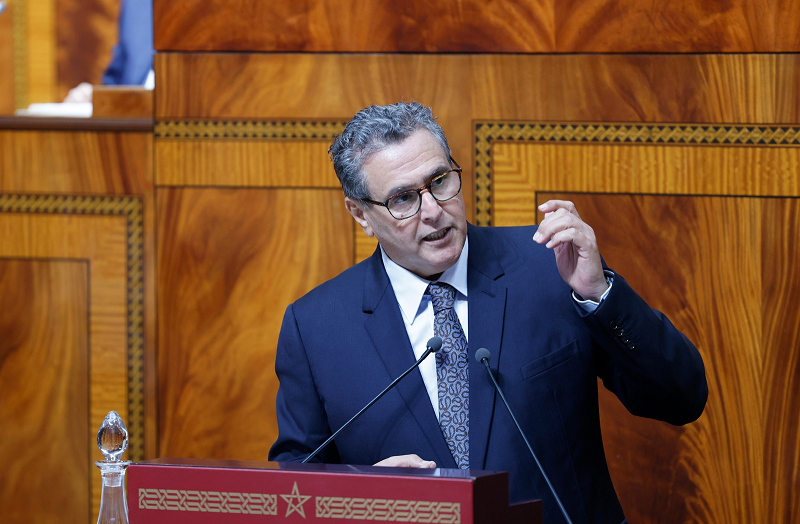
In a video accompanying the government’s review of the education sector, Head of Government Aziz Akhannouch highlights what he describes as a “structural” reform aimed at addressing the dysfunctions that have accumulated in the education system over several years.
According to him, the challenges of public schooling go beyond infrastructure or learning conditions. “The real challenge is the quality of teaching,” he insists, noting that unattended learning gaps tend to accumulate among students and can, in some cases, lead to school dropout. “Our goal is that no student is left struggling without support,” he affirms.
This transformation is based on a large-scale national consultation involving more than 100,000 stakeholders in the sector, including teachers, experts and parents. This participatory approach has made it possible to identify several levers for action, foremost among them the “Pioneering Schools” programme.
These institutions are experimenting with new pedagogical approaches based on hands-on learning, experimentation and the use of digital tools, breaking away from an exclusively theoretical approach.
The Head of Government emphasises a logic of pedagogical effectiveness: “We have chosen teaching methods that have proven their worth, particularly by adapting instruction to the actual level of each student,” he explains.
A large-scale rollout of Pioneering Schools
One of the pillars of this reform is an assessment of students’ competencies at the start of the school year, making it possible to identify each student’s needs and organise tailored follow-up. Students facing difficulties thus receive targeted support to address gaps and progress at the pace of their class.
“Students must be supported as soon as a difficulty appears, without waiting for it to worsen,” Aziz Akhannouch stresses, pointing to what he considers encouraging initial results among the first cohorts of students involved.
The programme now covers 4,626 primary schools and 786 secondary schools across the country. The stated objective is a gradual generalisation to the entire education system by the 2027–2028 school year.
The government also highlights investment in school infrastructure, particularly in rural areas. Over the past five years, 788 new schools have been built, including 472 in rural zones, in order to reduce territorial disparities.
The reform also places strong emphasis on preschool education, considered decisive for students’ future success. In 2026, 80% of children aged 4 to 6 benefit from it, according to the figures presented.
“Equal opportunities begin in the earliest years of schooling,” the Head of Government recalls, stressing the importance of strengthening the foundations of the educational pathway.
Enhancing the teaching profession
Another major axis is improving teachers’ working conditions. The issue of contract teachers, long a source of tension, is presented by the government as definitively resolved.
More than 336,000 teachers now benefit from a unified status, along with a salary increase of at least 1,500 dirhams per month, which can reach up to an additional 5,100 dirhams through various incentive measures.
“Reforming the school system also requires recognising the central role of teachers,” Aziz Akhannouch emphasises, considering these advances essential for restoring confidence in the education system.
Beyond figures and programmes, the government highlights a broader ambition: strengthening the credibility of public education and sustainably improving learning outcomes.
“The efforts undertaken must be visible in the daily lives of families and teachers,” the Head of Government concludes, presenting this reform as a decisive step towards a more equitable and higher-performing school system.