Kingdom
“Mira” by Lakhmari: The Breakup That Isn’t One?
Nour-Eddine Lakhmari trades urban cacophony for the crushing silence of the forests. With “Mira,” his latest film, the director continues to explore solitude and the search for meaning that runs through his entire career. But this time, far from car horns and neon lights, it is nature that speaks—and it strikes.

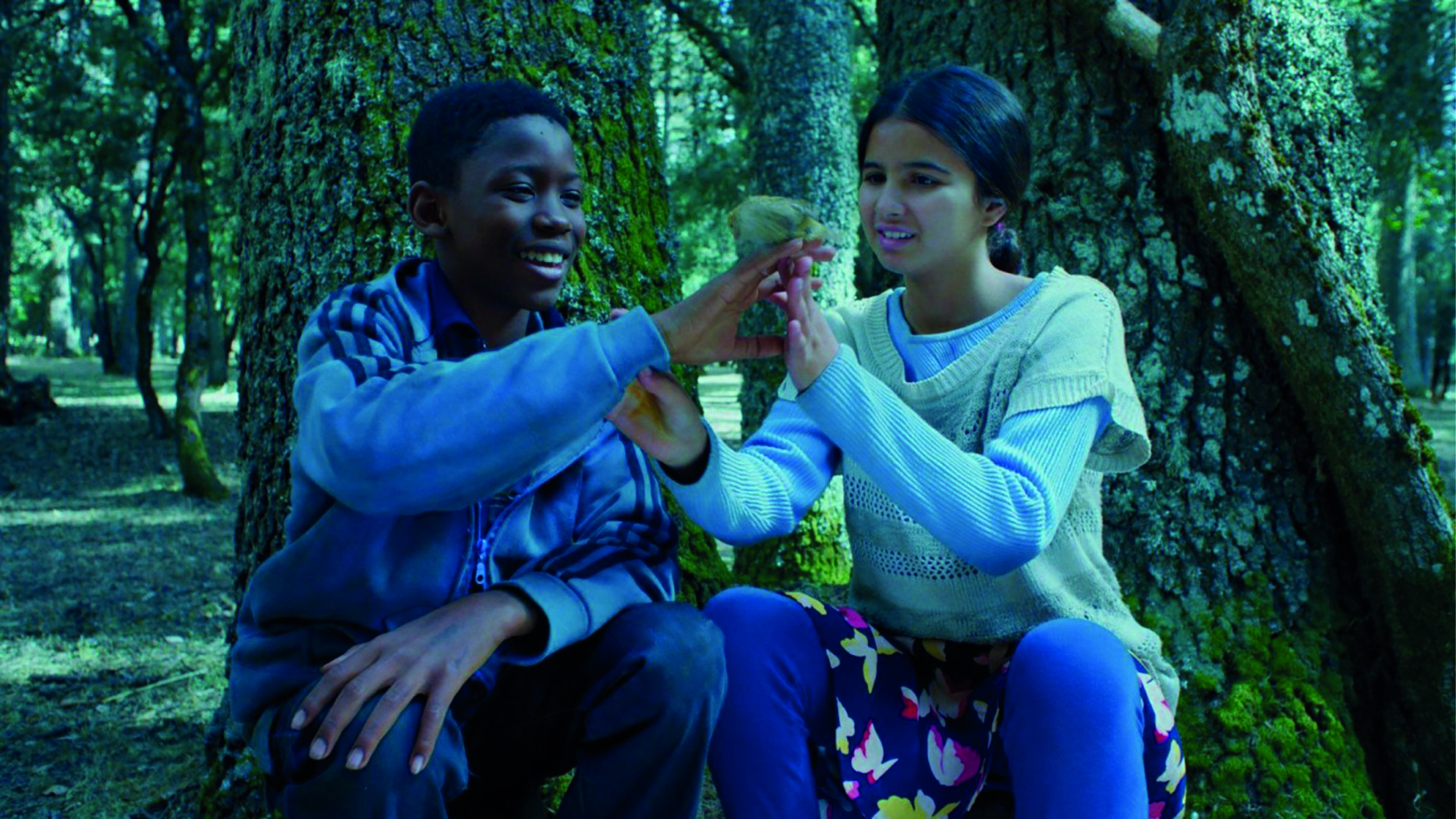
One might have wanted to believe in a sharp turn, a radical swerve. After the brutal neon lights of “Casanegra”, “Zero”, and “BurnOut”, here is Nour-Eddine Lakhmari planted deep in the forest, filming icy trees like Norwegian specters. We got carried away: “A break!” we said, delighted to have sniffed out a poetic shift at over 2,000 meters above sea level.
And then—no. Or rather yes, but not as one imagines. Because “Mira” (the story of a 13-year-old girl who saves trapped birds and searches for her place in a village where undocumented migrants, schoolteachers, and grandmothers navigate between tradition and dreams of freedom) breaks nothing. It extends. It broadens. It digs deeper.
The setting changes; the nerve remains.
Lakhmari admits it himself with almost disarming frankness. He quotes Fellini: “Every filmmaker makes only one film.” An endless loop. We think we’re varying, deviating, surprising. In reality, we always return to the same place. To the more or less hidden confession that, “consciously or not, we endlessly replay the same score: our muted neuroses, our traumas in filigree, the same story that insists.”
“In my case, the subject bursts through the screen: solitude. That kind of faulty compass that pushes one to search for an answer—or at least a direction—to all those questions we’ve been carrying around for too long.”
“Shorts, features, urban films, non-urban…, the setting hardly matters: it’s always the same intimate odyssey, this inquiry into ‘where we are’ and ‘where we’re going.’ A stubborn, almost headstrong quest to catch a fragment of meaning before it evaporates,” he states. There, it’s said: “Mira” is not a detour. It’s a retinal persistence.
The Same Film, Another Vertigo
When asked about this supposed change in register, Lakhmari cuts short. “Is it a break? Not really. More like a line that extends, a thread that unwinds without breaking: the city, the desert, the forest…
The settings change, but the subject remains the same. I spoke of solitude earlier: the forest opened another door for me, almost spiritual. A paradoxically open-air enclosed space, where you find yourself locked in with yourself amid the trees.
It offered me a different playground: a face-to-face between the characters and what transcends them, this nature we end up forgetting like a too-discreet loved one. We live in it, we breathe it, but we no longer look at it. Until something goes wrong, until reality slaps us, and only then do we begin to see, truly see, nature differently. A forced reconciliation, but a salutary one,” explains Nour-Eddine.
The forest is not a setting: it is a character, a presence, a judge that suffocates and liberates. But before the poetic revelation, there was the concrete struggle. And Lakhmari does not romanticize it. “The more constraints pile up, the more the urge to push forward awakens. The higher the obstacle rises, the more visceral the temptation to overcome it becomes. And the forest, obviously, was a monumental obstacle: perched at 2,000 meters, hauling equipment up a cliff, with actors, fatigue, and dehydration lying in wait,” he says.
Then, amid this physical ordeal, something shifts: “There was something almost magical: that light slipping between the trees like a whispered secret.
It felt like a silent dialogue, a stubborn conversation between us and the forest. Impossible to remain hermetic to it: it catches you, speaks to you, shapes you. It influences you without even asking permission,” he murmurs.
This dialogue with nature, some will see as a novelty in his cinema. He rejects the mask theory.
“These trees, these feathers, these birds, this wind… yes, they speak to me. And no, it’s not a new mask I’m putting on. The alleys spoke to me, the car horns spoke to me, the urban spoke to me. The city never intimidated me. This time, it’s the forest that takes the floor. And I can assure you of one thing: its silence weighs as heavily as the clamor of a crossroads at rush hour. The noise of the city, we know it comes from humans. The breath of the wind in the forest, though, is nature in its raw state. Harder, more violent, truer. A sound that doesn’t just brush past you: it tries to pierce your chest to reach the very heart of your soul,” he asserts.
The Silence That Screams
Not an escape: a transfer. An intensity that changes frequency. And that’s not all. Because beyond the silence, there is what he calls a “sonic void,” an almost metaphysical emptiness that becomes a full-fledged actor in the film.
“What we hear is a sonic void. A resonating emptiness, pierced by cries—not cries that frighten, no, cries that throw you back upon yourself. In a big city like Casablanca, the clamor is permanent. Too much noise, too much flow, too many chained gestures. We no longer have time to step back, to turn around, to ask ourselves who we really are. The silence of the forest, though, opens an abyss. It is immense, crushing, almost cosmic. And that void, that deafening absence, forces you to look yourself straight in the eye. To plunge into it. To dig inside. It’s harsh, even brutal, but impossible to escape,” he analyzes.
We understand then: the film doesn’t just seek to tell a story; it seeks to unsettle. Deep down, the real break is there: not in the shift from Casablanca to the trees of the Middle Atlas, but in this way of making silence a punch.
Lakhmari continues to film solitude, wandering, restlessness. But this time, he removes the sonic crutches. He leaves us facing the void. And the void, for him, is never neutral: it thinks, it bites, it illuminates.
“Mira”, in truth, is not a detour: it is a deepening. A way of digging the same furrow with a sharper tool. Less noise, more truth. Less city, more soul. The same film, perhaps, but filmed from a precipice.