Kingdom
Mining Value Chain: A Highly Strategic Industrial Vein
The Kingdom has just signed a framework agreement on critical minerals with the United States. In doing so, it is joining a global value chain, but it is aiming for more than the role of a raw-materials supplier. Processing, refining—and, why not, manufacturing: that is its new challenge.

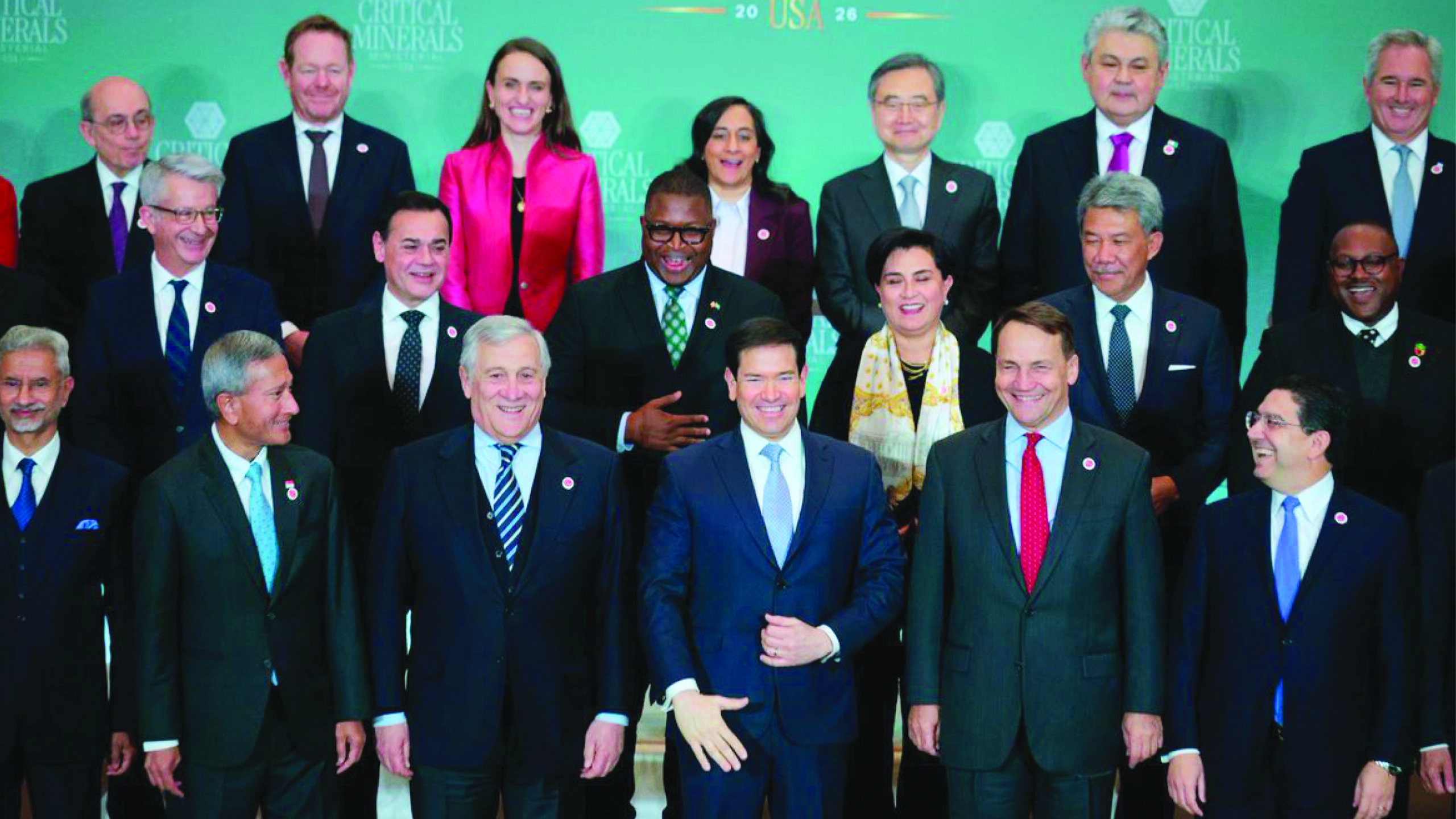
On February 4, Morocco and the United States signed a framework agreement on critical minerals. The Kingdom is one of about ten countries to sign this type of agreement, including Guinea, on the sidelines of the Ministerial Conference on Critical Minerals organized by U.S. Secretary of State Marco Rubio, attended by 50 countries.
“Today, the United States, together with its partners and allies, has committed to reshaping the global market for critical minerals and rare earths,” the State Department announced. And if the Kingdom was invited to be part of this process, it is no accident.
The U.S. Secretary of State did, in fact, explain that Morocco has a “key role to play because of the deposits it has, but also because of the Kingdom’s willingness to invest in processing and its cooperation in agreeing to take part in this global initiative.”
This is important for Morocco, “which can play a leading role, because it has significant mineral reserves it can leverage to develop its economy,” the head of U.S. diplomacy stressed. What will Morocco gain? A lot, it is believed—on several levels.
The Kingdom is investing heavily in renewable energy and electricity storage; is preparing to bring a deep-water port into service in the Mediterranean and another, in two years’ time, in the South—Dakhla Atlantic—with two mineral berths totaling 700 linear meters and a draft of 21.4 meters (which was not part of the project’s initial design); and has just embarked on the defense industry while preparing the ground for colossal investments in cloud computing and information technologies.
In parallel, the Kingdom has launched two regional initiatives: the Sahel-Atlantic corridor, enabling the four Sahel countries to have a maritime gateway to export their products, mainly minerals.
The second is the launch, in December 2024 in Marrakech, of the OTC corridor (Origination, Transit and Certification), initiated jointly by Morocco and several African countries, with the Kingdom as an essential link. Need we recall that Africa holds 40% of the world’s reserves of raw materials and 30% of critical minerals?
And Morocco is thus establishing itself as “a preferred hub for processing strategic and critical metals.” Its many free-trade agreements, now joined by this framework agreement with the United States, provide privileged access to various international markets.
Yet, as the State Department recalled, “critical minerals and rare earths are essential to our most advanced technologies, and their importance will only grow as AI, robotics, batteries, and autonomous devices transform our economies.”
Morocco’s gains should not be limited to strengthening its geoeconomic role and its weight as a leading regional logistics player. Politically, this agreement—with its multiple implications—reinforces, this time in economic terms, the American recognition of Moroccan sovereignty over the Sahara, along with the multiple investments it could attract.
Military and technological industry
The process provides, in fact, for two support mechanisms. Secretary Rubio announced the creation of FORGE, which will succeed the Minerals Security Partnership (MSP). FORGE “will take bold and decisive action to address persistent challenges in the global critical minerals market.”
This will be done through the implementation of operational policies “to promote initiatives that strengthen critical-minerals supply chains that are diversified, resilient, and secure.”
A second mechanism, Pax Silica, will, in partnership with the private sector, “play a driving role through investments in mining, refining, processing, end-use applications, as well as recycling and reprocessing.”
A working group made up of mining-industry leaders has been formed “to advance priority projects as part of a new collaboration with the United States and its partners.”
To that end, the U.S. government is mobilizing “unprecedented resources” to secure critical-minerals supply chains, supporting projects worth more than $30 billion in the form of letters of intent, investments, loans, and other forms of assistance over the past six months, in partnership with the private sector.
What’s more, these investments, combined with the Pax Silica initiative, have a multiplier effect, mobilizing private capital far exceeding U.S. government spending.
This is an opportunity for the Kingdom, which has just undertaken an overall overhaul of its legal framework for investment while preparing a new mining law, whose drafting and adoption process is already underway.
At the same time, the Kingdom is mobilizing the resources needed to support the mining sector’s growth, notably in terms of energy supply and water for industrial use.
The Kingdom hopes to go further than being a simple link—even if a “key” one, in the words of the head of U.S. diplomacy—in a vast global value chain for the extractive industry.
Morocco is aiming for a far more distinct position, with not only refining and processing but also manufacturing. The industrial base put in place in the defense field—drawing on its experience in automotive, aeronautics, and advanced electronics—enables it to manufacture locally certain parts from critical minerals extracted in Morocco or in certain African countries and processed and refined locally.
The Kingdom could thus leverage its integration into this value chain to negotiate an industrial—and beyond that, technological—transfer in certain sectors of the defense industry and advanced electronics.
And, as a result, attract European and American technology and defense industries. That is likely what the Kingdom is referring to when it speaks of adding value, locally, to the natural wealth of the African continent.
More than just a partner
Until now, the Kingdom has occupied a relatively modest position on the map of U.S. supplies of critical minerals—barely two or three of the minerals concerned.
Yet the Kingdom’s potential goes far beyond that. Of course, there are phosphates (recently added to the list of critical minerals) and their derivatives and by-products. There is also potash, also very recently added to the list, for which substantial reserves have been discovered but not yet exploited.
The Kingdom also supplies arsenic, and very soon polysilicon, with a plant planned in Tan-Tan with support from U.S. government funds. Copper, silver, and other metals that the Kingdom produces in remarkable quantities are also part of this value chain.
Of the fifty strategic minerals on the official USGS list, Morocco has more than fifteen. And we are talking here about deposits in operation or proven reserves about to enter the production phase.