Kingdom
Migration: In New York, Nasser Bourita Highlights Morocco’s Progress
During a meeting in New York held under the theme ‘Migration at a Crossroads: A Strategic Dialogue for a Changing World,’ Mr. Bourita stressed that the Kingdom has a clear and coherent vision, making it an African leader on the migration issue.

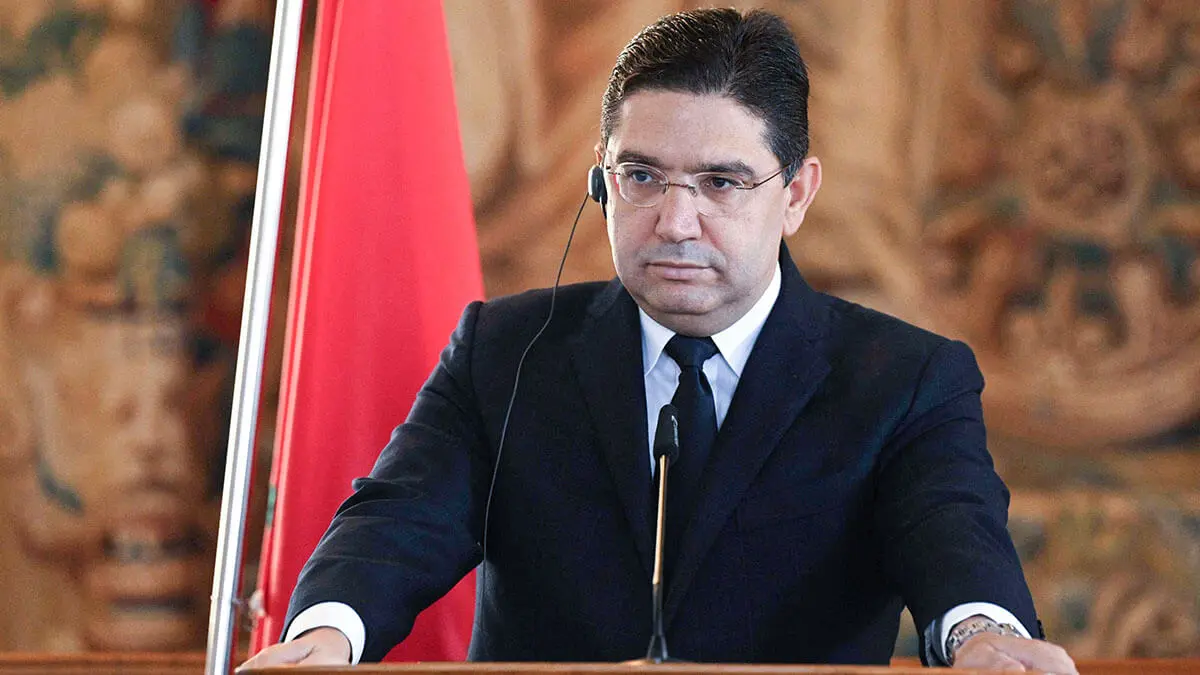
On Monday in New York, the Minister of Foreign Affairs, African Cooperation, and Moroccans Residing Abroad, Nasser Bourita, highlighted the progress made by the Kingdom in the field of migration, on the occasion of a high-level strategic dialogue on this issue organized on the sidelines of the 80th UN General Assembly.
During this meeting held under the theme “Migration at a Crossroads: A Strategic Dialogue for a Changing World,” Mr. Bourita stressed that the Kingdom has a clear and coherent vision, making it an African leader on the migration issue.
The minister thus recalled the Kingdom’s major initiatives, notably the African Agenda on Migration, approved by the African Union as the continental reference framework; the African Migration Observatory, based in Rabat, which provides essential data for evidence-based public policies; as well as Morocco’s constant commitment to the implementation of the Global Compact for Safe, Orderly and Regular Migration, adopted in Marrakech in 2018, and its exemplary partnership with the International Organization for Migration for over two decades.
He also emphasized that Morocco, as a country of origin, transit, and destination, fully understands the complexity of the migration issue and advocates for an approach based on solidarity, shared responsibility, and joint solutions.
In this context, Mr. Bourita highlighted the concrete successes of international cooperation, citing notably the Moroccan-Spanish partnership as a reflection of a pragmatic and effective approach, while advocating for the empowerment of the Champion Countries of the Global Compact to accelerate its implementation on the ground.
In his address, the minister pointed out “three major paradoxes” that characterize today’s migration reality, namely a theme too often politicized and reduced to slogans, at a time when migrants represent an essential economic and social force; as well as a multilateral system called upon to support the efforts of states but weakened by the gap between its mandate and the limited resources allocated to it.
He also warned of the risk that the upcoming Review Meeting of the Global Compact for Safe, Orderly and Regular Migration could be reduced to “a procedural exercise” instead of being a genuine opportunity to strengthen concerted migration governance.
Finally, the minister submitted for debate several proposals aimed at establishing credible and effective migration governance, based on strengthening knowledge through interconnected observatories, showcasing successful experiences, and increased resource mobilization, while calling for collective responsibility to transform migration into a lever for dialogue, solidarity, and shared prosperity.