Influences
Metal: One good riff is worth a thousand words!
With the Tracktour, distortion pedals reclaim their full power and primal savagery. Pure rage, massive bursts of decibels, amplifiers screaming into feedback… a total immersion in the pit.

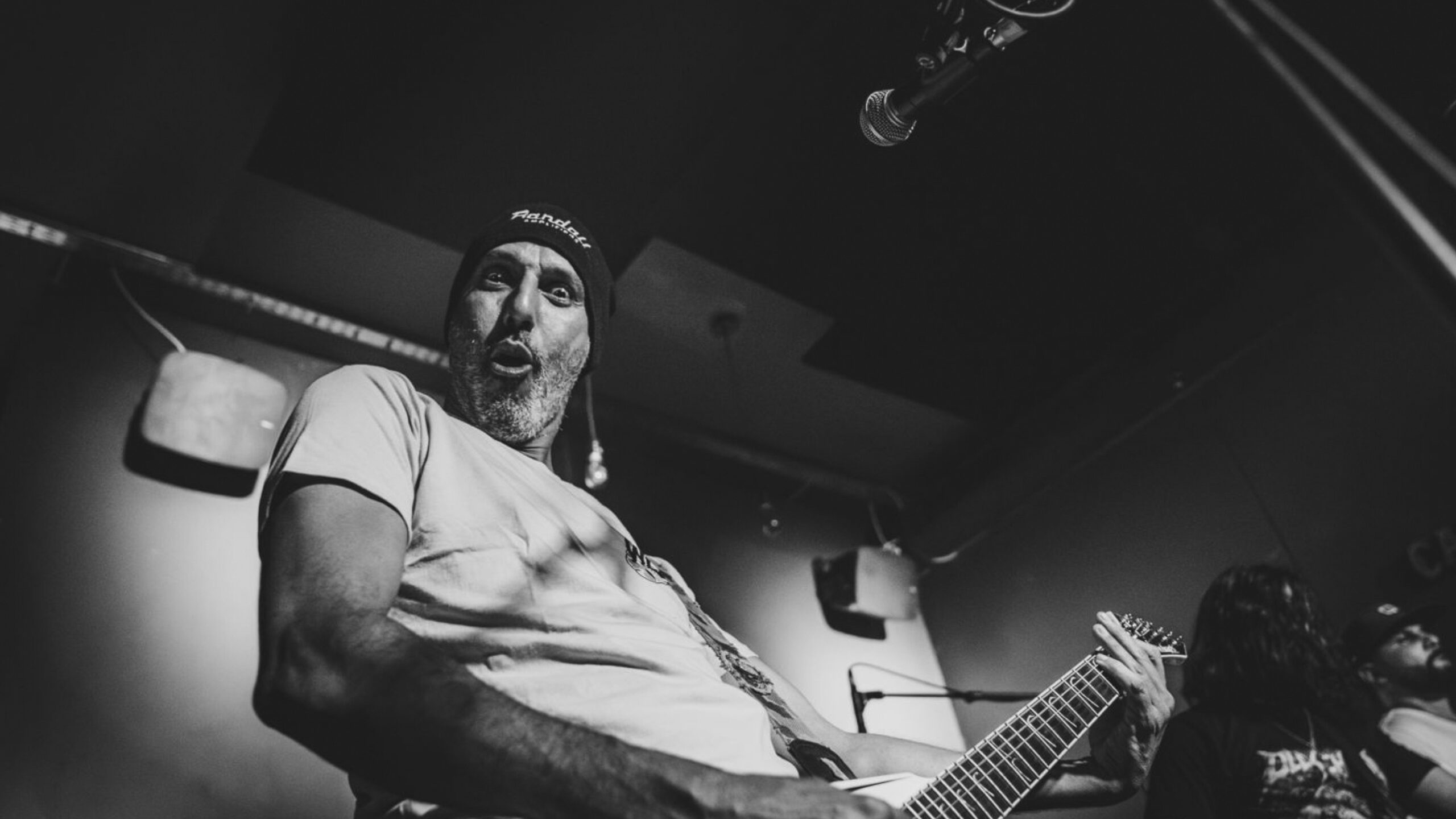
We had almost forgotten it beneath the autotuned tide and lukewarm playlists: Morocco has metal that hits like a hammer. The real thing. The kind that scrapes, spills over, and leaves marks.
There was a time when L’Boulevard brought Kreator, Arch Enemy, Sepultura, or punk legends The Exploited to Morocco, and no one found it strange. Today, riffs continue to tear everything apart in defiance of the great algorithmic levelling.
While rap dominates the space—and rightly so—this other scene stubbornly fights to survive. Better still, it is going through a pivotal moment, a phase in which everything seems to be realigning: energy, audience, desire.
On Saturday, 25 April, at Boultek, this was unmistakably clear. The Tracktour stopped in Casablanca after setting Rabat ablaze the night before. A tour put together with limited means, but conceived as a bridge—between cities, between scenes, between countries. On the bill: Hold The Breath, We Come For War, and the Swiss band CardiaC. The horde showed up.
Made up of balding forty‑somethings and long‑haired youngsters in metal band T‑shirts, the crowd held nothing back in terms of intensity. Horns raised from start to finish, necks whipping like windscreen wipers in a storm. Progressive metalcore band Hold The Breath, founded in Casablanca in 2011, opened the night.
On stage, their performance was surgical: precise riffs, massive breakdowns, melodic layers emerging where least expected. The set was tight, controlled, with no excess. The audience responded from the very first notes, and the pit formed immediately. Then We Come For War took over. Formed in 2018, also in Casablanca, they deliver an aggressive, chaotic yet melodic blend of metalcore and progressive deathcore.
Following Internal Suffering (2020), Oblivion with a music video in 2023, victories at MoshKill#4, and above all first prize in the Rock/Metal category at Tremplin L’Boulevard 2023, what happens on stage is exactly what’s promised: war. Furious blast beats, tearing growls, choruses that stick. The frontman lets it out: “Playing is expensive, touring is hard, but it’s worth it.” The room roars its agreement.
Finally, CardiaC. The Swiss band arrive with 20 years of experience in their amplifiers. Hardcore metal, Hispanic rage, countless miles logged (United States, Cuba, Europe). On stage, there’s no negotiating. They impose. A heavy sound, frontal groove, total presence.
Spearheads
Behind this event lies a handcrafted mechanism. A handful of passionate people—barely a dozen (Mamoun Belgnaoui, Ismael Gomez, Sanaa Elhaddad, Hamza Elherichi, Zakaria Laatouri, Maha El Assaadi, Ahmed Alkatraz, Reda Elkounia, Fatima Ezzahra Bellajil, Samy Mekkaoui, Sina Bouchareb, Driss Boutaybi, Ihssan Aquila, and Iliass Saifi; Lazywall and Amine Hamma, respectively former co‑founder and former member)—set up dates, contact bands, find venues, patch together solutions. No subsidies. No heavy structure. Just a network and an obsession: getting bands on stage.
“The project relies on a network of contributions—photographers, technicians, venues, ticketing platforms, and a few specialised media outlets that support the initiative,” explains Le Kinémobile (Hamza El Herichi Idrissi in civilian life), a very active member.
None of this came from a marketing plan, but from a lack: a lack of concerts, exchanges, breathing space for the scene. That’s where the idea came from—to invite foreign bands, have them play with local acts, and create connections.
“When they shared their idea with members of Lazywall, Mamoun and Ismaël realised they had already been thinking along similar lines,” Hamza tells us. From this convergence came a joint project, first called Tricintour in one form and then another. Today, it’s Tracktour.
Band selection is done without open calls, but through observation, affinities, and sonic coherence. “When a foreign band is available, organisers look for Moroccan bands that match stylistically and energetically. The aim is to create coherent artistic correspondences. This isn’t a competition, but a matchmaking process,” explains Hamza El Herichi Idrissi. Just connective tissue. An almost organic logic.
The downside is well known: lack of suitable venues, administrative constraints, difficulty finding funding, and persistent stereotypes. “Available spaces aren’t always designed for standing concerts, which are essential for this kind of music. Add to that bureaucracy, the challenge of finding sponsors, and lingering prejudices about metal. It all complicates event organisation.”
And yet, the shows exist. People come. Bands play—because for them, live performance remains essential.
“The project aims to structure the scene and support bands toward greater professionalisation, particularly through meetings, masterclasses, and exchanges,” Hamza concludes.
Riff‑driven chaos
The Moroccan metal scene is no stranger to cycles. “Looking at its evolution since the 1990s, we can see that it’s been through several phases,” Hamza continues.
At one point, the local scene was bursting with energy. Then came the 2003 case of the 14 “Satanic Angels,” which almost extinguished the movement altogether.
The scene restarted, then slipped back into relative silence. Several emblematic bands from that era disappeared or went on hiatus (Atmosfear, Despotism, Holly Angel…).
“There were also periods of rejection, when metal bands were poorly perceived and sometimes excluded from cultural spaces. One of the main problems remains the absence of labels, managers, distribution circuits, and support structures. That makes it hard for bands to envision a professional music career. The lack of concrete prospects discourages many projects,” Hamza laments.
Many bands emerge; few endure. Still, the scene stands, thanks to a handful of active bands and structures. It can be described as “reassuring.” It continues to exist and to generate initiatives—but it remains fragile. And yet, whenever a stage opens, bands return, reform, and play again (as with Sakadoya).
The hard truth is that Morocco has only 16 active metal bands and a few more in development. For a country of 39 million people, that’s meagre. Hamza is blunt: this numerical desert is plain to see in L’Boulevard festival competitions. Where rap draws hundreds of contenders, rock and metal struggle to line up applicants.
“This imbalance raises questions about the very renewal of the scene,” he says. Visibility? A mirage. “There were blessed times, when TV and radio pushed the scene,” Hamza recalls. “Today, podcasts, webzines, and alternative media keep things afloat, but it’s still thin. Metal still carries its baggage as a ‘satanic niche,’ loaded with weird clichés.” His rallying cry? Boost communication, flood the space with content, and shake up editorial teams until they finally acknowledge this underground scene.
Sonically, thrash metal holds the fort, closely followed by metalcore and deathcore in great form. Black metal remains discreet, while punk is resurging through a hungry new generation. But with so few troops, diversity inevitably struggles.
Tonight, however, fragility feels far away. In the pit, words fly between songs. Metal as an outlet, as a raw translation of daily life—anger, frustration, fear—all pass through it. A young woman, drenched in sweat, speaks of negative energy transformed into strength. Another describes a form of exorcism. If it doesn’t make your head move, it isn’t loud enough. Nothing theoretical. Everything lived.
A metal chorus
And this community is changing. It’s becoming more diverse. “The 18–25 age group is massively present. So are the elders. Tastes are broadening, musical boundaries are shifting. Metal absorbs, blends, evolves—sometimes with electronic elements, sometimes with other influences. Purism is retreating, openness is advancing,” Hamza notes.
Audiences are also more demanding, simply because people can now access what’s happening elsewhere and compare. In terms of attendance, some events sell out. “These are still modest capacities—between 100 and 300 people—but with an intensity many big stages would envy,” Hamza qualifies.
At Boultek that night, it was obvious: an engaged, attentive crowd, headbanging with the same fervour to local breakdowns as to Swiss grooves. The audience experiences the concert as a tribe growing stronger with each riff. Louder is better.
This concert proved one simple thing: Morocco hasn’t let go of metal. The scene, despite everything, holds. It moves forward at its own pace. It doesn’t try to please everyone—it tries to exist fully.
And as long as there are metalheads with strong necks to take the riffs and bands willing to take the stage, the rest will follow. Rest assured, Hamza, this music will never die. “Metal is forever.” (Rob Halford – Judas Priest).