Influences
Marrakech International Film Festival: The User’s Guide
The ochre city turns the spotlights back on: From November 28th to December 6th, the Marrakech International Film Festival (FIFM) presents 81 films from 30 countries and a cascade of bold works. With Bong Joon-ho as the guest of honor, alongside young wolves, established masters, and tributes… Marrakech is putting cinema back in touch with reality. Here is your guide to help you see more clearly.

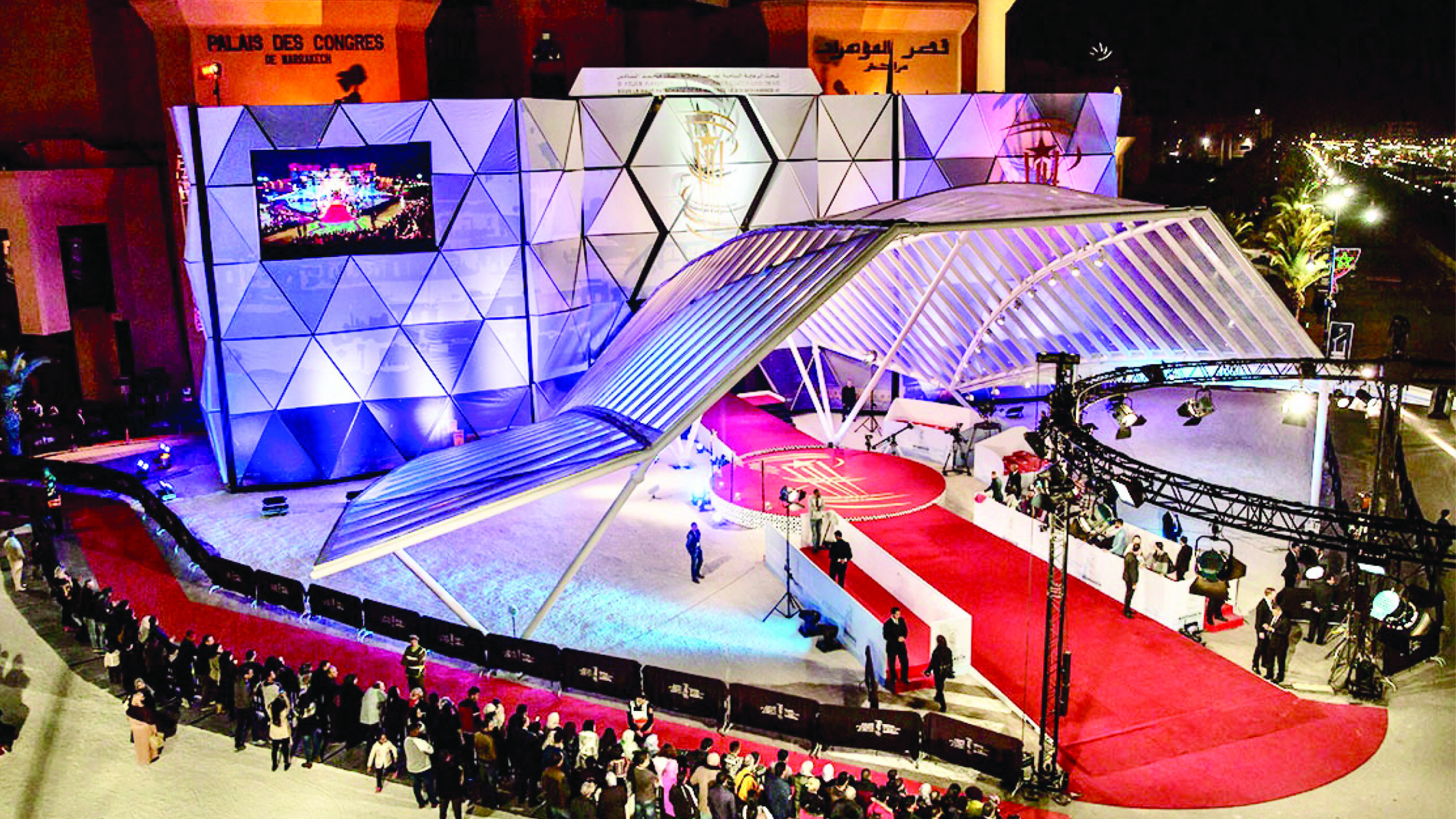
While the rest of the world drowns in recycled franchises and algorithms that decide what we should like, Marrakech, on the other hand, still breathes. For 10 days, the 22nd edition of the Marrakech International Film Festival (FIFM) will do what it does best: slam the door on conformity, throw open the windows to the world, and unleash 81 films from 30 countries.
No superheroes in tights, no numbered sequels: here, we’re talking about cinema that bites, that scratches, that cries, that laughs bitterly. And this year, it hits hard.
Bright Sparks
The Official Competition, this beating heart of 13 first or second films, tackles themes that bite (politics, fractured intimacy, inner exiles). Under the guidance of Bong Joon-ho, the Golden Star will crown gems like Aisha Can’t Fly Away by Morad Mostafa, a fable on impossible flight following a Sudanese woman who dreams of flying away from Cairo – literally; Behind the Palm Trees (world premiere) by Meryem Benm’Barek, with Sara Giraudeau and Carole Bouquet in a family drama, even a psychological thriller that smells of sweat and the shame that scratches at the wounds of the postcolonial era; or Promised Sky by Erige Sehiri, where Aïssa Maïga and Laetitia Ky dance on the tightrope of Tunisian feminism.
Not forgetting Laundry by Zamo Mkhwanazi which throws a punch on Apartheid as seen by a South African kid. And then, there are the docs that pin you to the wall: Memory by Vladlena Sandu on Chechnya, My Father and Qaddafi by Jihan K which settles scores with a Libyan childhood. Heavy stuff, the real deal, political cinema that doesn’t pretend.
The Galas, these non-competition jewels, emerge like invitations to travel: a fanfare opening with Dead Man’s Wire by Gus Van Sant which throws Al Pacino and Bill Skarsgård into a black comedy about the media eating their young; a closing on Palestine 36 by Annemarie Jacir, with Hiam Abbass and Jeremy Irons in a historical fresco that will make some grind their teeth – and so much the better.
Between the two, the gothic and romantic Frankenstein by Guillermo del Toro, an intimate monster with Oscar Isaac and Jacob Elordi as the creature (promising?!) ; Hamnet by Chloé Zhao, with Paul Mescal in Shakespearean mourning; or El Sett by Marwan Hamed with Mona Zaki as a woman of power; Sophia by Dhafer L’Abidine… And Rue Málaga by Maryam Touzani which brings Carmen Maura back to Tangier. Cinema that isn’t afraid to be mainstream without being stupid. Rare.
On the Horizons side, 19 contemporary films that probe the soul of the world: Jim Jarmusch with Father Mother Sister Brother, Tom Waits and Cate Blanchett in a family meditation; Claire Denis and The Fence, Isaach De Bankolé facing Matt Dillon on the walls that divide; Jafar Panahi who returns with It Was Just an Accident after having defied Iranian censorship for 20 years; or Kelly Reichardt with The Mastermind, Josh O’Connor in an interior western.
The 11th Continent section, 15 borderless pearls, scratches at marginal docs and fictions: All My Sisters by Massoud Bakhshi, on Afghan sisters; The Voice of Hind Rajab by Kaouther Ben Hania, a Tunisian cry for the little martyr of Gaza; or the restored versions of Mirage by Ahmed Bouanani and The Mummy by Shadi Abdel Salam.
A selection that does not hesitate to plunge into the abyss, from Iran to Congo, from Morocco to Colombia – a cinephile’s remedy to global homogenization. In short, everything the streaming platforms will never offer you.
Dream Team
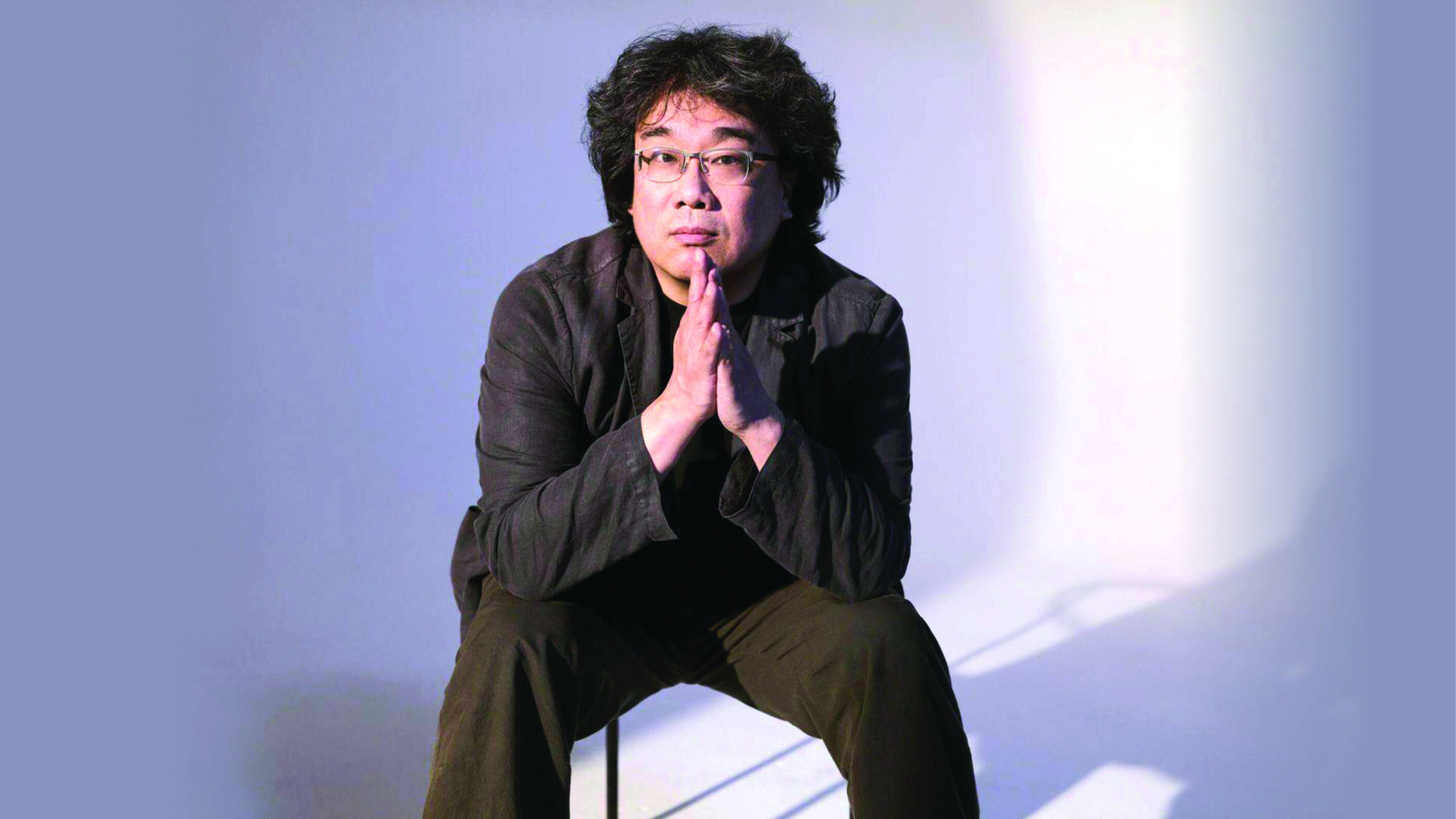
To judge these wild talents, a jury cut from urgency and diversity: eight members from four continents, generations colliding like in a Tarantino script. At the helm, Bong Joon-ho, the Korean who blasted Cannes and the Oscars with Parasite, a master of social suspense who mixes laughter and sledgehammer blows.
Around him, Karim Aïnouz, the invisible gaze of The Invisible Life of Euridice Gusmão; Hakim Belabbes, the intimacy forged in Maghrebi memory; Julia Ducournau, the cannibal Palme d’Or winner for Titane; Payman Maadi, the actor from A Separation who carried Farhadi’s Golden Bear; Jenna Ortega, the gothic star of Wednesday who bites the screen; Celine Song, the migrant emotion of Past Lives; and Anya Taylor-Joy, the queen of gambits in Furiosa.
A panel that promises fiery debates, where the Oscar meets the César and the souk. Eight jurors, four continents, zero diplomatic language. The debates will be fierce, and we can’t wait.
But, amid all this excitement, the 8th Atlas Workshops (November 30 – December 4) are sowing the future: 28 projects and films in development, shooting, or post-production, from Africa, Asia, and the Middle East, under the patronage of the Romanian Cristian Mungiu – the quiet force of 4 Months, 3 Weeks and 2 Days, a Palme d’Or winner who knows how to sculpt the flesh of dictatorships. Among the gems: in development, Hold Me (If You Want) by Mounia Akl, a second fiction about love under bombardment; Under Her Eye by Amjad Al Rasheed, a female gaze on oppression; or Siméon Idriss by Zineb Wakrim, a first feature on queer identity.
In shooting: Don’t Let the Sun Go Up on Me by Asmae El Moudir, a doc on wounded memory; La Más Dulce by Laïla Marrakchi, a third bittersweet fiction; or Wolves by Rami Kodeih, an animal howl about Beirut. The Moroccan Close-Ups, like Earth and Ashes by Leyna Tahiri or Remontada by Reda Lahmouid, and the Showcase with Until Dawn by Mohamed Zineddaine, complete the circle. Mungiu, an austere mentor, will breathe his spirit into them: these 28 sparks could well become the Palmes of tomorrow.
Speaking True
The “Conversations” program, these intimate face-to-face talks, brings together 16 titans to dissect the soul of cinema. Bong Joon-ho on his “sharp mind” in Parasite; Guillermo del Toro on his human monsters; Jodie Foster between Oscar-winning actress and discreet director; Laurence Fishburne, from the hood of Boyz n the Hood to virtual matrices; Karan Johar, the Bollywood magnate who radiates India in Technicolor; Nadine Labaki on the women of Capharnaüm; Jafar Panahi, resilient in the face of Iranian exile; Tahar Rahim, from the carceral prophet to the nomadic alpha; Yousra, the Egyptian icon who reinvented Arabic in the feminine.
Not forgetting Andrew Dominik and his moral assassins, Kleber Mendonça Filho and his Brazilian Bacurau, Bill Kramer of the Academy on the evolving Oscars. Crossover discussions add spice: Virginie Efira (César for Paris Memories) and Chiara Mastroianni (Cannes for On a Magical Night), on an actress’s freedom in the face of the world; Asmae El Moudir (Cannes for The Mother of All Lies) and Karima Saïdi (A Way Home), spinning Moroccan memory between the intimate and the collective. Exchanges that, like a burning mint tea, infuse urgency: how to film exile, horror, love when the world is cracking?
Converging Worlds
The FIFM crowns its idols by paying homage to four pillars of cinema, from transatlantic stars to rooted Arab legends. Jodie Foster, double Oscar winner (The Accused, The Silence of the Lambs), a bridge from prodigy childhood to sharp director, will present An Easy Girl by Rebecca Zlotowski – a Franco-American wink. Guillermo del Toro, with three Oscars in his pocket (The Shape of Water, Pinocchio), master of tender golems, will unveil his personal Frankenstein, where the beast reveals the human.
Raouya (Fatima Harandi), a tutelary figure of Morocco, embodied dignity in films by Nejjar or Marrakchi, will represent the rare tenderness of Maghrebi cinema. And Hussein Fahmi, the Egyptian of a thousand lives (actor, director, producer), noble for five decades, with his My Tears and My Smile shot in Marrakech – a bridge between the Nile and the Atlas. Four homages, four generations, four ways of saying: cinema is bigger than us.
To sum up, Marrakech is about to become again what it never stopped being: the place where cinema still breathes deeply. While other festivals navel-gaze, the FIFM looks the world in the face. And it’s not done giving us chills. Meet under the stars for nine days where the film is not seen, but lived. And if, in the end, that was the true Golden Star: to illuminate the shadow?