Kingdom
Market for Blankets: Winter, the True Driver of Demand
The market has faced a structural crisis for several years, leading to the closure of many production units. Consumption remains modest, impacted by low-cost foreign products.

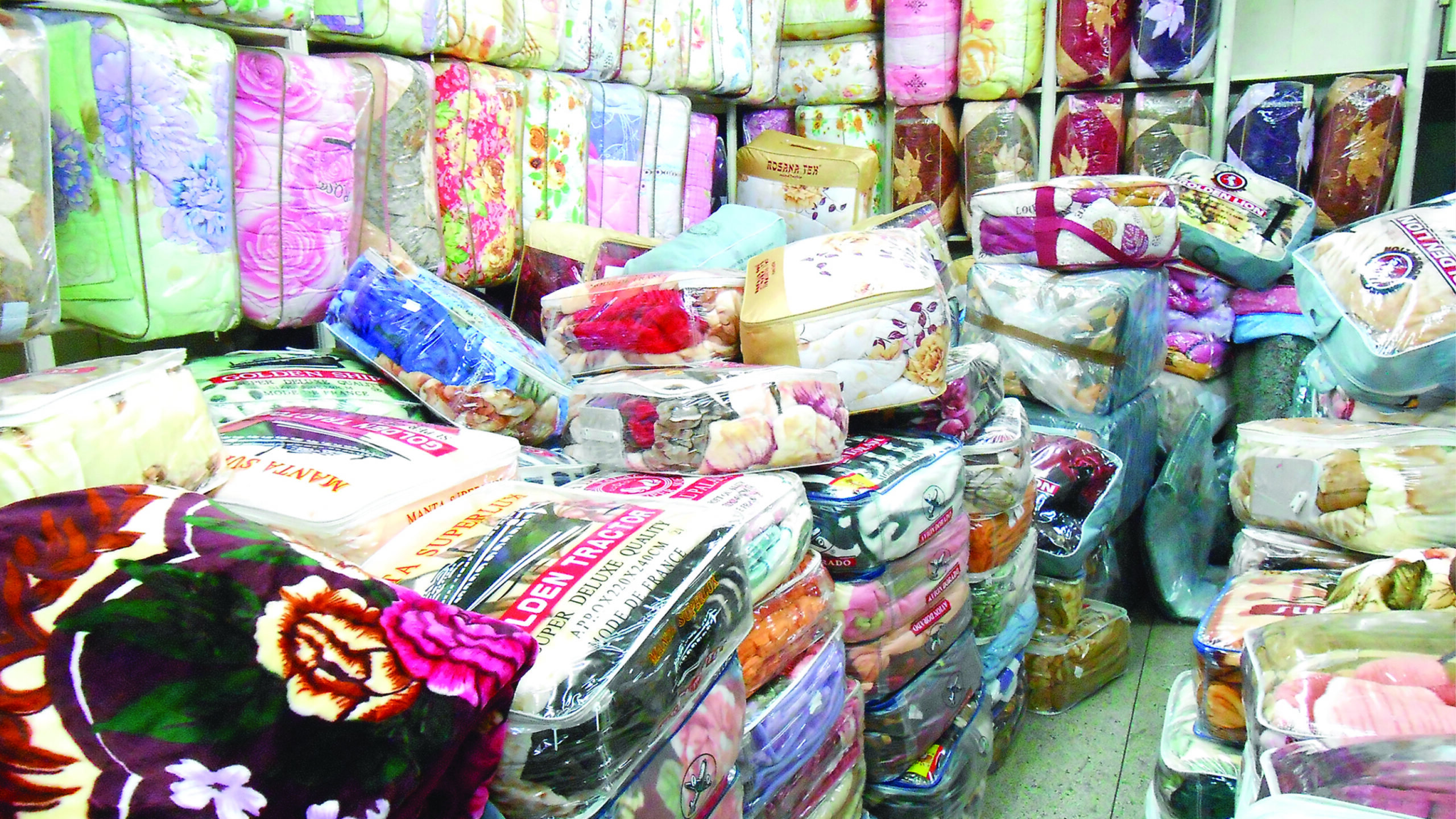
The blanket sector, a niche within the home textiles market, could, according to industry players, achieve annual growth of 4 to 5% over the next four years. This is explained on one hand by the expansion of the middle class and on the other by the organization of events like the World Cup.
“It is certain that the needs for furnishing and decoration, particularly with the construction of new hotels and the supply of rental housing, will boost the demand for blankets,” suggests an industrialist.
Apart from this favorable conjuncture for rising blanket sales, with every drop in temperature, this market emerges from its relative discretion to become a product of prime necessity.
Winter acts as a catalyst for demand, both in cities and in rural households, making blankets a strategic segment of the home textiles sector.
No exact market estimate is available, but according to operators, its value would be between 300 and 500 million dirhams. Local manufacturing covers, according to professional estimates, nearly 90% of needs. The remainder is exported to Africa and Europe. This market absorbs 3.1% of national blanket exports.
Blanket consumption is highly seasonal. Sales intensify from autumn onwards to reach their peak, estimated between 20 to 30%, from November to February. And this is especially true in cold areas.
For many households, a blanket is a recurring purchase. On average, households buy 1 to 3 units per year. Sales, it is said in the sector, focus essentially on mid-range products, sold for around 350 dirhams.
Counterfeiting and second-hand clothing flood the local market
The price of blankets varies by category with a marked distinction between low-end (cheap synthetic) and high-end (premium wool or cotton).
For a low-end blanket, one must budget between 130 and 400 DH. This category dominates popular markets and e-commerce. These blankets generally come from Asia. For the high-end, items are made of wool or silk-cotton. And the price varies between 1,500 and 5,000 dirhams.
Distributed by luxury furniture and home linen brands, these blankets are intended for A+ socioeconomic categories as well as for the hotel industry.
The mid-range offering, for its part, covers cotton-polyester items sold in supermarkets (GMS) at a price ranging from 500 to 1,200 dirhams.
Modern distribution today represents nearly 25% of blanket sales, note professionals. “Demand is shifting much more towards lightweight and durable blankets. A segment that would be expanding,” they explain.
Over the past five years, blanket consumption has been influenced by the growth of urbanization and modern distribution as well as by the rise of e-commerce.
However, the market, despite good prospects towards 2030, is being undermined by illegal imports.
Overall, imports represent 60% of the legally imported blanket market. This represents an estimated volume of between 50,000 and 70,000 units per year.
Primarily low-end items from China and Turkey. Illegal flows, also low-end, imported by land from Mauritania, Ceuta, and Melilla, represent 40% of the market, with an annual volume of 20,000 tonnes.
The price gap, varying between 40 and 60%, heavily penalizes local producers, a large number of whom have gone out of business. Historically, this sector had nearly 30 factories, about twenty of which are now idle due to intense unfair competition.
These factory closures have strongly impacted the sector, which could, even without an official estimate, reach a billion dirhams.
To protect this industry, fiscal measures have been introduced, notably increases in customs duties on competing products as well as reductions of 30% on essential inputs like cotton or synthetic wool.