Kingdom
Launch of the book “The Oxford Handbook of the Moroccan Economy”
Launched this Thursday by the Policy Center for the New South, the book offers, through 34 chapters, a historical and long-term analysis of the evolution of the Moroccan economy from 1960 to 2025. It is presented as a true reference work, intended for economists, policymakers, academics, as well as all stakeholders interested in development issues in Morocco.

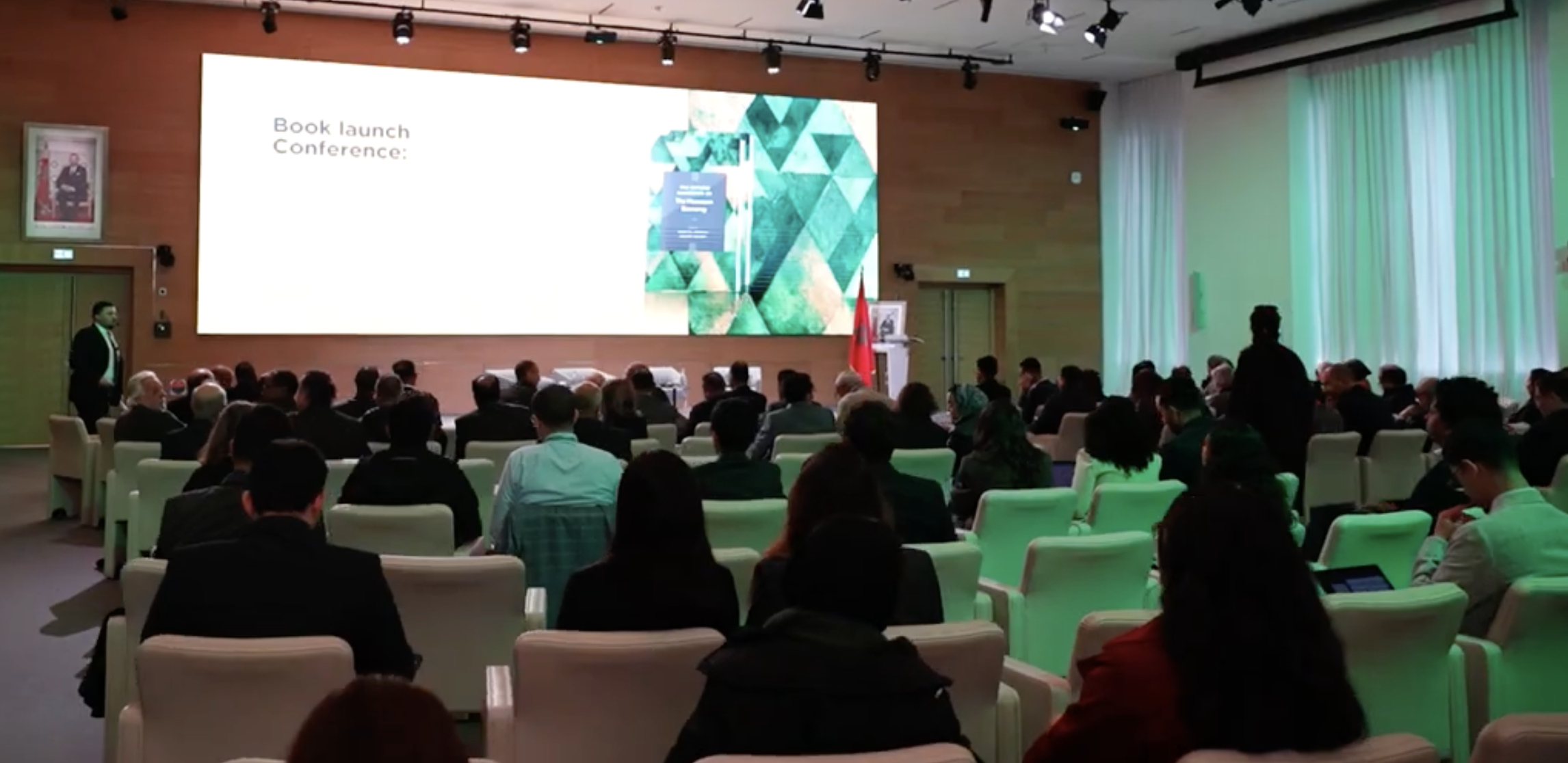
The Policy Center for the New South (PCNS) launched, on Thursday in Salé, “The Oxford Handbook of the Moroccan Economy,” a reference work aimed at understanding Morocco’s economic transformation.
Edited by Karim El Aynaoui, Executive President of the PCNS, and Arkebe Oqubay, British Academy Professor at SOAS University of London, the book is published by Oxford University Press. Bringing together 53 contributors, it offers, across 34 chapters, a historical and long-term analysis of the evolution of the Moroccan economy from 1960 to 2025.
The chapters address the major issues currently shaping the economic debate on Morocco, including structural transformation, productivity, industrialization, industrial policies, research and innovation, private sector development, integration into global value chains, the labor market, informality, poverty, inequality, education, health, energy transition, and regional development.
Designed as a reference manual, “The Oxford Handbook of the Moroccan Economy” provides a structured analytical foundation based on stylized facts, long-term trends, sectoral transformations, and the key public policy issues shaping Morocco’s economic trajectory.
It aims to renew the body of knowledge available on the Moroccan economy and to offer a structured, rigorous, and accessible synthesis for researchers, students, public decision-makers, and practitioners.
Speaking at a conference dedicated to the book’s launch, El Aynaoui noted that the work is the result of two and a half years of effort. “We sought to provide both an analytical and historical perspective, covering the period from the 1960s to today, in order to place more than half a century of economic evolution into context,” he said.
He continued: “This book is not intended to be an isolated academic publication, but a true reference document for economists, policymakers, teachers, and all stakeholders interested in development issues in Morocco. We also ensured that it is available in open access, in order to encourage wider dissemination and enrich public debate.”
According to El Aynaoui, one of the major contributions of “The Oxford Handbook of the Moroccan Economy” lies in highlighting certain economic regularities, notably the propensity to import, household saving behavior, the fiscal multiplier effect, as well as elasticity parameters that condition the transmission of economic policies. These elements, he noted, are essential for understanding how households and businesses respond to tax measures or public investment.
Regarding the selection of authors, it was based exclusively on the recognition of their expertise, the Executive President of the PCNS said, adding that each contribution draws on in-depth experience and long-accumulated knowledge.
For his part, Oqubay stated that the book stands as a major reference at the African level, emphasizing that a meaningful analysis of the Moroccan economy requires a distinctly multidisciplinary approach, drawing on history, sociology, and engineering.
The publication of this work is part of the PCNS’s mission as a public good institution, aiming to contribute to strategic debate and the shaping of public policy in Morocco and across the African continent.
By offering a rigorous, accessible, and empirically grounded synthesis, it complements the Policy Center’s publications on development trajectories, economic reforms, and structural transformations.