Business
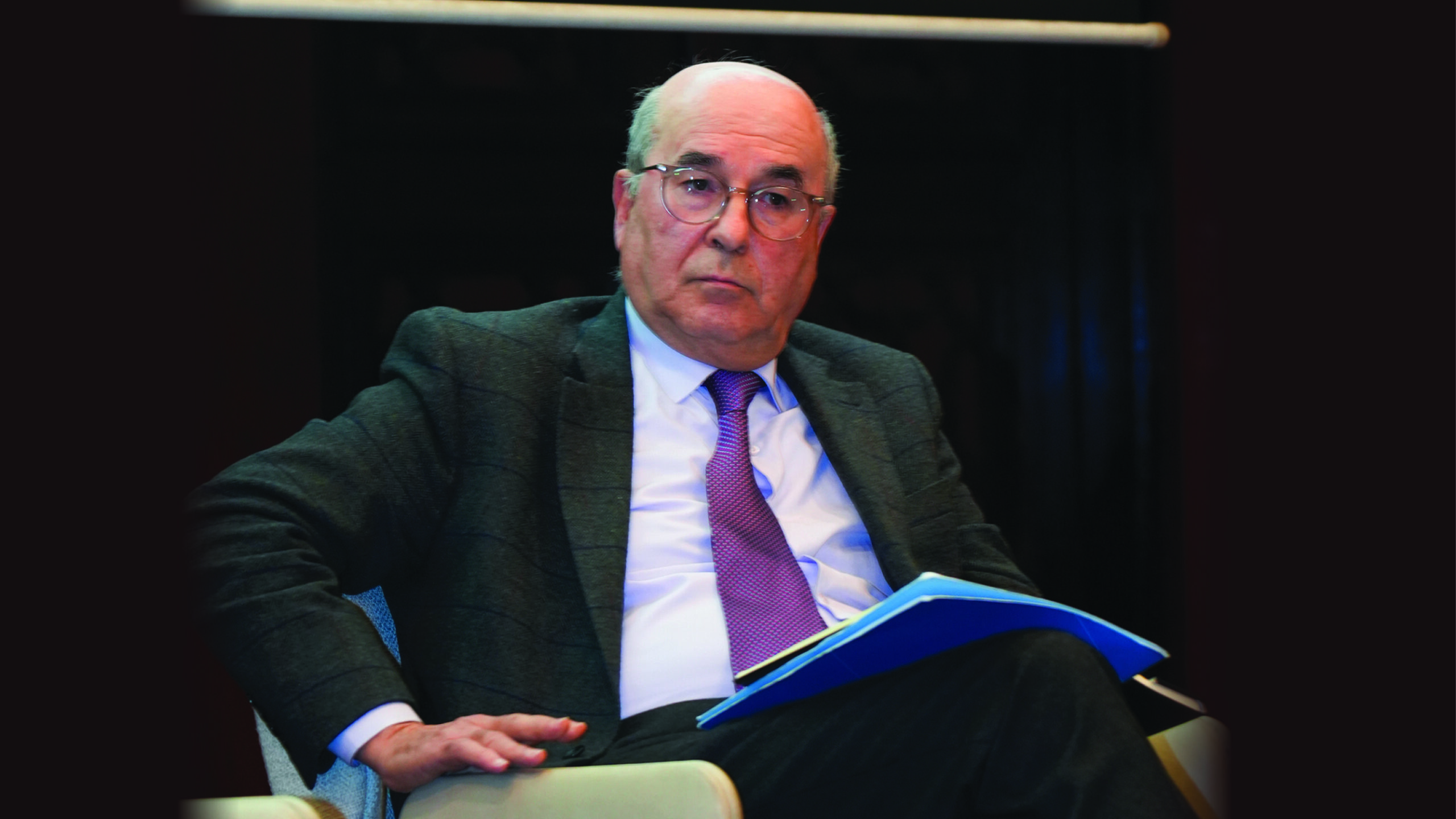
Larbi Jaïdi: “The FM6I Represents a Real Qualitative Leap”
For the university professor and Senior Fellow at the Policy Center for the New South, the State’s role in investment has evolved. Previously a mass investor, the Moroccan State now embodies a catalyst State and a new kind of shareholder.

Sustained investment effort
“There was a time when the question was whether the State could sustain a significant investment effort—especially since the economy was in a phase marked by sluggish growth, due in particular to the domestic situation and external factors.
Another question concerned the return on investment capable of opening up new opportunities. Years later, we see that the State’s investment effort remains sustained, albeit perhaps with a slight lag.
In short, the whole challenge was to maintain the same upward trend in public investment, because society’s expectations were higher in terms of social spending (jobs, health coverage).
The corollary of this concern was maintaining vigilance over public debt in order to guarantee a high level of public investment without, however, affecting macroeconomic balances, which are essential to growth.”
A welcome reform
“Public investment falls under both the State’s general budget (BGE) and public institutions and enterprises (EEP). From this standpoint, reform of the public sector was extremely decisive in cleaning up the EEPs and redefining the State as a shareholder—its scope and its strategy.
This work at times made it possible for the EEPs to contribute more than the BGE to the public investment effort. This reform also led to the search for new financing solutions, such as innovative financing, which is very interesting in terms of its effects.
However, these new financing methods raise questions about their arrangements and their future costs. Because it is not enough simply to rely on asset sales—assets that can be monetized—but to think about, and above all to anticipate, their future costs.”
The State as a catalyst
“The State has also faced the need to rationalize public spending and investment spending. Efforts were made on these aspects thanks to recommendations from various bodies (IMF, OECD, etc.), which were taken up by the Ministry of Economy and Finance.
Today, there is a new reality, as we are witnessing a true transformation of the State, moving from the role of a mass investor to that of a catalyst State and a new kind of shareholder.
This transformation allows optimism for the future, while also raising questions related to the State’s capacity to deepen major reforms—relating, among other things, to governance—so that public investment has a spillover effect on macroeconomic aspects, but also on social equity and territorial development.
Hence the new role that goes beyond the strategist State—namely the catalyst State—capable of driving stronger momentum in the private sector, for example through infrastructure spending, co-investments (PPPs), human capital, or collective services (research and development).
If, a few years ago, the issue for the State was the trade-off between spending in social sectors and spending on infrastructure, today a new phase is emerging in which social spending must be at least as ‘productive’ as that captured by infrastructure.
And this, thanks to greater involvement of the private sector (in terms of growth), and to the expansion of tax levies to a tolerable threshold. This would, in a way, allow the private sector to be an indirect financer of the social sector. Nowadays, this reversal of roles is very important and constitutes an alternative to classic paradigms.”
A genuine qualitative leap
“The Mohammed VI Investment Fund (FM6I) represents a real qualitative leap in investment vehicles compared with traditional financing methods.
Because Morocco lacked a vehicle covering several instruments while also addressing different sectors, capable of filling the financing-gap segments, fintech being one example.
The qualitative leap brought about by the FM6I will generate many positive outcomes in terms of mobilizing and diversifying financial resources, while meeting the specific expectations of certain segments of the private sector.”