Kingdom
K-1: A High-Caliber Crime Thriller
K-1 bursts onto 2M with ambitions rarely seen in Moroccan fiction: a solid budget, unapologetic realism, a fresh take on the police… In short, clichés are out, making way for a tense, dark crime series that aims to compete on equal footing with international standards.

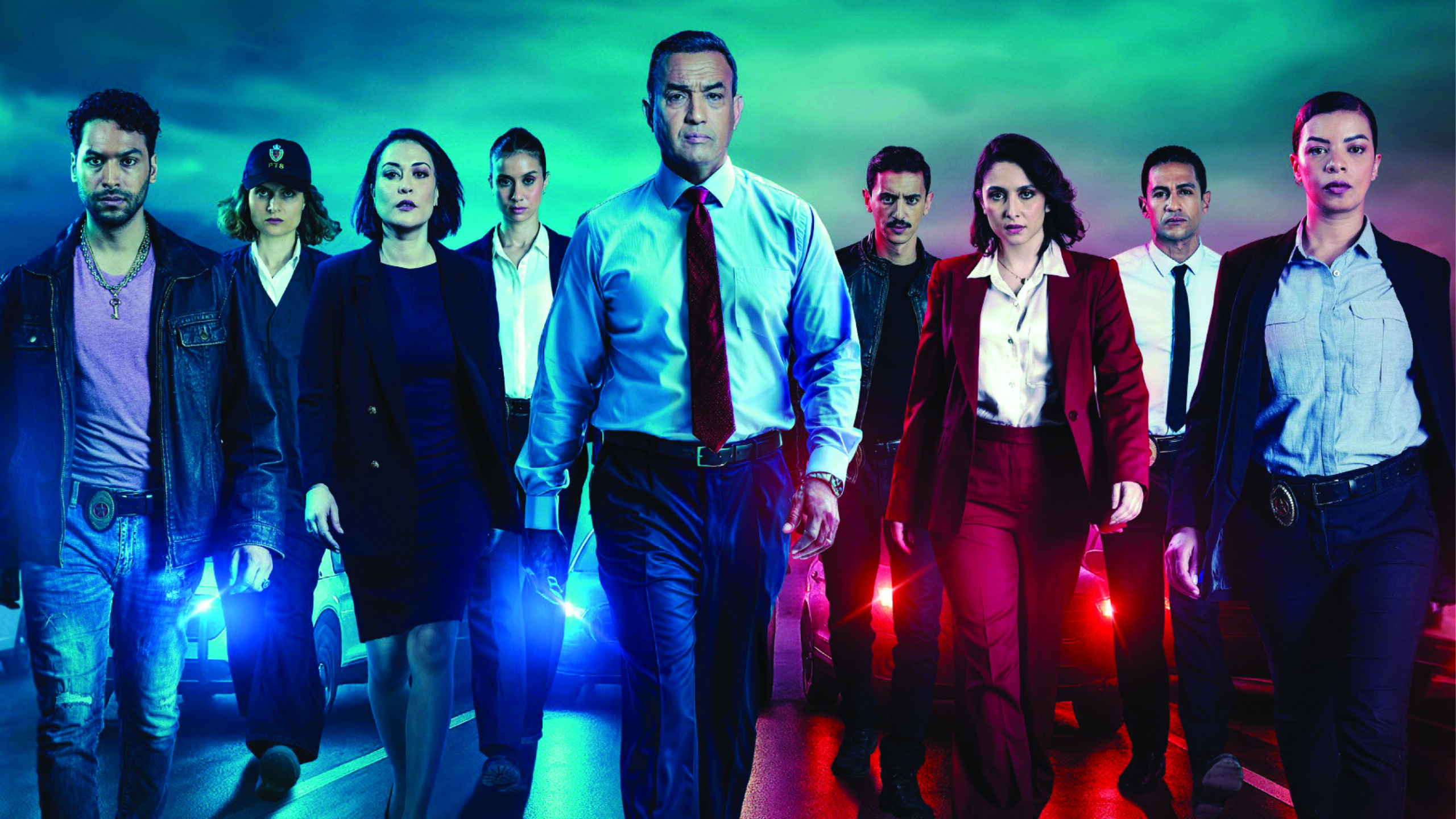
The K-1 series has arrived. And it wasn’t designed to fill airtime. Not in the prettified mirror of Ramadan dramas, but in the cold, bluish reflection of a crime series that fully embraces being a crime series.
This one isn’t here to play a background role. It plants its boots on the table, gun in hand, with a per-episode budget that puts typical local productions to shame and a selection at the Berlinale Series Selects last February. The first Moroccan fiction to earn that distinction. We hadn’t seen that before… ever.
At the helm is a woman who has already proven herself in Hollywood: Khadija Alami. Producer of *Captain Phillips* and *Aquaman*, she decided to return home to show that Morocco, too, could produce American-style series without imitating anyone.
An assertive showrunner, she’s steering a war machine: 1.5 million dirhams per episode, real stunts, weaponry, special effects, actors immersed in police academy training. All of it backed logistically by the DGSN itself. Far from makeshift craftsmanship—this is big-league territory, but with a Casablanca accent.
The story? An elite unit of the National Judicial Police, called K-1, brings together the best cops in the Kingdom after the spectacular assassination of a high-ranking official in Casablanca.
They crisscross the country from south to north, hunting organized crime bosses, sometimes crossing paths with Interpol or counterterrorism units. But K-1 doesn’t settle for car chases and smoking guns.
The series digs deeper. It shows cops returning home with images burned into their retinas—loneliness, anger, loss. Characters who doubt, break down, lash out at each other. Think *The Wire* sprinkled with Moroccan sunlight, in a Hollywood noir series style.
The aesthetic is icy, with bluish tones and an omnipresent night. “We wanted to plunge into that invisible world where police work while everyone else sleeps,” explains Nour-Eddine Lakhmari.
To sustain that tension over time, the series adopts a fragmented structure: three directors, three territories, one single narrative. Casablanca for Lakhmari, the North for Yasmine Benkirane (Azrou, Tetouan), the South for Hicham Ayouch (Ouarzazate, Erfoud).
“This inevitably meant variations in light, atmosphere, and storytelling. But we maintained coherence thanks to the same crew and the same characters. In the end, it’s a very enriching experience.”
Noir series
Lakhmari, notably—the Norwegian by adoption, a former pharmacy student turned filmmaker—returned to Morocco with a perspective that is both external and intimate.
No compromises, he insists, despite international ambitions. But he remains clear-eyed: “The real gap with the international scene is mainly a matter of resources. We have the actors, the technicians, and the know-how. What we still lack are larger budgets and time (…).
This project, supported notably by 2M, marks a significant step forward. It proves that Moroccan television can invest in quality productions. It’s a door opening.”
The script, co-written by Alami, Lakhmari, Jah4show, and Aicha Jabour, was even sharpened by an American script doctor specializing in true crime. They don’t joke about credibility. And that’s where K-1 hits hardest: its obsession with realism.
Judicial procedures followed to the letter, the central role of the prosecutor’s office, full immersion for the actors. The cast was trained by real police commissioners. You see cops who can’t kick down a door without a legal framework. No more American-style fantasies.
Here, they show the real work: patience, investigation, paperwork, forensic science.
And above all, a new generation of police officers that Lakhmari describes bluntly: “We discovered a new generation of police officers—young, brilliant, often trilingual, open to the world, and highly professional. Far from the clichés. Their work is complex, rigorous, built on patience and investigation, far beyond the simplistic image of the armed cop.”
What grips you in his account emerges almost quietly. A remark slipped in like an aside, yet revealing: the place of women in the police force. They are everywhere—scientific units, financial divisions, specialized squads—and their level, he says, “pleasantly surprised” him.
Behind this observation is an image that clashes with stereotypes: that of a Morocco in motion, shaped by new dynamics. “It’s a Morocco in transition,” he says. A country transforming at its own pace, sometimes in fits and starts, but moving forward nonetheless.
To sum it up: we have here a series that lays down the law, a Moroccan fiction that speaks frankly, a “big-budget” operation… K-1 is also a bet—the idea that Moroccan fiction can export its own stories, confidently, without folklore.
“This project proves that national television can invest in quality,” says Khadija Alami. The rest is up to society—to follow, to debate, to challenge, to argue in front of their TVs, just as they already do in cafés.