Business
Joussour 2030: Tawilcom’s new strategic plan at 300 billion dirhams
Tamwilcom has laid the first milestones of its 2026-2030 strategic plan, aiming to finance 435,000 TPME (very small and micro enterprises) and create 45,000 gross jobs per year.

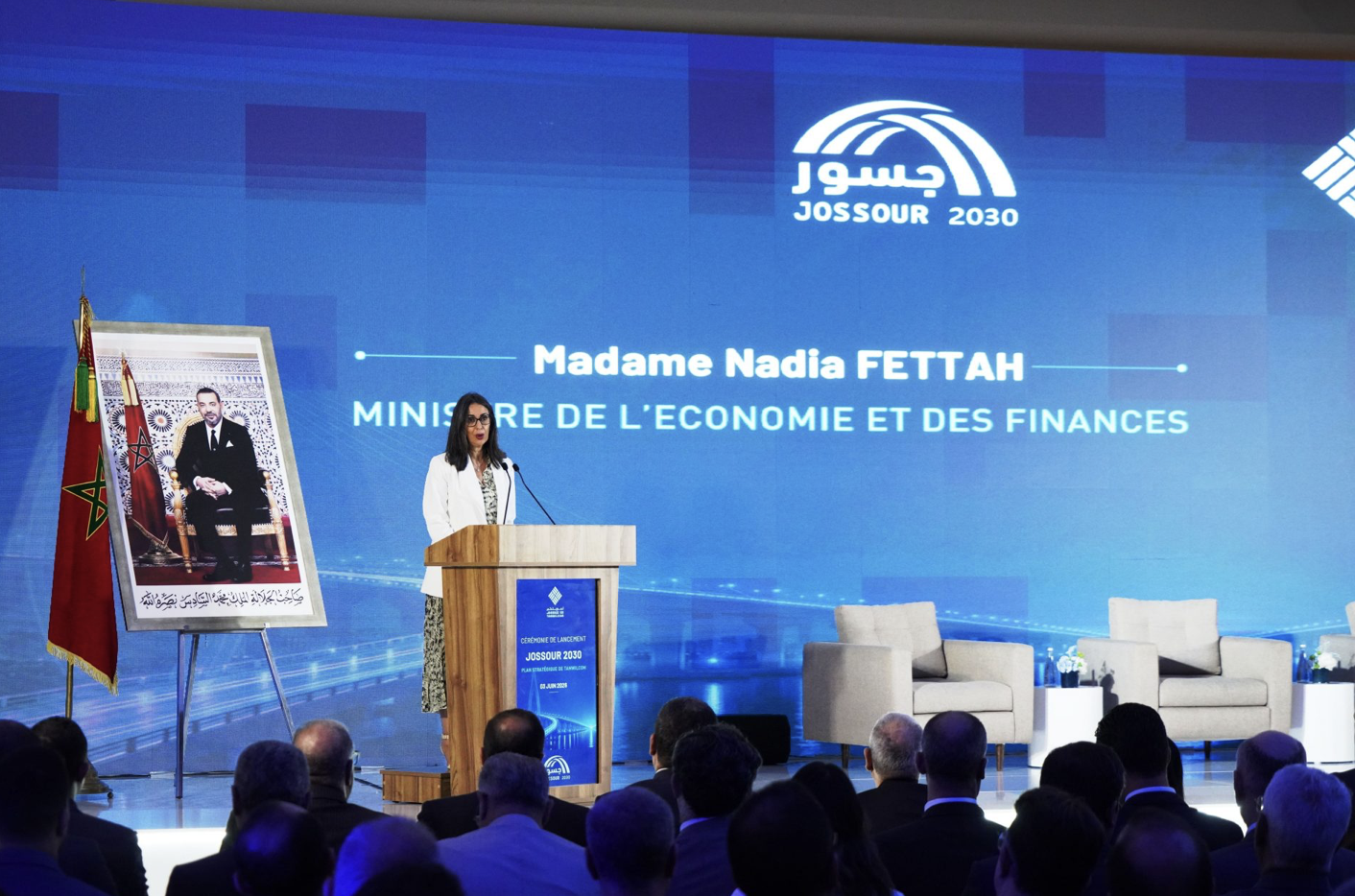
Tamwilcom officially launched on Wednesday its 2026-2030 strategic plan, titled “Jossour 2030.” The program foresees the mobilization of 300 billion dirhams of financing, for a volume of commitments of 170 billion DH, plus 60 billion DH of cumulative private investments and the creation of 45,000 gross jobs per year. By 2030, the institution aims to support nearly 435,000 beneficiaries.
The launch ceremony, presided over by the Minister of Economy and Finance, Nadia Fettah, also president of Tamwilcom’s board of administration, took place in a context of economic and social transformation of the Kingdom. The minister praised Morocco’s resilience to successive crises and global geopolitical tensions, qualifying it as the fruit of a long-term vision, continuous reforms, and preservation of macroeconomic balances.
Nadia Fettah recalled the central role of the private sector in the Kingdom’s emergence trajectory, emphasizing the need for fluid, inclusive, and effective access to financing. She traced the reform of the national guarantee system initiated in 2020, which led to the transformation of the Central Guarantee Fund into Tamwilcom, with the ambition to make guarantee a lever serving investment, entrepreneurship, and TPME.
“Jossour 2030” seeks to mobilize the entire financial ecosystem to accelerate private investment. The plan is designed to be consistent with the national financial inclusion strategy, with the willingness not to leave behind any territory, any company, any entrepreneur, or any young talent.
Tamwilcom’s General Director, Said Jabrani, indicated that this plan marks a new stage in the journey of an institution that, over the years, has affirmed itself as a central player in access to financing and an important lever of public policies supporting business, investment, and economic inclusion.
It is an ambition focused on financing the new generation of productive projects, oriented toward more territorial impact, financial inclusion, innovation, and support of private investment, and which also aims to further strengthen the institution’s bridge role between public policies, the financial sector, and the real needs of the economy.
The ceremony was marked by the signing of two partnership agreements. The first, concluded with the Association of Regions of Morocco, aims to develop financing solutions adapted to the needs of the Kingdom’s twelve regions. The second, signed with the Ministry of Economy and Finance and the Professional Grouping of Banks of Morocco, aims to strengthen financing for intermediate-sized companies and support TPME access to financing.