Influences
Interview. Rachid Benzine: “Reading means standing tall in the face of the world’s collapse”
To read in order to stand tall. To write so as not to yield to hatred. To still believe in the goodness of mankind when the world is collapsing. In “The Man Who Read Books,” Rachid Benzine makes literature a shelter, an open wound, and an act of sovereignty.

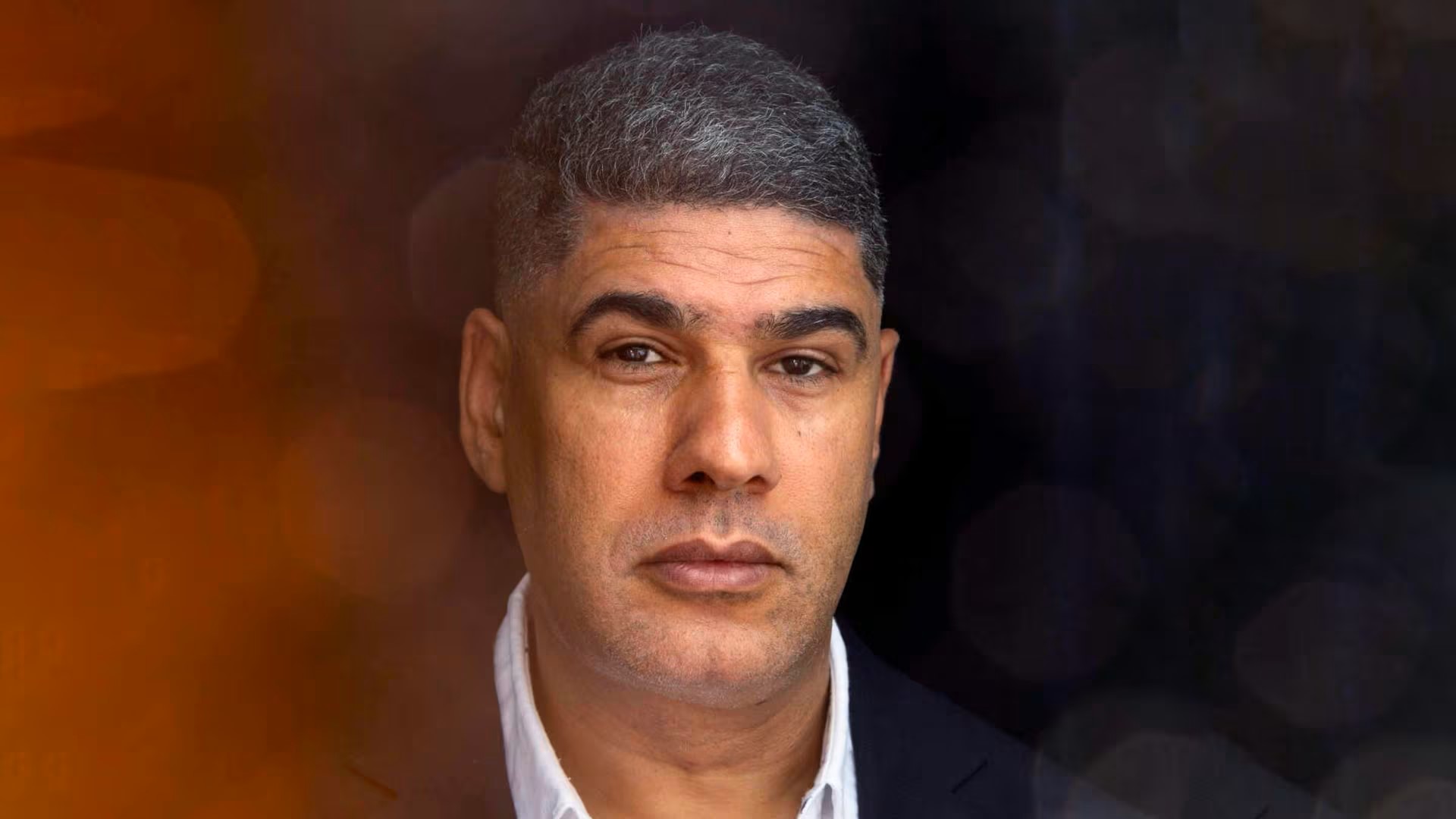
With The Man Who Read Books, Rachid Benzine delivers a profoundly moving meditation on dignity and resistance through words. In a world saturated with images where Palestinian pain is consumed on screen, the Franco-Moroccan writer, political scientist, Islamologist, and researcher chooses to narrate war through the humble acts of reading, transmitting, and standing tall through literature. An interview with a thinker who still believes in the power of books in the face of the world’s collapse.
In a context where images of Gaza saturate our screens without always eliciting empathy, why did you choose to make the act of reading – so discreet, so internal – the central thread of your narrative?
Rachid Benzine: You are right: our screens are saturated with images that, through sheer repetition, end up anesthetizing our minds. We are sometimes caught between shock and powerlessness, to the point that some can no longer bear to watch them. Yet, in the face of this violent reality, we need other languages to describe the world.
Literature, unlike the flow of images or journalistic urgency, offers a long time, that of narration and memory. For me, it is a rhetoric of the senses in the service of meaning, which allows for the recreation of empathy, for reweaving a common thread. Where politics divides, literature connects.
With Ainsi parlait ma mère (Thus Spoke My Mother), I had already explored this power of speech. Here, I wanted to tell the story of Nabil El Jaber, a Palestinian bookseller whose name, derived from the Arabic root Jabara – “to repair” – symbolizes one who attempts to stitch back together something of the collapsing world. Through him, I wanted to show how the book becomes an act of resistance in the face of dehumanization and despair.
This Nabil Al Jaber, born to a Muslim mother and a Christian father, carries within him the Palestinian odyssey, filtered through works like Hamlet or Mahmoud Darwish’s La Terre nous est étroite (The Earth is Closing in on Us). What did these texts reveal to you about how literature heals the scars of hatred?
Rachid Benzine: We are always saved by the words of others. From birth, it is the words that precede us that constitute us. In Arabic, the word kalam means both “speech” and “wound”: to speak is to open a wound, and every opening is already a promise of life.
Literature, by projecting a world, allows us to inhabit the world of the text. In the novel, each chapter corresponds to a place in Palestine traversed by Nabil since the Nakba, but also to a major work. The first books he gives to a photojournalist are Malraux’s La Condition humaine (Man’s Fate) and Darwish’s La Terre nous est étroite: one speaks of revolt and hope, the other of memory and poetry.
For we have often heard of Palestine through the poetry of Darwish. One must be able to look at reality in its naked violence while maintaining a poetic gaze. I believe one must always have a book of poetry in one’s pocket to see the world differently.
When Nabil performs Hamlet in Gaza, saying “To be or not to be” obviously no longer carries the same weight as in Paris or Casablanca. There, these words become the question of the very existence of a people: do they have the right to be or not to be?
Literature offers Nabil both a refuge and a mirror. Through constant reading, he becomes a “book-man.” When everything is destroyed – the home, the family, the territory – all he has left are books as a portable homeland. He inhabits the texts, and the texts inhabit him. And that is surely one of the most beautiful ways to remain human.
Your humanist fable questions what a “good man” is at the heart of war, when empathy frays in sterile debates. How do you see culture as a bulwark against the dehumanization imposed on Gaza?
Rachid Benzine: A good man is one who stands tall through his humanity, in the face of dehumanization.
Nabil has only words as his weapons. He refuses to reproduce the violence he suffers, because he knows that responding to barbarism with barbarism would mean losing his humanity.
To be a good man is to refuse to dehumanize the one who dehumanizes you. It is to continue to see beauty despite the horror. And it is perhaps there, in this obstinacy to remain human, that true resistance lies.
“The last word does not belong to the bombs, but to the books.”
Amid the rubble of Gaza and the worn-out books of a bookstore that still stands, an old man waits. What is he waiting for? Perhaps simply to be listened to. For the volumes he holds close are not relics: they are pieces of life, memory, shared pain.
A young French photographer, come to capture an image, thinks he is only seizing a face. But as soon as he meets the bookseller’s gaze, he understands he is about to cross to the other side of the mirror. “Behind every gaze, there is a story. Sometimes that of an entire people,” whispers the man among the books. Thus begins the journey of a witness to exile, a poet of resistance, a Palestinian who has made words his home.
From prisons to betrayed promises, from theater to lost loves, from children growing up between two worlds to deaths that never fade, his voice unravels a fragile thread: that of humanity. And in the clamor of the present, where bombs would always have the last word, he reminds us of this simple truth: to read is to stand tall. Not to escape, but to inhabit the world, in spite of everything. Because at the heart of chaos, a man who reads remains, always and forever, an act of resistance.
*Rachid Benzine, «L’homme qui lisait des livres» (The Man Who Read Books), Novel, Julliard, 2025.