Influences
Intangible Cultural Heritage: Morocco’s Caftan Candidacy to be Reviewed by UNESCO in December
In its extensively documented application file, the Caftan is presented as “a traditional Moroccan garment, rooted in a long history of clothing traditions that have continually evolved from the medieval era to the present day.”

The candidacy submitted by the Kingdom to inscribe the Moroccan Caftan on the 2025 Representative List of the Intangible Cultural Heritage of Humanity will be reviewed this December, announced the United Nations Educational, Scientific and Cultural Organization (UNESCO).
According to a statement from the UN organization, the UNESCO Intergovernmental Committee for the Safeguarding of the Intangible Cultural Heritage will examine this candidacy during its twentieth ordinary session, to be held from December 8 to 13 in New Delhi (India).
The Moroccan candidacy, submitted under the title “Moroccan Caftan: art, traditions, and know-how,” pertains to the Representative List of the Intangible Cultural Heritage of Humanity, which “recognizes and promotes the diversity of cultural practices and know-how carried by communities.”
In its extensively documented application file, the Caftan is presented as “a traditional Moroccan garment, rooted in a long history of clothing traditions that have continually evolved from the medieval era to the present day.”
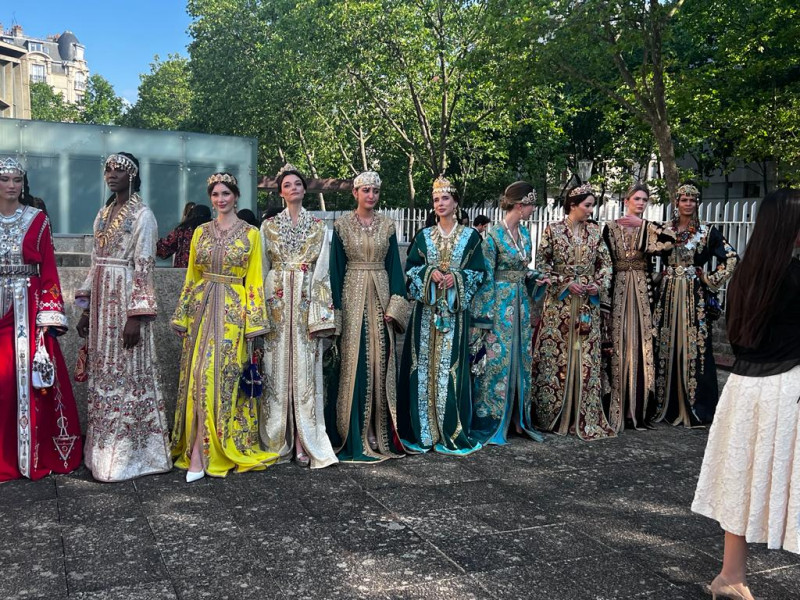
Resulting from the “know-how of artisans and tailors (m’almīne) stemming from Arab, Amazigh, and Jewish cultures,” it is described as the product of “an ornamental synthesis composed, among other things, of trimmings made from silk threads, embroidery in silk or gold threads, and handcrafted bead and sequin decorations.”
“The bearers of this know-how, namely brocade weavers, artisan-tailors, trimmings and button makers, embroiderers, and apprentices, compete to create a richly decorated caftan that varies from one region to another,” it notes.
“The Moroccan caftan has gained popularity worldwide”
It adds that “today, the Moroccan caftan has gained popularity worldwide and ensured its survival thanks to the rise of a new generation of Moroccan designers who, without denying the heritage of the past and while paying homage to traditional artisans, deploy their creativity to shape an elegant, modern, and easy-to-wear garment.”
In total, the UNESCO Intergovernmental Committee will review, during the upcoming session, 54 candidacies for inscription on the Representative List of the Intangible Cultural Heritage of Humanity, including 6 extension requests for elements previously inscribed to include additional countries or other communities within the same country.
The other candidacies concern the List of Intangible Cultural Heritage in Need of Urgent Safeguarding and the Register of Good Safeguarding Practices.
Under the framework of the 2003 Convention for the Safeguarding of the Intangible Cultural Heritage, UNESCO emphasizes its determination to continue feeding the three “International Lists,” which make it possible to highlight and promote “the diversity of living heritage worldwide, and above all to reflect the efforts deployed to safeguard it.” To date, they include 788 elements practiced in 150 countries.
Intangible cultural heritage includes, it specifies, oral traditions, performing arts, social practices, rituals, festive events, knowledge, and skills that communities, groups, and individuals recognize as part of their cultural identity.
Unlike objects and monuments, it is a form of “living” heritage, transmitted from generation to generation and whose evolution aligns with that of communities. “It strengthens the sense of belonging, stimulates creativity, and fosters dialogue between cultures,” assures UNESCO.