Business
Industry: How Training Keeps Pace with Transformations
The Director General of OFPPT provided an enlightening testimony on how the training offer constantly adapts to the emerging requirements and needs of industries in continuous evolution.

The new industries in which the country has engaged require new trades, skills, and technical expertise, also called the jobs of tomorrow. These build on basic trades and knowledge that Morocco has accumulated over more than 15 years.
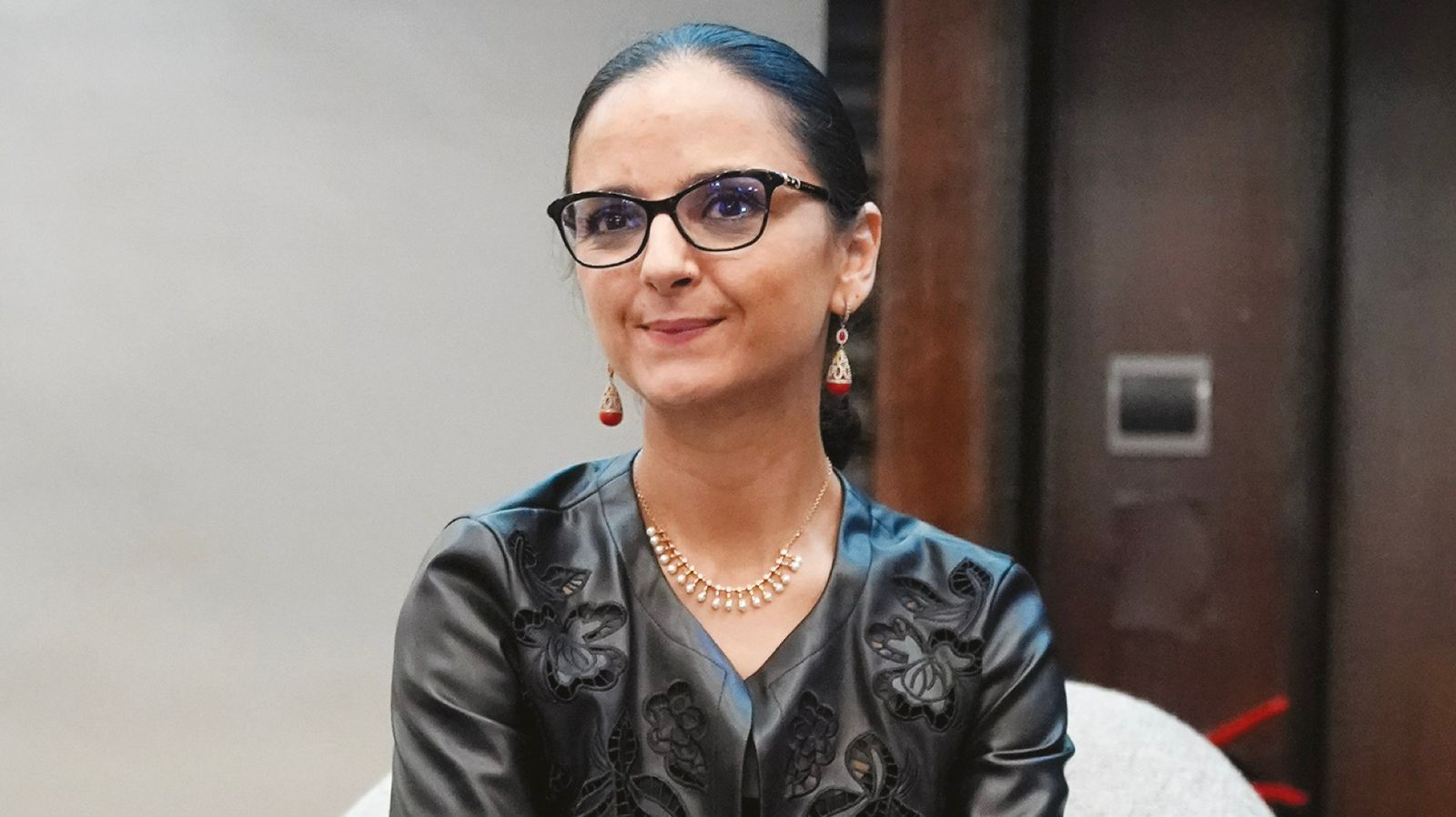
“The Kingdom had a certain maturity in basic trades, such as mechanics, mechanical engineering, thermal engineering, pneumatics…” explains Loubna Tricha, Director General of the Office of Vocational Training and Labor Promotion (OFPPT).
According to her, “the threshold of heavy industries, with high added value and high precision, would not have been crossed if the country had not spent about thirty years training basic trades.”
Moreover, she recalls, this is the first time in Morocco’s history that a sectoral training needs program was predefined, both in terms of profiles and required volumes. It is precisely through this framework that OFPPT, alongside engineering schools and higher education, has committed to providing the requested profiles as this industrial transformation unfolds.
As Morocco has embarked on this large-scale industrial shift, integrating both electric batteries and green hydrogen, a transformation of trades is also necessary. Preliminary work is done with professional federations, CGEM, ministries, and concerned parties to determine the skills needed to support Morocco’s industrial transformation.
“We start by gradually capturing emerging needs. Once identified, a training engineering process is carried out to meet the expressed needs,” details Tricha.
Constant Adaptation
Currently, OFPPT’s national training offer covers 18 sectors and 28 subsectors, with industry encompassing about ten subsectors ranging from mechanical engineering to naval, including automotive and aeronautics.
OFPPT responds brilliantly to this challenge. But it is not the only one. The Director General emphasizes that the emergence of new trades is not the only challenge; renewing conventional trades is also necessary due to changes in business models, value chains, supply, and production.
All this fundamental change aims to meet three essential challenges: technological evolution and the need to adapt to global advances, digital transformation with AI use, and sustainable development imperatives through migration to eco-friendly industries.
Adding to this are CSR elements, optimizing resource consumption including water, energy, and raw materials. “These imperatives have served as guidelines when developing the technical specifications of our training program terms of reference,” she highlights.
Next-Generation Training
Training at OFPPT rests on three pillars: versatility and adaptability in preparation for career shifts, entrepreneurship and intrapreneurship, and better mastery of work situations. In this regard, “pedagogical factories have been set up within the Cities of Trades and Skills, in collaboration with the Ministry of Industry. The goal is to replicate a work environment as close as possible to the professional environment,” says Tricha. Thus, interactions between different industrial trades and disciplines are possible.
To date, there are seven such facilities, including two for agro-food product processing in Agadir and the Oriental region, an electric vehicle charging station production line in Rabat, an electric vehicle assembly line in Tangier, and an “Industry 4.0” pedagogical factory in Casablanca.
Talent Mobility
This is a key topic OFPPT is working on, central to discussions at the last assembly of the African Alliance for the Development of Vocational Training, which brought together about thirty African countries with Morocco providing continental expertise.
According to Tricha, “preparatory work must be done to align competency frameworks among member countries to recognize diplomas.” Technical work must ensure that programs deployed in these countries meet the same profiles.
Beyond that, the Director General warns about the flow of skills across borders, which requires rigorous management to avoid imbalances in both skills and the number of migrant talents.
Industry 4.0, a Business to Capture
For tomorrow’s industries, we need tomorrow’s trades, especially those linked to technology, i.e., Industry 4.0, robotics, and automation. According to Mohamed Bachiri, “mastering the trades of tomorrow will protect our achievements and allow us to project ourselves into the future.”
Especially since the stakes are high. He notes that the Industry 4.0 market in Morocco is $1.5 billion per year, with a projected growth of 12% annually by 2030.
“There are very important business opportunities to capture in this field so that we can offer industrialists technologies that will help them find solutions to their production problems, so that Made in Morocco can shine more internationally,” he emphasizes.