Business
Chorouq Machtache: “Morocco has become a locomotive that inspires all francophone Africa”
With its new smart printing solutions, next-generation projectors and innovations designed for African realities, Epson wants to go beyond the simple role of manufacturer.

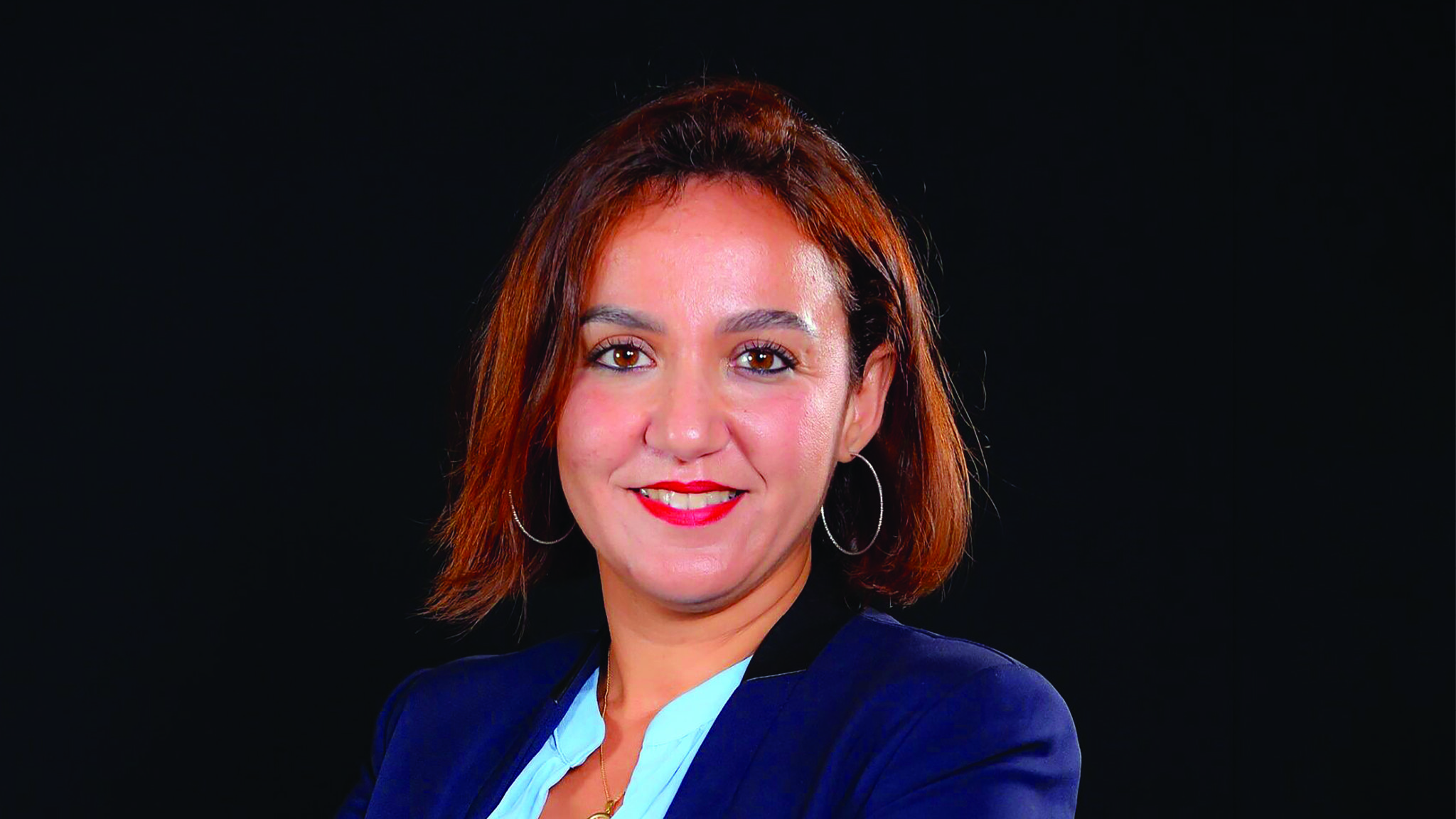
A strategic Epson hub for francophone Africa since 2019, Casablanca plays a central role in the Japanese group’s strategy on the continent. On the occasion of the Epson Partner Conference 2026, we met Chorouq Machtache, B2B Sales Director for francophone Africa at Epson.
For her, Morocco now stands out as a laboratory for digital transformation, notably in education, justice and public services. In this interview, she discusses Epson’s ambitions in Africa, innovation adapted to local realities, and the changing uses around printing and projection.
What place does Africa represent today in Epson’s global growth, and more particularly Morocco?
You should know that we opened our offices dedicated to francophone Africa in Casablanca in November 2019. This hub now pilots the region’s entire operations.
We cover 18 francophone territories and Morocco occupies a central place: it represents nearly half of the revenue generated across this zone.
At the continental scale, francophone Africa is today our number-one region.
It is a fast-growing area and a real reservoir of opportunities. We deploy large-scale projects there and replicate initiatives that have been successfully tested in Morocco.
The Kingdom has become a locomotive in key sectors such as education, health and public services.
It also attracts many African government delegations who come to observe Moroccan reforms and draw inspiration from this model. Morocco therefore plays a driving role in the regional dynamic.
You mention a region undergoing digital transformation. What concrete signals do you observe on the ground?
Morocco is advancing according to a clear vision that has defined strategic priorities: education, health, justice and public administration. Today, we are beginning to see the concrete results of this orientation.
In education, for example, we have been working for two years on the concept of “Pioneer Schools”, which integrate digital tools, projectors and a new pedagogical approach. We recently discussed the results of this initiative with the Ministry of Education. Transformation also affects the justice system.
We participated in the digitization of processes in Morocco’s courts of appeal. Previously, some steps relied on complex paper procedures that were exposed to loss or malfunctions. Today, document digitization simplifies and secures these workflows.
So your activities go beyond simply selling equipment?
Absolutely. Epson does not only sell products, but also complete solutions. Digitizing is not simply scanning or storing a document: you must also process the information, use it and add value to it.
We therefore develop software and solutions capable of supporting all our equipment. This notably concerns intelligent archiving and document management. Morocco is engaged on these issues with many major structuring projects.
Your group invests more than $300 million a year in R&D. What are your priority areas today?
Research and development are part of Epson’s DNA. During a visit to Japan, I was able to see the scale of the resources mobilized. For projectors alone, more than 1,000 engineers work on their development.
Innovation is essential: a company that does not anticipate ends up being overtaken. However, we do not innovate just for the sake of innovating. Our approach is based on listening to real uses and needs.
I notably participated in the “Africa Project”, which aimed to imagine the ideal projector for the African continent: a product accessible in terms of price, adapted to local constraints such as access to electricity, and designed according to field realities.
Japanese culture favors slow but controlled innovation. Some developments can take several years, because every aspect is studied, notably safety and reliability.
You are announcing new solutions today in printing and projection. What needs do they address?
At this event, we are presenting, among other things, new EcoTank ranges and a new projector: the Lifestudio.
The idea is to offer a new home entertainment experience, whether for watching a movie, gaming, or sharing a moment with friends or family.
The product has been reworked on several dimensions: design, mobility, sound quality and ease of use.
We collaborated with Bose for the sound and integrated Google TV. The device is also designed to integrate easily into different environments thanks to its design and flexibility.
We are targeting a young, connected clientele seeking immersive experience
Are Moroccans receptive to this type of product today?
Yes, clearly. There is interest. The main barrier often remains price, but also certain perceptions around installation.
We have observed that many still imagine projectors as complex equipment to set up.
With this new generation, the goal is precisely to make usage much simpler. The experience offered is different: watching content on a large screen completely changes how you live it, whether you are alone, with family or with friends.
Education remains a major issue in Africa. How does Epson intend to help reduce inequalities in access to technology?
This is a subject that is particularly close to my heart. I myself come from public school. Today, we often talk about the difficulties of the education system, but we talk less about the progress made. Yet schools have been renovated, teachers trained and digital equipment deployed.
We participated in the installation of more than 125,000 equipped classrooms in Morocco, nearly half of them in rural areas.
For a child living in a remote region, access to digital content profoundly changes the educational experience. He or she discovers content, images and an opening to the world that they might not otherwise have had access to. Our relationship with the Ministry of Education goes beyond a commercial logic. We are engaged in a strategic support approach to contribute to a positive impact on future generations.
Who are your main competitors today?
As in any technology market, we have competitors and different technologies coexist. But our position is strong in North Africa and francophone Africa thanks to sustained work, the quality of our products and closeness to our partners.
In printing, we are betting notably on professional inkjet, which we believe is the future of the sector.
You mention digitalization a lot. Isn’t it paradoxical to continue promoting paper printing?
That may seem contradictory, but it is not. According to a recent study conducted by Epson among teachers and parents in several countries, including Morocco, we find that 62% of respondents believe that printed materials promote better understanding and deeper reading, confirming that pedagogical effectiveness also depends on a complementarity between digital and printed materials.
Digitalization has its place, but some uses still require physical media, notably in several African countries where certain administrative procedures still demand paper documents.
Printing will not disappear. It will evolve. Our goal is therefore to offer cleaner, more sustainable, more economical technology that consumes less energy.
Digitalization and printing are not opposed: they meet complementary needs.