Business
Industrial Development: Morocco Shifts into High Gear
The “Made in Morocco” label, the renewal of the Tatwir-R&D and Innovation program, local manufacturing of pharmaceutical inputs, a platform dedicated to the railway industry… So many major announcements made during the 3rd edition of the National Industry Day. Round-up.

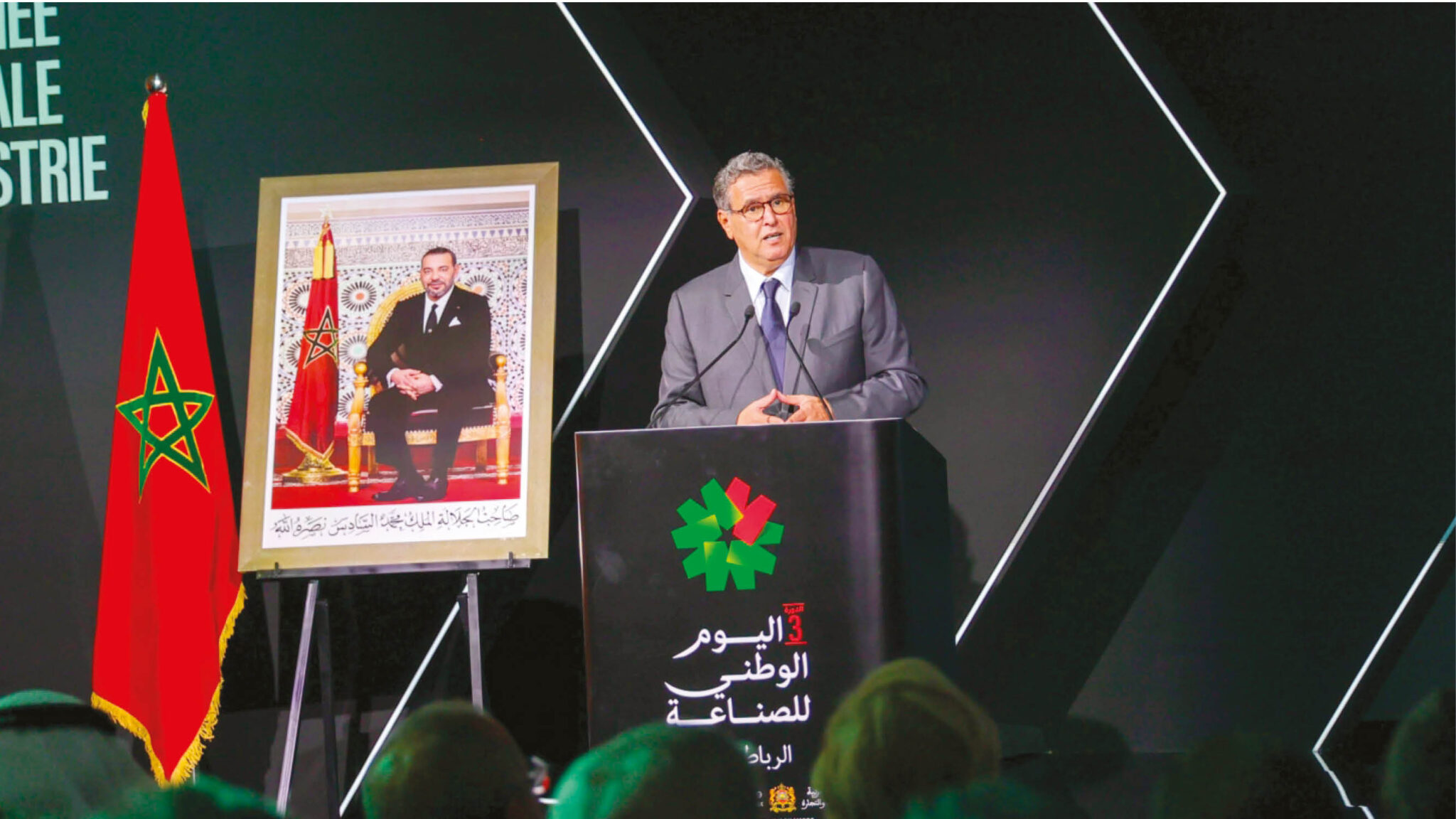
The “Made in Morocco” brand is now asserted as a strategic lever, strengthening the Kingdom’s position as a competitive industrial destination at the regional and international level.
This statement by the head of government, Aziz Akhannouch, during the major Moroccan industry event co-organized on November 3 and 4 in Rabat by the Ministry of Industry and the CGEM, alone sums up the new trajectory of this strategic sector in recent years.
Examples abound, mainly in automotive and aerospace, two high value-added sectors, as the Head of Government also recalled in his speech on the occasion.
Representing about 40% of national industrial exports, the automotive sector is also the largest employer, with nearly 25% of total industrial sector jobs. Moreover, the Kingdom has become the leading producer of passenger cars in Africa and the largest exporter of thermal engine vehicles to the European Union.
Morocco is also accelerating in aerospace, as detailed in a recent report (see edition No. 5,298). Proof: In 2024, the sector recorded exports of 26.4 billion MAD, a 14.9% increase year-on-year and a 242.9% rise over ten years.
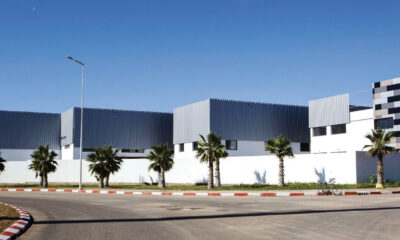
Its ecosystem, currently involving more than 150 industrial players, continues to expand and attract industry giants. The launch of Safran’s aircraft engine manufacturing industrial complex on October 13, by King Mohammed VI in Nouaceur, confirms this growing enthusiasm.
Promoting Industrial Products
This industrial development comes with job creation. “This momentum was accompanied by the creation of 46,000 net jobs in the industrial sector in 2024, versus 7,000 the previous year, bringing the total number of employees to over 985,000, nearly double what it was ten years ago,” said Akhannouch.
This growth also reflects on industrial exports, which have increased by about 64% since 2019, rising from 243 billion MAD to more than 398 billion MAD in 2024, he stressed.
However, the national industry does not intend to rest on its laurels. The central theme of this major annual event, “Made in Morocco: a guarantee of quality, competitiveness, and a lever for integrated territorial development,” already gives an overview of the new direction the sector aims to take.
An ambition confirmed by the five agreements signed. The first was initialed by Ryad Mezzour, Minister of Industry and Trade; Karim Zidane, Delegate Minister in charge of Investment, Convergence, and Public Policy Evaluation; CGEM President Chakib Alj; and Abderrahim Taibi, director of the Moroccan Institute of Standardization (Imanor).
It is a framework agreement aiming to establish a strategic cooperation framework between institutional and economic actors to promote the “Made in Morocco” brand. Objective: to enhance national industrial products.
900 Million MAD to Further Support Innovation
The second agreement concerns the renewal of the support program for innovation Tatwir-R&D and Innovation for 2026-2028, including the integration of start-ups and companies in the gaming sector.
An additional funding of 900 million MAD, at 300 million MAD per year, will also be allocated to this fund. The partnership involves the Ministry of Industry, the Ministry of Budget, the National Agency for SME Promotion (MarocPME), and CGEM.
Morocco also plans to boost the manufacturing of machines and industrial equipment. Hence the new contract-program between the State and the “Machinery Tooling & Automation” (MTA) cluster.
Spanning five years, this agreement defines the financial support provided by the government to this cluster under the Competitiveness and Innovation Clusters Support Fund and sets the MTA’s commitments regarding collaborative projects that will contribute to the development of this sector.
The pharmaceutical industry is also expected to take a new turn thanks to the partnership between the Ministries of Health and Industry, CGEM, the Moroccan Agency of Medicines, the Moroccan Federation of Pharmaceutical Industry and Industrial Innovation, the Chemistry and Parachemistry Federation, UM6P, and InnovX.
Objectives: develop local manufacturing of pharmaceutical inputs, reduce import dependence, and secure health product supply chains.
Production of More than 5 GW of Green Electricity
The fifth agreement foresees the creation of a technical testing and development platform dedicated to the railway industry between the Ministry of Industry, ONCF, the MTI cluster, and the Center for Metallurgical, Mechanical, Electrical and Electronic Industry Studies and Research (Cerimme).
Energy transition is also among government priorities. This is evidenced by the signing on November 4 of a tripartite agreement with Masen, ONEE, and the National Agency for Strategic Management of State Holdings (ANGSPE) to accelerate the provision of over 5 gigawatts of additional green electricity by 2030.
Strong Government Measures to Support Industrial Companies
In his speech on the occasion of the 3rd National Industry Day, Aziz Akhannouch listed the measures taken by the Executive to support the industrial sector.
“The government has worked to implement reforms included in the 2023-2026 business climate improvement roadmap, to improve structural investment and entrepreneurship conditions, support national competitiveness, and develop a favorable environment for entrepreneurship and innovation,” he stated.
Among the main structural reforms is the reduction of payment delays, which has helped strengthen company liquidity and significantly reduce their debts.
The Head of Government also mentioned the reform and improvement of the public procurement system, “considered a fundamental lever for the development of the industrial sector and a stimulant for the emergence of promising industrial sectors.”
He recalled concrete measures to increase company liquidity, “ensuring its direct injection into the productive fabric and supporting their investment capacity.”