Kingdom
Housing assistance: A scheme at the heart of the State’s social strategy
Access to housing, revitalising the property sector, tackling substandard housing… the direct housing assistance programme is emerging as a structuring tool of public policy, with tangible results recorded since its launch in 2024.

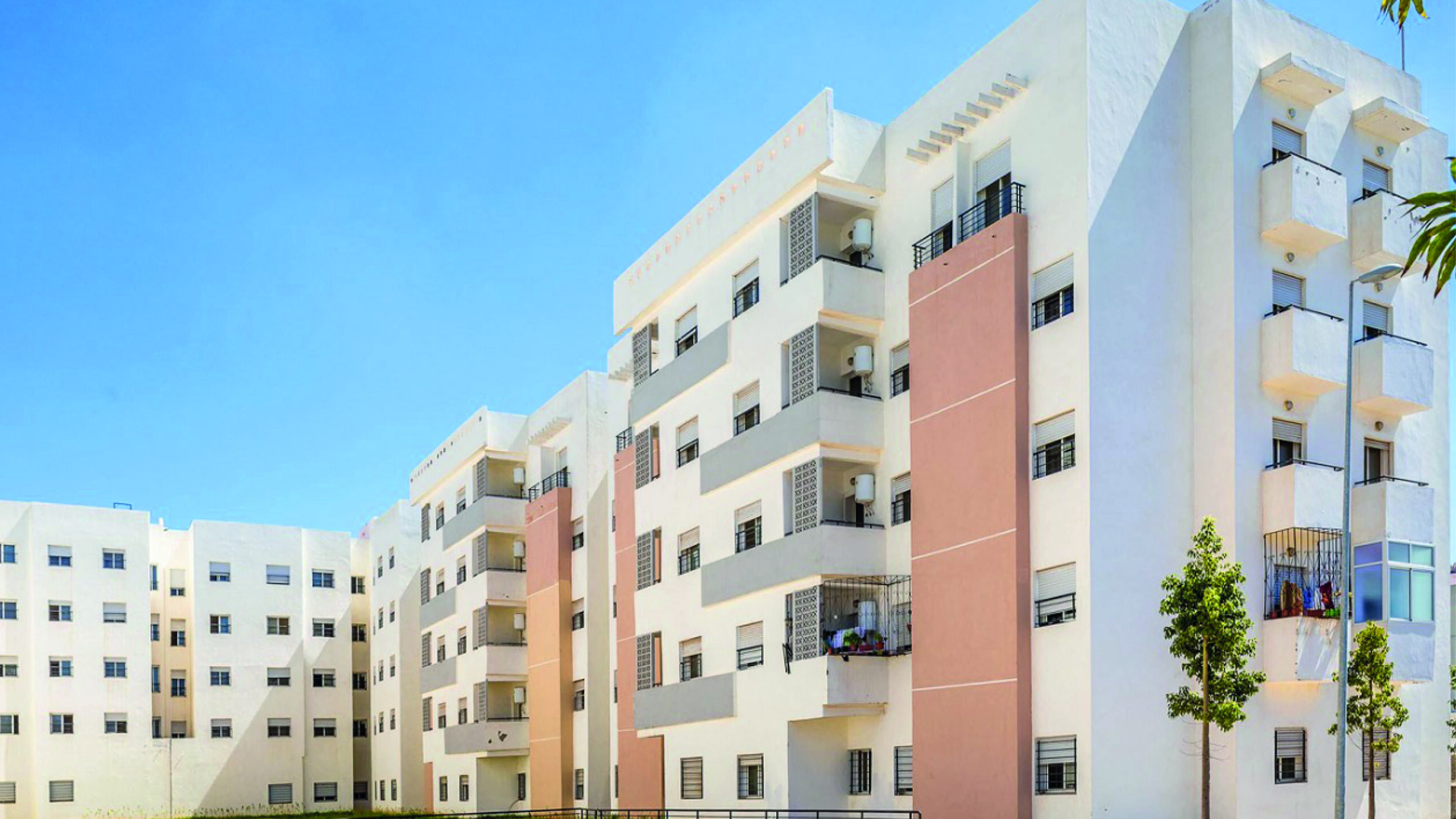
Strengthening household capacity to access decent housing is one of the pillars of the social state agenda pursued by the government.
Thousands of Moroccans have been able to acquire housing through the rollout of the direct housing assistance programme, which replaced the former scheme whose objective was to provide tax incentives for the construction of social housing priced at MAD 250,000 and low‑value housing capped at MAD 140,000.
The new mechanism introduced in 2024, and scheduled to run until 2028, aims, on the social level, to facilitate access to housing for low‑income households as well as for the middle class. It also helps to reduce the housing deficit and to accelerate the completion of the Cities Without Slums programme.
From an economic perspective, the programme makes a strong contribution to increasing housing supply, revitalising the housing sector, and stimulating the private sector through the involvement of private developers, who have shown broad commitment to the scheme.
Two years after its implementation, the programme continues to demonstrate its effectiveness. As of 13 April, 96,948 people had benefited from the scheme, out of approximately 200,000 applications submitted.
“Housing is not a luxury, but the foundation of social stability and a cornerstone of human dignity,” stated Aziz Akhannouch, Head of Government. The average number of beneficiaries stood at 3,850 per month in 2025, compared with 2,400 in 2024.
As of the end of October 2025, the middle class represented 62% of beneficiaries, women accounted for 46%, and people under the age of 40 made up 54%, while Moroccans living abroad (MREs) represented 24%.
In terms of amounts, 63% of beneficiaries received a subsidy of MAD 70,000, while 37% benefited from assistance of MAD 100,000.
70% of buyers satisfied
In another respect, the value of housing acquired under this programme amounts to MAD 29.8 billion, including MAD 5.9 billion in state contributions.
More than 70% of beneficiaries reported being satisfied with the architectural quality of the housing acquired. The programme has also had significant economic impacts, notably in terms of housing loans and financing granted to property developers.
Outstanding loans granted to buyers increased by 3% to MAD 255 billion in 2025, while loans extended to sector professionals rose by 3.3% to MAD 59.7 billion.
Demand from buyers has been strong enough for the government to introduce several sector‑friendly adjustments in this year’s Finance Law.
Adjustments introduced
With a view to ensuring greater social equity, eligibility conditions for the direct housing assistance scheme have been broadened.
Starting this year, they are expected to include owners of jointly held (undivided) property, particularly heirs who were previously not eligible for the public subsidy.
To harmonise tax rules, the government has extended the minimum occupancy period to five years, up from four previously—aligning it with the period required to benefit from capital gains tax exemption on the resale of a primary residence.
At the same time, in order to reinforce effective occupancy and prevent potential speculation following property acquisition under the scheme, another major adjustment has been introduced.
This consists of the full repayment of the subsidy received in the event of sale prior to five years of actual occupancy, together with the payment of income tax or the equivalent capital gains tax.
Cities Without Slums: monitoring mechanisms
The housing assistance programme has also strongly benefited households living in informal settlements.
The number of households covered by the Cities Without Slums programme increased from 270,000 in 2004 to 496,000 according to the latest figures, of which 370,000 have had their situations regularised.
Within the framework of the 2024–2028 five‑year programme, data relating to 120,000 households have been updated across all Moroccan cities without exception.
As a result of the government’s approach to combating substandard housing—shifting from a rehousing logic to a resettlement approach—62 cities and urban centres are now officially declared slum‑free.
Monitoring mechanisms have also been put in place by the supervisory authorities to prevent the future emergence of informal settlements, once the programme reaches completion.
Rent‑to‑own housing: a project under development
Particular attention is being given to the middle class, which often faces excessive housing prices, especially in large cities.
To address this constraint, the Ministry of Housing is conducting a study aimed at establishing a residential rental model priced at around 20% below current market rates.
The model also includes the possibility of counting part of the rent paid as a down payment towards eventual home ownership at the end of the contract. Preliminary results of the study are expected to be published in March.