Business
Hospitality: The New Niche for Real Estate Developers
More and more developers are investing in this growth segment to secure additional revenue streams and contribute to boosting Morocco’s tourism supply. A management contract is typically signed between the parties, subject to management fees.

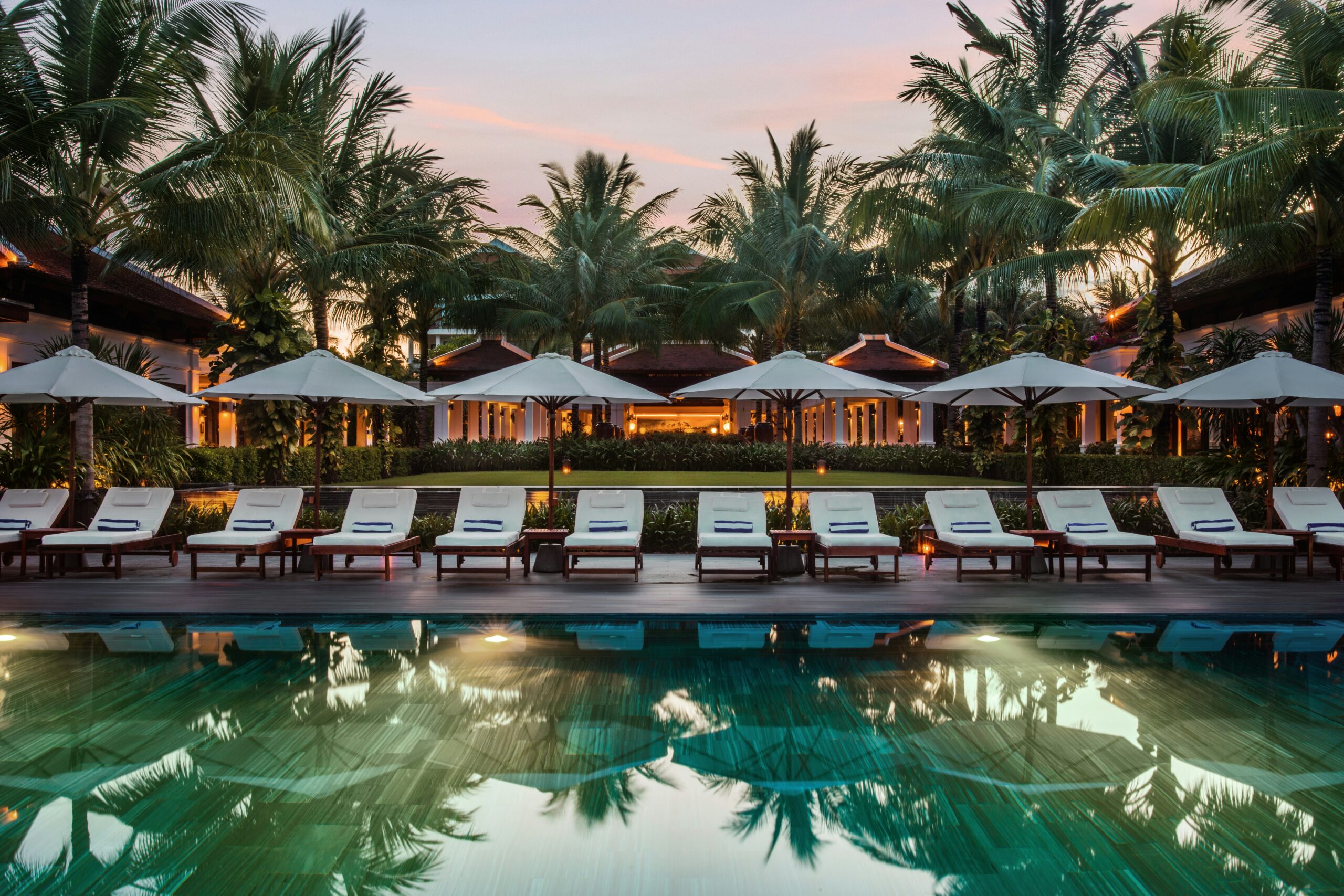
Over the past few years, many real estate developers have turned toward a more sustainable, lucrative, and attractive business segment: hospitality. Indeed, faced with the sluggish residential market (with the exception of the direct housing assistance program), entering this sector helps spread risks and secure additional revenue streams by exploiting this niche.
Alliances Développement Immobilier, Groupe Mfadel, TGCC, Groupe Nokta… are examples. While some have already invested in this segment, others are still in negotiations. In any case, they are diversifying their activities while securing a sustainable revenue base.
The most recent example is ADI, which has formed a partnership with the international brand Rixos Hotels to develop hotel units in both Larache and Marrakech, for the tidy sum of 3 billion dirhams. It should be said that this is not the group’s first venture. ADI has already delivered over thirty hotels on behalf of several partners, including Accor.
Groupe Mfadel, for its part, launched a hotel project in the heart of Casa-Anfa last April, the management of which will be entrusted to Radisson Hotel Group. These are the Radisson Blu Hotel & Apartments Casablanca Finance City and the Radisson Red Hotel Casablanca Finance City.
With an opening scheduled for the first half of 2028, the project will include a 5-star Radisson Blu hotel (131 rooms), a 4-star Radisson Red hotel (177 rooms), a 4-star Radisson Blu aparthotel (77 keys), and a conference center. The developer is no novice in this field. It has been active since 2014 and has already developed the Ibis in Mohammédia and another hotel project at Smir Park in Tétouan.
TGCC is not far behind. It has proven experience in the field with the Four Seasons in Rabat, the Hilton Arzana, and the Al Houara Coastal Resort in Tangier. Another project is said to be upcoming in Casablanca. Groupe Nokta is reportedly in negotiations with a world-renowned hotel brand to establish two hotel units in Casablanca.
Mondial 2030, the opportunity
This deadline represents a real opportunity. Hosting the global sporting event that is the 2030 World Cup is a major boon, encouraging developers to contribute to the national effort to strengthen the tourism supply in order to absorb the massive influx of visitors expected.
Morocco faces a significant need for accommodation capacity, and this is across all cities in the country, not only those hosting football matches. It must also be said that the real estate sector has seen much better days, sustained mainly by the direct financial assistance program for first-time buyers.
Especially since “land intended for real estate development is becoming increasingly scarce and, as a result, more expensive, especially in major cities like Rabat, Casablanca, and Tangier,” explains one developer.
This makes hospitality a good growth relay, since “it is easier to obtain exemptions to build hotels than to implement residential projects,” states a developer.
The state, for its part, plays a decisive role, as it strongly encourages investment in this niche by offering attractive incentives to stimulate project holders’ interest in accommodation, which fall under the new Investment Charter.
Management Contract
In any case, the construction of a hotel unit by the developer is subsequently entrusted to a management company, which is usually a well-known brand. “In 90% of cases, it is a management contract through which the real estate asset remains the property of the developer, who also finances renovations and equipment,” explains a professional in the sector.
In return, the hotel group provides management teams, supports and assists the developer, recruits staff, and brings the brand and expertise, according to its standards.
In exchange, the developer provides management fees that are proportional to the revenue generated. In fact, “these fees average around 5% and are deducted from gross operating profit, i.e., before accounting for various expenses. In the end, this could represent nearly a third of the profits,” adds our source.
Other types of contracts exist, the simplest of which is a lease agreement between the developer and the manager, either with fixed rents or variable rents depending on the performance of the hotel unit, or even a sale-and-leaseback contract. Franchising is one of the least common forms of agreement, because generally “major brands do not consider Africa a premium destination for concluding this type of agreement,” explains the developer.
And in the end, it’s a win-win. The manager is not burdened by the significant construction costs, and the developer retains ownership of the asset, which can only increase in value. Profits are shared equitably between the two parties. Morocco, for its part, continues to expand its hotel portfolio.
The partnership extends to schools and clinics
This management model, in which a real estate developer gets involved in varied economic activities, is not limited solely to the hotel sector.
Indeed, other types of establishments also call on the expertise of the sector’s professional to design and build facilities suited to their activity. This is the case for schools and universities, as well as clinics and healthcare facilities.
In all these cases, the real estate developer plays a key role by ensuring that buildings are not only compliant with technical and regulatory standards but also optimized for the daily operation and management of the activity. This allows operators to focus on their core business.