Influences
Holding in Moscow of the 8th Joint Intergovernmental Commission Morocco-Russia
Particular emphasis was placed on several key sectors such as agriculture, energy, industry, transport, customs cooperation, education, and culture.

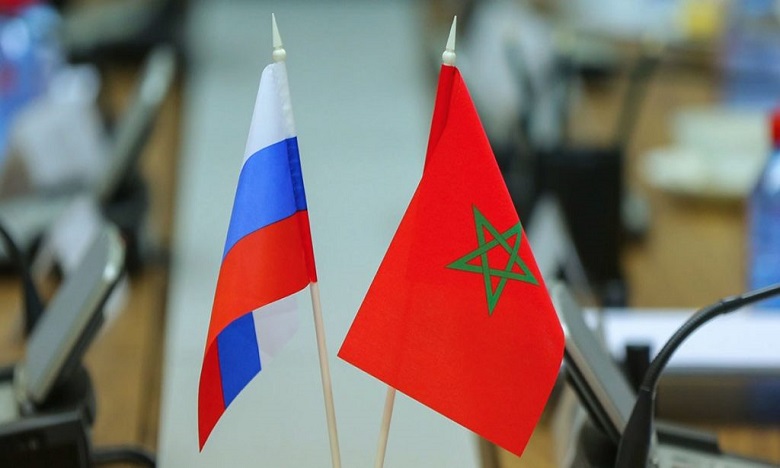
On the eve of the 10th anniversary of the Deep Strategic Partnership, concluded in Moscow in 2016 during the historic visit of His Majesty King Mohammed VI, may God assist Him, upon the invitation of President Vladimir Putin, the Minister of Foreign Affairs, African Cooperation, and Moroccans Residing Abroad, Nasser Bourita, co-chaired, on Friday in Moscow, with the Deputy Prime Minister of the Russian Federation, Dmitry Patrushev, the 8th session of the Morocco-Russia Joint Intergovernmental Commission.
This session marks an important milestone in strengthening the Deep Strategic Partnership between the Kingdom of Morocco and the Russian Federation.
The Commission’s work, held in the presence of a large Moroccan ministerial delegation representing several priority sectors of bilateral cooperation, allowed for a review of the state of cooperation and the definition of means to further strengthen it. Particular emphasis was placed on several key sectors such as agriculture, energy, industry, transport, customs cooperation, education, and culture.
The work of the Joint Commission led to the finalization and signing of three legal instruments.
These include an Agreement on cooperation in the field of maritime fisheries, a Protocol on the exchange of documents and data on the customs value of goods transported between the Russian Federation and the Kingdom of Morocco, and a Protocol on cooperation, information exchange, and mutual assistance within the framework of the unified system of tariff preferences of the Eurasian Economic Union.
This 8th session was also an opportunity for both parties to reaffirm their shared willingness to elevate the Moroccan-Russian relationship to a more ambitious level, through the diversification of economic and trade exchanges, support for mutual investments, and the development of new forms of sectoral cooperation.
Both parties also agreed to maintain regular political consultations and ensure effective follow-up on the implementation of concluded agreements, in order to give their strategic partnership the full scope it deserves.