Kingdom
HCP: Benmoussa Presents the Main Demographic Transformations of the Kingdom
The High Commissioner for Planning notably highlighted the current and future demographic trends of Morocco, indicating that the urbanization rate, estimated at 62.8% in 2024, is expected to reach nearly 69.2% by 2040.

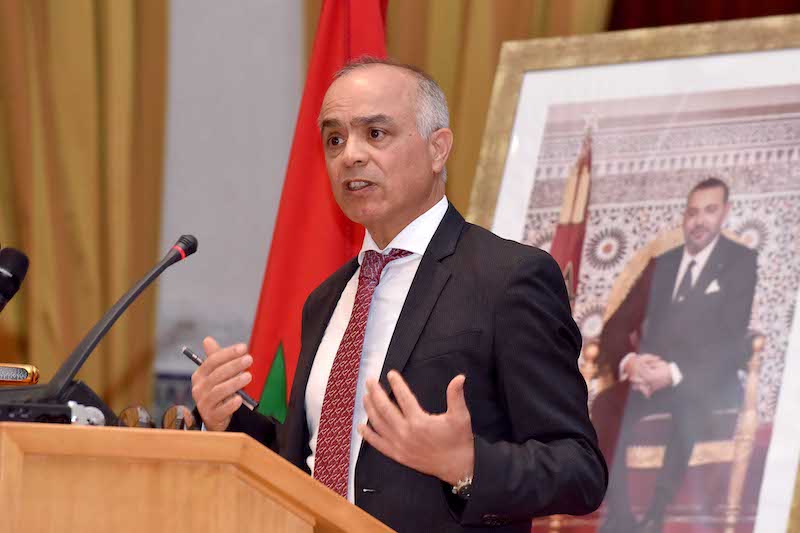
The High Commissioner for Planning, Chakib Benmoussa, presented on Tuesday in Rabat the main demographic transformations of the Kingdom during a conference organized by the Rotary Club Rabat Excellence in partnership with the Rotary clubs of Rabat and Salé.
Mr. Benmoussa highlighted current and future demographic trends in Morocco, indicating that the urbanization rate, estimated at 62.8% in 2024, is expected to reach nearly 69.2% by 2040.
Regarding the distribution of the population by place of residence, he noted a sustained increase in the urban population, which rose from 16.5 million in 2004 to 23.1 million in 2024 and is expected to reach 28 million by 2040. In contrast, the rural population has begun to decline, evolving from 13.4 million in 2004 and 2014 to 13.7 million in 2024, before dropping to 12.5 million in 2040.
The High Commissioner also stated that the number of households will reach nearly 12.3 million by 2040, compared to 9.3 million in 2024 (+32.5%), alongside a reduction in the average household size from 3.9 to 3.3 persons.
At the same time, Mr. Benmoussa highlighted regional disparities in demographic growth in Morocco, noting that five regions—“Casablanca-Settat” (20.3% of the national demographic weight), “Rabat-Salé-Kénitra” (13.5%), “Marrakech-Safi” (13.4%), “Fès-Meknès” (12.5%), and “Tanger-Tétouan-Al Hoceïma” (10.5%)—have maintained their status as the most populous regions since 2014 and alone accounted for 86.2% of the overall population growth between 2014 and 2024.
Addressing the age structure of the population, he pointed to accelerated aging in Morocco, noting that the share of people aged 60 and over increased from 7.2% in 1960 to 9.4% in 2014, then to 13.8% in 2024, and is expected to reach 19.5% in 2040 and 22.9% in 2050.
The High Commissioner also examined the situation of young people aged 15 to 29, stating that this age group numbers nearly 8.1 million in 2024, representing 22.25% of the total population and nearly 37% of the working-age population (15–59 years).
He further specified that the demographic weight of youth declined from 26.3% to 22.25% between 2014 and 2024, a decrease of about 4 percentage points, adding that 73% of them are concentrated in five regions.
In terms of activity, Mr. Benmoussa noted that 42.6% of young people aged 15 to 29 are still pupils or students (a rate affected by early school dropout), while 24.2% are employed and 11.1% are unemployed.
Referring to the demographic and social profile of older persons, Mr. Benmoussa stressed that marital status is a key determinant of their socio-economic situation, lifestyles, and well-being, pointing to marked gender disparities: 90% of elderly men are married, compared to 52% of women, of whom 38% are widowed.
According to Mr. Benmoussa, the living arrangements of older persons remain predominantly family-based, with 42% living in multigenerational households, 43% living as couples, and 9% living alone.
For her part, the President of the Rotary Club Rabat Excellence, Najat Lachhab, stated that this meeting has a unifying character by bringing together, in an interclub format, four Rotary entities from the capital region, thus illustrating the shared commitment to strengthening cooperation, promoting dialogue, and consolidating the values of service and civic engagement upheld by the Rotary movement.
Meanwhile, the President of the Rotary Club Rabat Doyen, Mustapha El Omari, noted that this meeting is part of the joint activities carried out by the Rotary clubs of Rabat-Salé, highlighting the willingness of the various Rotary entities to strengthen cooperation and promote dialogue around issues of national interest.
He went on to say that this conference provides an opportunity to discuss the major demographic transformations taking place in Morocco, their impacts and repercussions, as well as the best ways to anticipate these developments in order to effectively support the country’s social and economic changes.
Organized as part of the activity program of the Rotary clubs of the Rabat-Salé region for the 2025–2026 Rotary year, this conference reflects the Rotary movement’s commitment to engaging in major societal debates and contributing to a better understanding of the Kingdom’s demographic transformations.