Kingdom
Green Hydrogen: Why Morocco Must Bet on Electrolysis Technologies
Driven by the rise of renewable energy projects and industrial decarbonization, the global electrolyzer market is growing rapidly. The Kingdom would benefit from investing in it to strengthen its technological sovereignty and build an industrial value chain around green hydrogen.

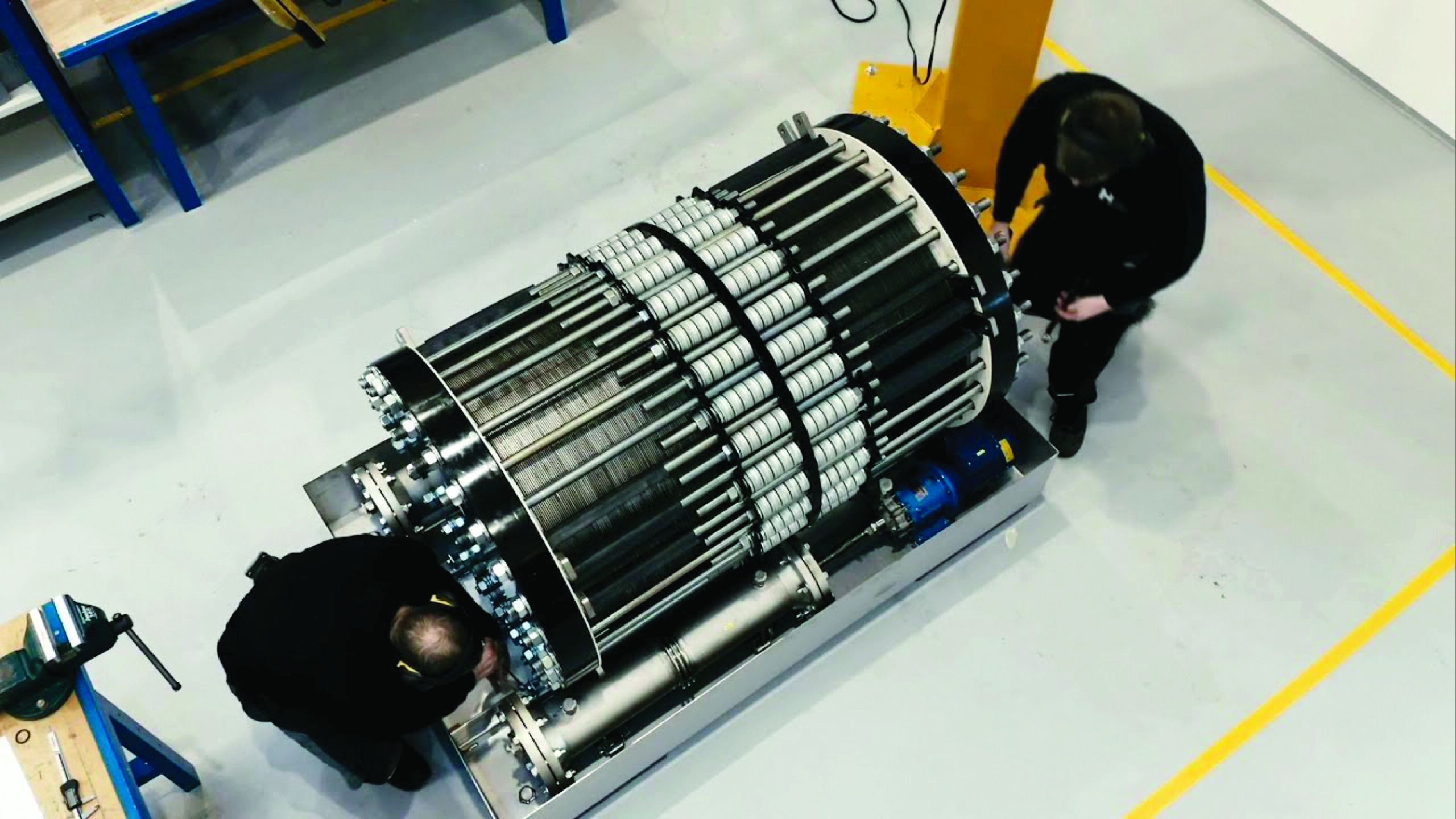
In the global race for green hydrogen, the challenge is no longer limited to producing low-cost renewable electricity. The real challenge now lies in mastering electrolysis technologies, which are essential to making green hydrogen competitive and industrially viable.
Aware of this strategic stake, powers such as China and the United States are investing heavily in the manufacture of electrolyzers in order to produce a critical mass of equipment and capture significant market share.
The global context is particularly favorable. Valued at more than $13 billion in 2026, the electrolyzer market is expected to reach $509 billion by 2035, driven by industrial decarbonization and the growing number of green hydrogen projects.
According to the International Energy Agency (IEA), installed capacity—which did not exceed 5 gigawatts (GW) not long ago—could surpass 500 GW in the coming years.
An industrial and sovereignty bet
For Morocco, investing in electrolysis technologies goes far beyond the energy sphere. It is a genuine industrial bet and a matter of technological sovereignty, commensurate with the Kingdom’s ambitions to capture nearly 4% of global green hydrogen demand by 2030.
The Kingdom aims to install 10 GW of electrolyzers and up to 20 GW of new renewable capacity dedicated to green hydrogen by 2030, with the objective of producing several million tonnes of derivatives, notably green ammonia. An ambitious but realistic challenge, given the country’s structural strengths.
Thanks to the abundance of its solar and wind resources, the country has the necessary conditions to build a large-scale electrolyzer industry and to structure complete value chains around hydrogen.
These technologies can be supplied with large volumes of water from desalination plants powered by renewable energy, giving rise to an integrated and sustainable energy chain.
“Morocco benefits from a major strategic advantage: an extremely competitive energy mix based on solar and wind,” emphasizes Professor Abdessamad Faik, Director of the Laboratory of Inorganic Materials for Sustainable Energy Technologies (LIMSET) at UM6P.
“The continued decline in electricity costs, combined with improved electrolyzer efficiency—which could rise from 65% to over 75%—is likely to profoundly transform the economic equation of green hydrogen,” he adds.
Cost reduction: The key to competitiveness
Large-scale industrialization of electrolyzers is a central lever for reducing costs and, consequently, the price of green hydrogen. Currently estimated at around $2.5 per kilogram in Morocco, this cost could fall to below $1.1 if electrolyzer prices dropped to $200 per kilowatt, according to the researcher.
A downward trend is already underway internationally. Prices are expected to gradually converge toward a range of $440 to $500 per kilowatt by 2030.
“For a long time, electrolyzers were manufactured in small series, notably in China, which limited volumes and drove up costs. Today, gigafactory projects are emerging in Europe, Asia, and Morocco, paving the way for mass production and significant economies of scale,” Faik explains.
Desalination: A limited impact on costs
The water issue, often raised in debates around green hydrogen, deserves to be nuanced. Contrary to some common misconceptions, electrolysis is relatively water-efficient, with an estimated need of between 8 and 10 kg per kilogram of hydrogen produced, compared with 13 to 18 kg for traditional grey hydrogen processes.
“In Morocco, the preferred approach is based on integrated systems that combine hydrogen production and desalination units,” the LIMSET director notes. The impact of desalination on the final cost of hydrogen would remain marginal—on the order of $0.01 to $0.02 per kilogram—an increase deemed negligible.
The expert nonetheless stresses the importance of the quality of the water used. The presence of impurities, such as sulfur or magnesium, can degrade electrodes and reduce catalyst efficiency.
“Without high-performance purification systems, performance deteriorates quickly—like an engine running on poor-quality fuel,” he warns.
OCP and Al Mada step up the pace
Morocco can build on several structuring initiatives already underway. The OCP Group stands out as a pioneer, with the launch in 2021 of the “Green H2A” technology platform, in partnership with IRESEN and UM6P, at the Jorf Lasfar industrial site.
This project aims in particular to produce four tonnes of green ammonia per day, based on 4 MW of electrolysis capacity split between PEM and alkaline technologies.
In parallel, OCP has multiplied international alliances, notably with the American company Peregrine Hydrogen to industrialize an innovative electrolysis technology, and with Australia’s Fortescue to develop integrated green hydrogen projects and manufacture equipment, as part of its goal of carbon neutrality by 2040.
The Al Mada holding company is not to be outdone. Through its Al Mada Ventures fund, it invested in the British start-up Supercritical Solutions, which specializes in high-pressure electrolyzers, paving the way for more compact and more efficient technologies.
A strategic partnership that should enable Nareva, the holding’s renewable energy company, to accelerate the development of its project to produce ammonia, green steel, and methanol with Taqa and Spain’s Cepsa—one of six projects selected under the “Morocco Offer.”
R&D and academic partnerships
Research is another pillar of Morocco’s strategy. In collaboration with the British start-up Oort Energy, UM6P developed a 1 MW solar electrolyzer intended for a pilot project in Jorf Lasfar.
For its part, the National School of Applied Sciences (ENSA) of El Jadida has entered into a partnership with Renew Tech to develop high-performance electrolyzers and solid hydrogen storage solutions, in support of industrial decarbonization.