Business
Grand Hassan II Stadium: Bioui Travaux Will Carry Out the Railway Engineering Structures for 138 Million Dirhams
The new road bridges will be built between the Mohammedia and Bouznika stations, on the railway line linking Casablanca to Sidi Kacem. The aim is to ensure smooth and safe traffic flow, especially during peak periods, while guaranteeing the continuity of rail service. Details follow.

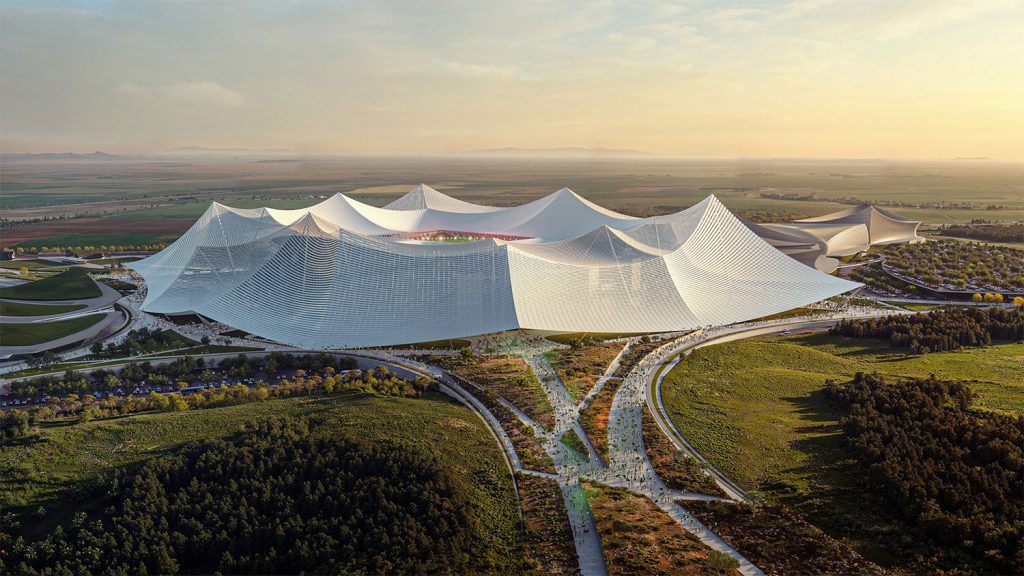
The Moroccan National Railways Office (ONCF) is speeding up upgrades to the road corridors serving Casablanca’s Grand Stadium, with the aim of facilitating access to the future football venue.
The public entity headed by Rabie Khlie has awarded Bioui Travaux (SBTX) the contract to build the engineering structures spanning the railway line for 137.7 million dirhams (MDH), according to official documents we consulted. This figure is slightly below the projected budget of 140 MDH announced last January.
Already very active on major national worksites, SBTX was selected thanks to its bid deemed the “lowest,” ahead of six other competitors, including three construction giants: TGCC (156 MDH), Seprob (157.5 MDH) and Jet Contractors (142 MDH). China Overseas Engineering Group, with a proposal of 146.9 MDH, was not selected.
The new road bridges will be built between the Mohammedia and Bouznika stations, on the railway line linking Casablanca to Sidi Kacem. The objective is to ensure smooth and safe traffic flow, particularly during peak periods, while guaranteeing the continuity of rail traffic. The infrastructure will meet international technical standards, with an estimated durability of more than 100 years.
Planned over a one-year period, the services will include, in particular, topographic work, construction of standard engineering structures, restoration of road connections, as well as earthworks, temporary diversions, and longitudinal and transverse drainage works.
According to ONCF, more than 44 tonnes of steel will be used for the foundations alone, while earthworks operations will exceed 13,000 cubic meters for roadway development. The use of high-performance reinforced concrete, combined with advanced waterproofing systems, will help prevent any infiltration that could compromise the structures or the safety of rail traffic.