Kingdom
Government Record: A Mandate of Achievements
Together with his majority coalition partners, Aziz Akhannouch delivers an impressive record on the political, economic, and social fronts. The Kingdom has reached a new level, driven by the successful implementation of a series of far‑reaching structural reforms.

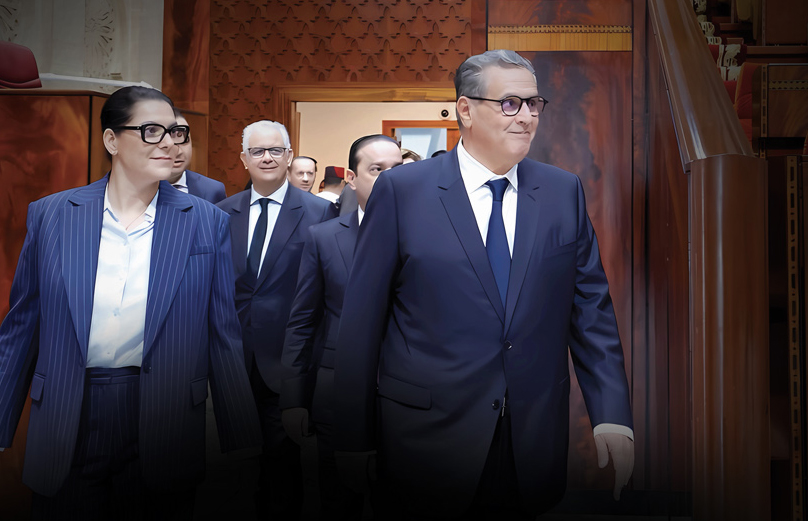
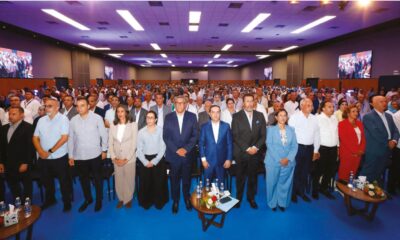
Images often speak louder than words. Surrounded by the leaders of the three majority parties, the Head of Government made his entrance into the parliamentary chamber on Wednesday, April 15, to present his record as his term enters its final parliamentary session.
This scene offered yet another illustration of the solidity of the governing alliance—widely regarded as a textbook case of political harmony.
Since his appointment, Aziz Akhannouch has consistently ensured the cohesion of his parliamentary majority. Unlike previous governmental experiences, often hindered by internal divisions, the current coalition has managed to maintain a convergent political line.
This unity has helped accelerate the legislative process and limit dilution through excessive compromise, proving decisive for the adoption of often sensitive reforms.
In an uncertain regional and international environment, this ability to act in a coordinated manner has enhanced the credibility of the Executive.
However, political stability holds little meaning without concrete results. It is precisely on this terrain that the government seeks to be evaluated, highlighting a range of achievements that directly affect the daily lives of Moroccans.
This is what prompted Akhannouch, for the second time during his mandate, to invoke Article 101 of the Constitution to present a new record before both Houses of Parliament—a record that demonstrates, on both the economic and social fronts, that Morocco has entered a new phase of development.
A Model of Economic Sovereignty
Since taking office, the government led by Aziz Akhannouch has pursued a clear and deliberate course: the profound transformation of Morocco’s economic and social model.
Public action is now guided by an idea that is both simple and ambitious—making economic growth a tangible lever for improving living standards.
“An economy that grows without this growth being reflected in people’s daily lives is an economy that delivers prosperity to only a limited segment,” the Head of Government stressed, outlining the foundations of this strategic repositioning.
Morocco has thus embraced a model of economic sovereignty based on resilience and initiative rather than passivity in the face of global crises.
“Under the leadership of His Majesty King Mohammed VI, the government has translated this vision into concrete achievements, elevating the country to the rank of a major international player,” he recalled.
The Kingdom has strengthened its sovereignty across strategic sectors such as industry, energy, water, and agriculture.
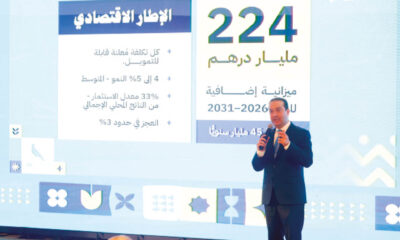
In addition, the new Investment Charter has sparked unprecedented momentum with tangible outcomes: the approval of hundreds of projects totaling 581 billion dirhams, a 73% increase in foreign direct investment, and a 65% surge in public investment.
These economic performances (see accompanying graphics) have led to the creation of 850,000 net jobs over four years, while maintaining macroeconomic balances praised by international rating agencies and financial institutions.
Rationalizing Public Policy
One of the central pillars of the government’s record is the implementation of the social State project. Long discussed as a strategic ambition, this initiative has seen significant acceleration under the current majority.
“The essence of public policy remains unchanged: placing the human being at the heart of every decision and every reform,” Akhannouch stated, summarizing the philosophy of his government’s action.
This repositioning reflects an evolution in the role of the State, now called upon not only to regulate but also to guarantee social rights fully embedded in the constitutional framework.
“This project is no longer confined to texts; it has become a concrete reality in the lives of millions of Moroccans,” the Head of the Executive insisted.
Among the most emblematic reforms is the generalization of social protection. The government has undertaken a massive expansion of health insurance coverage, integrating millions of new beneficiaries into the system.
This effort has been accompanied by a substantial financial commitment, particularly through State‑funded contributions for the most vulnerable populations. “Solidarity is not merely discourse; it is a real financial commitment,” Akhannouch emphasized.
Beyond the quantitative aspect, this reform marks a paradigm shift: social protection is no longer viewed as occasional assistance, but as a guaranteed right. It thus redefines the relationship between the State and citizens, based on trust and shared responsibility.
In continuation of this momentum, the government launched a direct social assistance scheme aimed at replacing the fragmented approaches of the past. The program seeks to improve beneficiary targeting while rationalizing public spending.
“We have opened a new chapter in the history of national solidarity,” the Head of Government declared. Today, the scheme benefits several million families, reflecting the scale of State intervention in the social sphere.
Particular emphasis is placed on governance and transparency in order to avoid the shortcomings observed in certain earlier programs.
Health and Education: Structural Reforms
Another major axis of the government’s record is the transformation of the healthcare system. Aware of longstanding structural shortcomings, the Executive launched a sweeping reform to rebuild the sector.
“We have initiated a comprehensive structural reform aimed at reconstructing the health system on new foundations,” Akhannouch affirmed.
This ambition has translated into a significant increase in the health budget, alongside a multidimensional strategy encompassing infrastructure modernization, digitalization, and the enhancement of human resources.
Reducing territorial disparities is among the top priorities. “There must be no difference in access to healthcare between a citizen living in an urban center and another residing in a remote region,” he insisted.
Programs to rehabilitate health centers, construct new hospitals, and strengthen medical training illustrate this deep‑rooted transformation.
Education represents another cornerstone of the government’s agenda. The Executive has adopted a holistic approach aimed at improving access, quality, and equity within the education system.
“A State that fails in the education of its children undermines its ability to meet future challenges,” Akhannouch stated.
Efforts have notably focused on the generalization of preschool education, the expansion of so‑called ‘schools of excellence,’ and targeted support for students from disadvantaged backgrounds.
All in all, across multiple fronts, government achievements have been tangible—and most importantly, they are already delivering the expected results.