Kingdom
Government: Actions and Achievements
He still has several months left as head of government to add to an already impressive list of achievements: at the end of 2025, all indicators are green, human development is tangible, an emerging Morocco is blinking on geopolitical radars… And it’s not over yet. An interim assessment forced by a political earthquake triggered by the withdrawal of a key player.

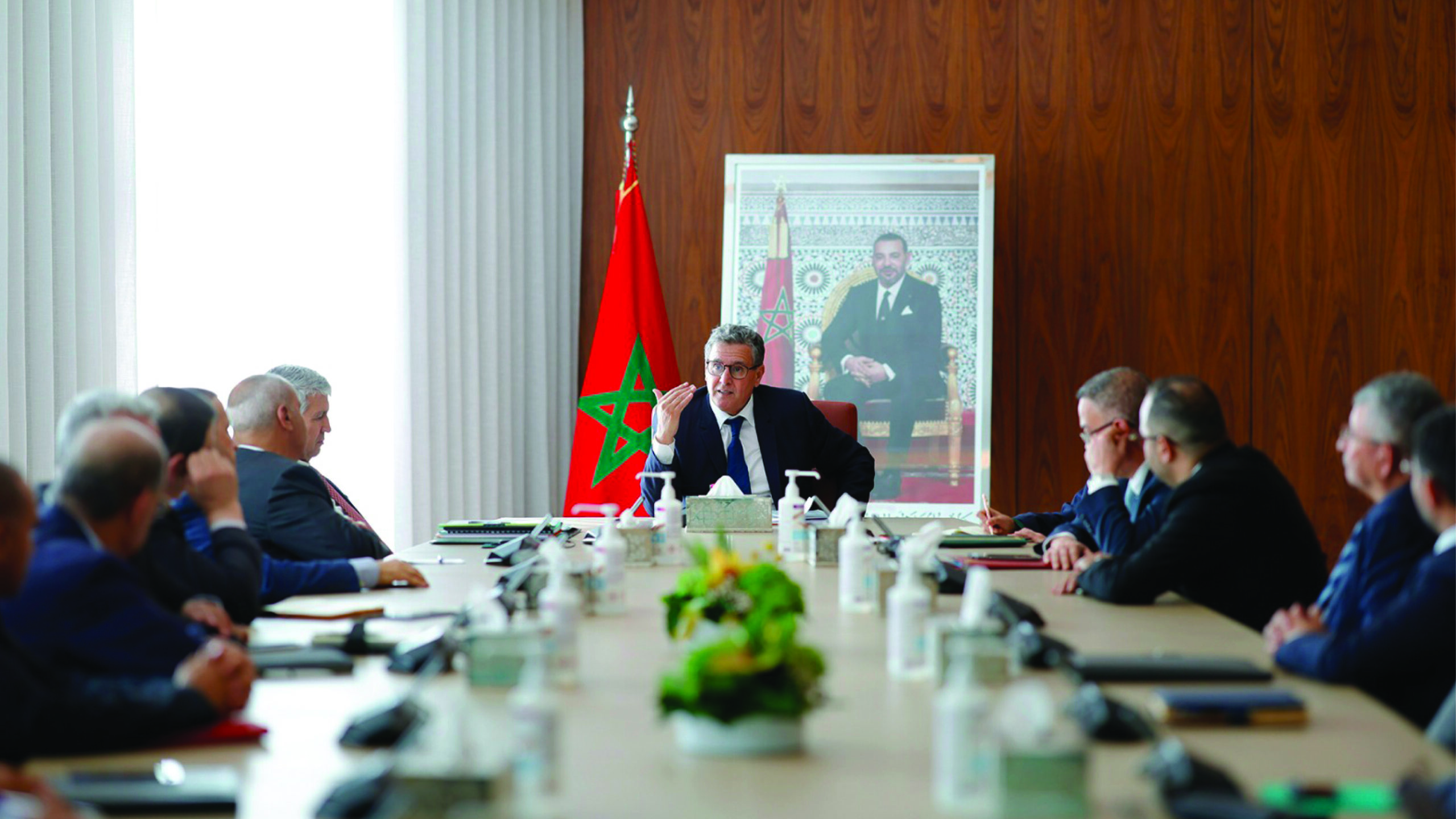
Aziz Akhannouch will not seek a third term at the head of the RNI. He will also not be a candidate in the next legislative elections. Personal decisions, respectable on many counts, which suggest that the head of the RNI (until the extraordinary congress on February 7th) has no ambition to seek a second term as head of government.
Of course, the royal arbitration will always remain, which could lean towards appointing a member of the RNI, should the party emerge victorious from the legislative elections, even if it is not the leader of this political formation. After all, in the Kingdom of Morocco, the ways of power are impenetrable…
But the head of government can pass the torch calmly, filled with that pleasant feeling of duty accomplished as the maestro of a government team that has performed. One only needs to list a host of macroeconomic indicators or social indices to assess the scale of the work accomplished.
Sound Public Finances
To begin with, the growth rate of non-agricultural activities reached an average of 4.8% between 2021 and 2024. Furthermore, the agricultural sector has regained its strong added value, achieving growth of 6.3% in 2025, which has allowed the national economy to enter a new phase of recovery and sustainability.
Moreover, thanks to the government’s vigilance and the urgent measures implemented, the inflation rate has drastically decreased: it stabilized at 0.9% in 2024 and reached 0.8% between January and November 2025, after reaching record levels in 2022 and 2023 (6.6% and 6.1% respectively).
This framework has helped preserve household purchasing power, notably through subsidies amounting to nearly 132 billion dirhams between 2021 and 2025 to regulate the national market and stabilize the prices of staple goods.
This dynamic has also been strongly driven by a series of fiscal and budgetary reforms implemented by the Executive. One of its direct results has been the unprecedented success in reducing the budget deficit to 3.8% in 2024, after it reached 5.5% in 2021.
Furthermore, the level of debt is expected to decrease progressively to reach 67.7% in 2024, compared to 72.2% in 2020, with projections indicating a continuation of this decline to 67.4% in 2025, then to 65.9% in 2026.
There is also the steady progression of total tax revenues, which rose from 214.6 billion dirhams in 2021 to 317 billion dirhams in 2024, and are expected to reach 376 billion dirhams in 2026.
This situation is accompanied by record revenues from the tourism sector. Remittances from Moroccans living abroad reached nearly 113.3 billion dirhams in 2024 and 103 billion dirhams by the end of October 2025.
Foreign direct investments (FDI) are no exception: they have undergone a qualitative evolution, increasing from 32.5 billion dirhams in 2021 to 43.8 billion dirhams in 2024, reaching 45.4 billion dirhams by the end of October 2025.
Pillars of the Social State
On the social front, the dignity of the Moroccan citizen has been placed at the heart of priorities, in line with the enlightened vision of King Mohammed VI. Henceforth, access to social protection services has become a guaranteed right and a concrete reality for all Moroccans.
More than 11 million vulnerable Moroccan citizens benefit free of charge from the AMO-Tadamon system. The state covers their contributions, which amounted to nearly 27 billion dirhams between 2022 and 2025, and this amount is expected to exceed 11 billion dirhams for the current year.
This access to basic health insurance has been extended to approximately 4 million self-employed workers and professionals, as well as their dependents.
To amplify the impact of this social transformation, the Royal Program of Direct Social Aid has been materialized to combat various forms of exclusion and poverty and to improve the socioeconomic situation of targeted families.
By the end of 2025, more than 3.8 million families, or 12 million people, were benefiting from a monthly financial aid ranging from 500 to 1,200 dirhams, depending on their composition.
The government has also worked to increase the amount of these allowances this year. Just as it honored the commitment made before taking office to pay a direct monthly aid of 500 dirhams to orphaned and neglected children under the guardianship of social services…
Structural Reforms
The government has accompanied these major royal social initiatives with a radical and comprehensive reform of the different components of the national health system and the allocation of necessary financial resources.
The public health budget has increased from 19.7 billion dirhams in 2021 to 42.4 billion dirhams in 2026, a rise of 115%.
This new governmental approach has enabled the launch of major investment projects, which have collectively strengthened human resources and improved their working conditions, as well as the expansion of the regional and provincial hospital network and the increase of its capacity.
The modernization of 1,400 primary healthcare centers and the expansion of university hospitals and medical faculties across the Kingdom constitute a major success in this area and a crucial step in restoring trust in public hospitals.
Aware that establishing a true social elevator involves restoring the prestige of public education and Moroccan universities, the government has tackled this reform head-on from the beginning of its term.
The budget for national education and preschool education has thus been raised to over 97 billion dirhams, an increase of nearly 65% over the period 2021-2026.
This budget will help boost investment in educational infrastructure and services and provide stimulating working conditions for the promotion of teachers and educational staff.
This includes developing the pilot experience of pioneering schools and preparatory schools, generalizing preschool education and improving its quality.
In parallel, higher education and vocational training have been the subject of a profound government reform aimed at adapting training to labor market needs and keeping pace with the rapid evolution of the national economy.
Ultimately, if the recent years of government action have been marked by significant reforms, 2026 will offer a real opportunity to consolidate these efforts by working towards continued economic take-off and achieving the desired social transformation. And fortunately, Akhannouch and his team are still there…