Kingdom
Government: A New Social Contract with Citizens
Under the leadership of His Majesty King Mohammed VI and thanks to the commitment of the government headed by Aziz Akhannouch, Morocco is continuing to consolidate a national project that places people at the heart of its priorities.

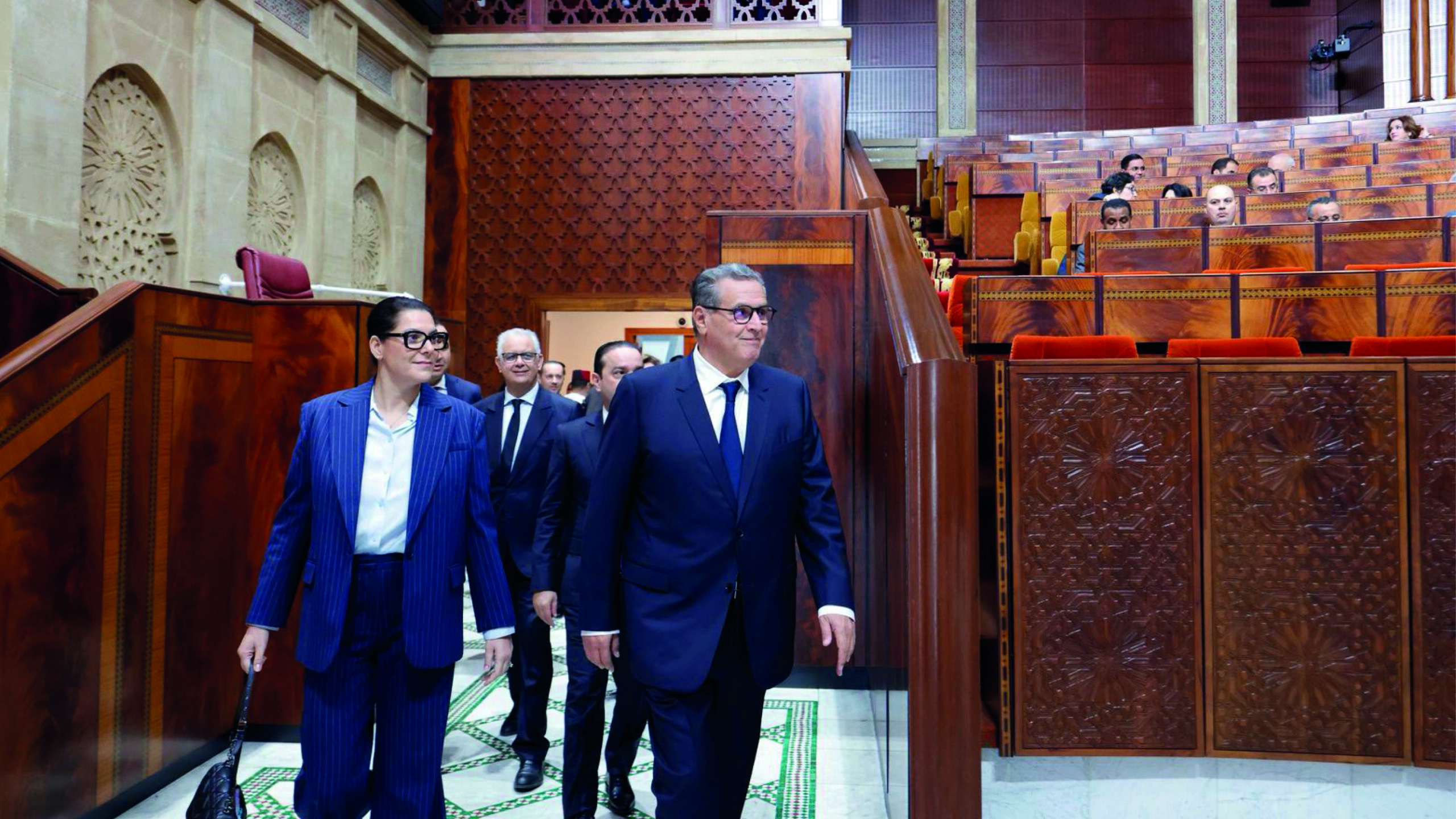
Since taking office in October 2021, the priority set out by the government led by Aziz Akhannouch has been clear: to consolidate the foundations of a social state capable of guaranteeing citizens’ dignity and reducing inequalities.
This undertaking, driven by the enlightened vision of His Majesty King Mohammed VI, is based on a profound transformation in the philosophy of public action.
Social rights are no longer conceived as ad‑hoc assistance mechanisms, but as fundamental rights embedded over the long term.
The record recently presented by the Head of Government is striking, both economically and socially: achievements that demonstrate how the Kingdom has moved to a new level through the successful implementation of a range of far‑reaching structural reforms.
The generalisation of social protection is one of the pillars of this transformation. In just a few years, nearly 15.5 million additional Moroccans have joined the health‑care coverage system, marking a major step towards universal access to care.
The State has supported this expansion through substantial financial effort, covering contributions for the most vulnerable populations.
In the same spirit, the direct social assistance programme has emerged as a flagship measure. Targeting around four million families, this scheme aims to support purchasing power while improving the targeting of public aid.
Through this mechanism, the government seeks to rationalise social action and enhance its effectiveness, avoiding the dispersal of resources.
Health and education: structural reforms
As part of this approach, reform of the health‑care system embodies the ambition to overhaul public services. The sector’s budget has more than doubled in five years, reflecting a clear commitment to modernising infrastructure and improving the quality of care.
The upgrading of thousands of health centres, the construction of new hospitals and the gradual digitalisation of the system all testify to this momentum.
Beyond infrastructure, the government is also investing in human capital by expanding medical faculties and strengthening training capacities.
The dual objective is to reduce territorial disparities and restore citizens’ confidence in the public health‑care system. Education represents the other major strategic priority.
The expansion of preschool education, the gradual generalisation of “schools of excellence”, and the reform of teachers’ status reflect a determination to improve the quality of public education.
The government has also invested in vocational training and higher education to better meet labour‑market requirements.
These efforts are part of a long‑term vision: to make Moroccan youth a driver of development by equipping them with the skills needed to integrate into a changing economy.
A resilient economy in the face of crises
Moreover, such far‑reaching reforms would not have been possible without economic momentum evident across several sectors.
The government made no attempt to use the international context—marked by successive crises, supply‑chain disruptions and market volatility—as a pretext to suspend social reforms. On the contrary, it took every step to strengthen the resilience of the national economy.
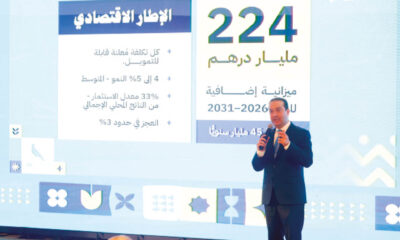
Economic growth has indeed shown a notable improvement, reaching nearly 4.8% in 2025, compared with 1.8% in 2022.
This improvement has been accompanied by a diversification of activity, with non‑agricultural sectors playing an increasing role. The labour market also reflects this dynamic, with the creation of around 850,000 jobs between 2021 and 2025.
Although unemployment remains a major challenge, these figures indicate an acceleration in the pace of job creation compared with previous periods.
At the same time, the government has worked to preserve macroeconomic balances. The budget deficit has been reduced, inflation contained and public debt stabilised.
These outcomes have bolstered Morocco’s credibility with international investors and rating agencies, with tangible effects on foreign direct investment inflows, which peaked at 56 billion dirhams in 2025.
Confidence, responsibility and solidarity
Furthermore, the government has placed particular emphasis on social dialogue. Agreements have been concluded with social partners, providing for wage increases and tax reforms.
In parallel, measures have been implemented to support purchasing power, notably through the Compensation Fund. These interventions have helped limit the impact of inflation on households in a difficult international context.
The housing support programme also fits within this logic, facilitating access to home ownership for tens of thousands of families. Reducing territorial disparities is another key axis of government action.
Through advanced regionalisation and territorial development programmes, the State seeks to guarantee equitable access to basic services. Progress has been made in infrastructure, access to water and electricity, health care and education.
The aim is to transform regions into development hubs capable of generating economic opportunities and curbing rural exodus.
Beyond figures and indicators, a deeper transformation is under way: that of the relationship between the State and the citizen.
The social state project seeks to establish a new social contract based on trust, responsibility and solidarity.
Morocco is thus committing to a trajectory that aims to reconcile economic modernity with social cohesion.
It is an ambitious endeavour, the outcomes of which will depend on the ability to sustain this momentum and translate reforms into tangible improvements for all citizens.