Kingdom
From Managing Scarcity to Managing Abundance
Just a little over a year ago, the government was ramping up investments to speed up the desalination of seawater and brackish water to supply cities and villages with drinking water. In December, it shifted to managing floods and their impact. In scarcity as in abundance, water management has been exemplary.

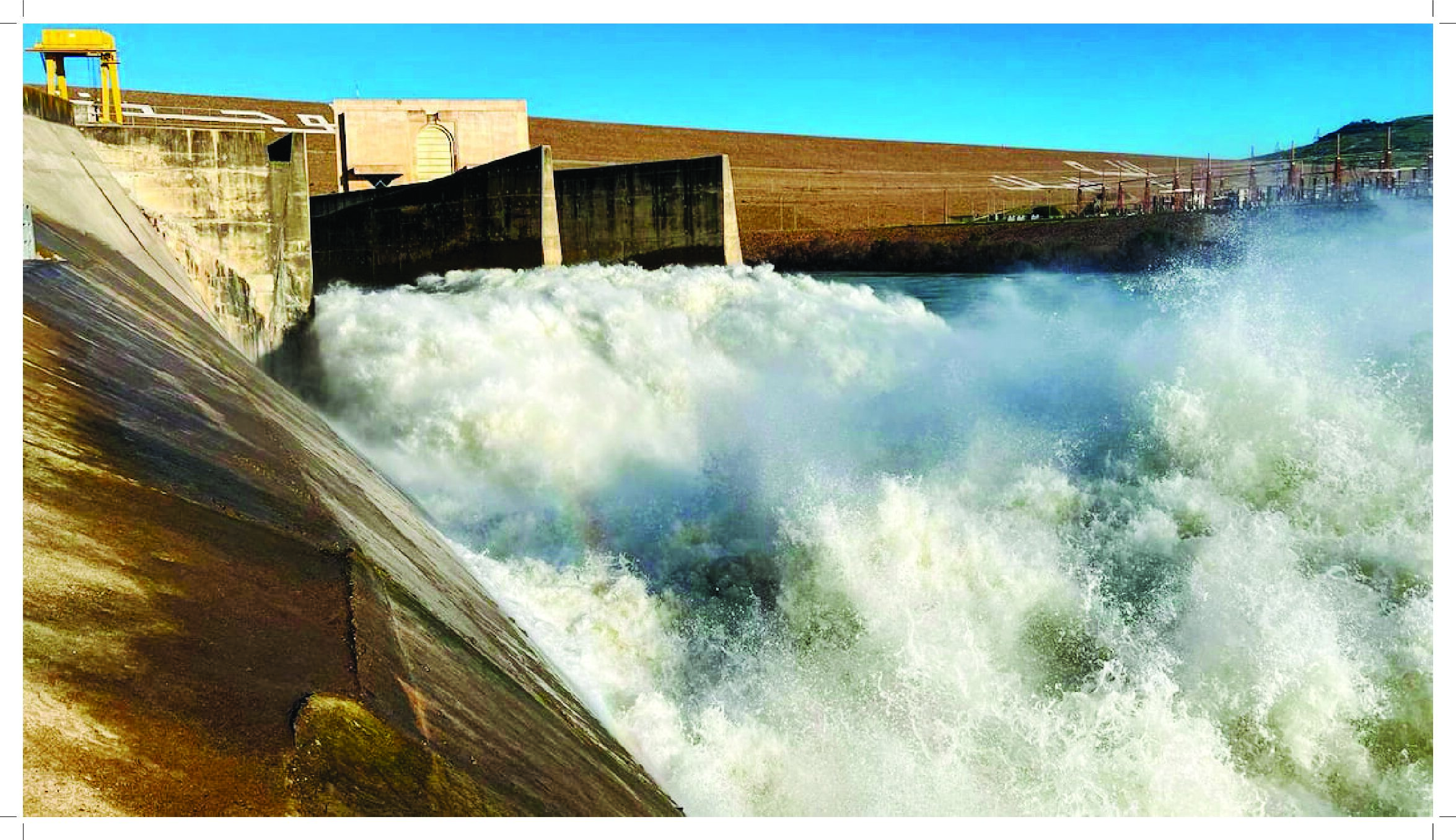
This is an unprecedented situation that the Kingdom has just experienced. The public authorities quite simply switched, within a very short period of time, from managing water scarcity to managing water abundance. While measures were being multiplied to ensure that certain regions would not suffer from thirst, here we are, overnight and without transition, managing the risk of flooding.
Moroccans are anxiously watching dam fill-rate readings, assessing the risks of reservoirs overflowing, whereas only a few months earlier we were following with interest and impatience the progress of construction work on desalination plants.
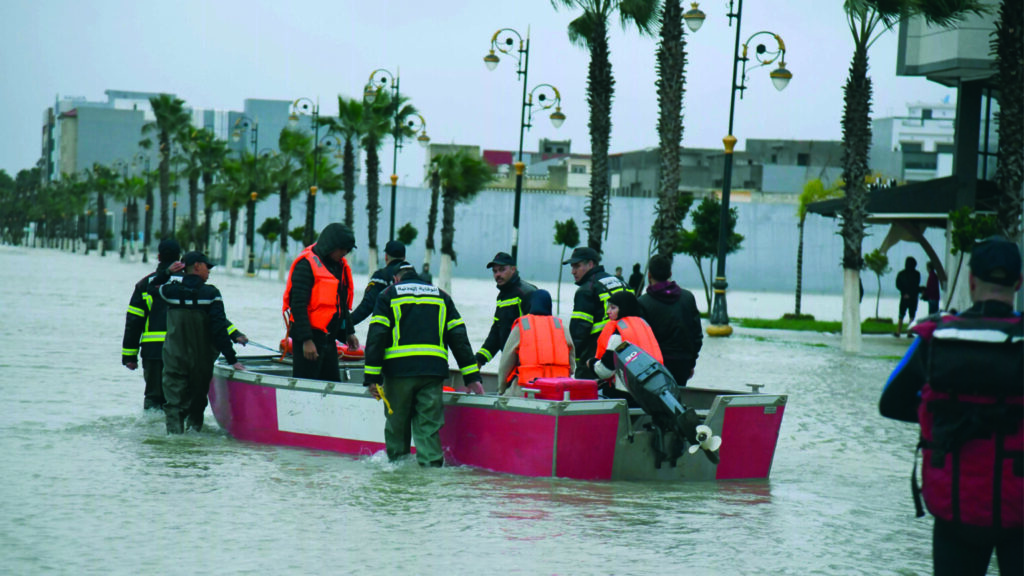
Public authorities—the government, in this case—were working flat out in 2023 to secure the drinking-water supply for the Rabat–Casablanca corridor; less than two years later, it became necessary to evacuate an entire city, Ksar El-Kébir, and many douars in the Gharb region, to avoid the risk of loss of human life.
As of December 18, 2023, water was going to be cut off in the cities of Rabat and Casablanca and in surrounding urban areas. The Sidi Mohammed Ben Abdellah dam, now at a 95% fill rate (i.e., more than 935 million m³), contained only 85 million m³ of water.
A population of 12 million inhabitants was quite simply going to find itself without drinking water. A little over two months earlier, in October 2023, the first project of the “water highway,” linking the Sebou to the Bouregreg, was operational. In the end, water was not cut off, and the population was spared scarcity.
In both situations, and without resorting to any form of foreign aid whatsoever, Morocco managed to save cities from thirst and from flood risks.
If securing the supply of entire cities requires swift decision-making, coordination between departments, investment, and a sustained pace of work, in the other case—evacuating tens of thousands of citizens under conditions that were widely praised—another logistical set-up had to be devised with the intervention of the Royal Armed Forces (FAR). Morocco received 12 billion m³ of water in two months, including 6 billion m³ in a single week.
The Oued El-Makhazine dam, for example, received a continuous flow of 3,200 m³/s. Existing storage capacity was unable to take in that amount of water in such a short time. Water had to be released. A weighty decision to make, given the uncertainty of being able to replenish that water and while measuring the impact on the areas downstream of the dams.
“Every decision taken has repercussions that can affect citizens’ lives,” the Minister of Equipment and Water would later explain at a press conference.
World-class expertise
The Kingdom surpassed itself. The evacuation of more than 180,000 citizens in several provinces—notably Larache, Kénitra, Sidi Kacem, and Sidi Slimane—together with the organization of their gradual return to their homes, is unquestionably the largest operation of anticipatory intervention carried out by the country in managing a natural disaster.
Rare are the cases in which an operation of such magnitude has been conducted with such mastery. The closest case is undoubtedly that of 2005 in the United States, as Hurricane Katrina approached. Nearly 1.2 million people were evacuated. As with Ksar El-Kébir, the major risk came from the breaching or overtopping of levees and dams.
The difference is that the Moroccan evacuation of 2026 was more “orderly” thanks to the use of surveillance drones, avoiding the social chaos observed in 2005. In 1998, China mobilized the army to evacuate 14 million people. In 2021, more than 1.2 million people were preventively displaced, due to record seasonal flooding of the Yangzi Jiang and Huang He rivers.
To do so, the country relied on massive use of the armed forces and strict control of evacuated zones to prevent looting. This bears no resemblance to the nature of the intervention by the Royal Armed Forces. The closest case to Morocco is probably that of Australia in 2021.
During floods linked to the La Niña phenomenon, more than 40,000 people were evacuated. This is the model that comes closest to Morocco on the technological aspect. Australia pioneered the use of AI predictive models to decide the exact time of evacuation before the first road was cut.
In Morocco, there was notable large-scale deployment of technology to protect property. To reassure residents who feared their empty homes would be looted, the DGSN and the Royal Gendarmerie used fleets of drones to monitor evacuated neighborhoods day and night—an unprecedented step for a natural disaster of this magnitude in Morocco.
In this sense, the deployment—according to some sources—of night thermal-vision drones, connected to an on-site command center, made it possible to monitor entire neighborhoods, by day as well as by night, with a reduced workforce.
Cutting-edge technology
Let us recall that this was not the first time Morocco used a system of drones equipped with thermal cameras. These drones, capable of flying at low altitude regardless of weather conditions, were used for the first time in 2021 to fight forest fires.
Their use in Ksar El-Kébir made it possible, without any exaggeration, to move the evacuation forward in that month of February 2026 for thousands of people. This operation has become a global reference in crisis management because it combined mass logistics with cutting-edge technology.
Some observers note, in this regard, that “investment in precision meteorology is more profitable than any levee” when facing floods.
The Kingdom, it should be recalled, acquired in 2022 the most powerful supercomputer in Africa, dubbed “AMTAR,” in reference to precipitation. It is 120 times more powerful than the DGM’s former system and enables, among other things, better anticipation of thunderstorms, heavy rain, and climate change.
This is therefore how the speed of intervention by local authorities—anticipating potential flood risks by mobilizing rescue resources and mechanisms and making them available to the population—was widely praised.
This, just as much as the intervention of the Royal Armed Forces, the Royal Gendarmerie, the DGSN, Civil Protection, the Auxiliary Forces, and the territorial authorities to evacuate disaster victims and secure their property in the hardest-hit areas, notably in the city of Ksar El-Kébir.
In terms of respect for human rights, what was highlighted in particular was free transport for the population and the creation of reception centers and health centers for all citizens, with particular attention to pregnant women, the elderly, and persons with disabilities.
The speed, professionalism, and high level of coordination with which the authorities faced this situation—making use of the latest cutting-edge technologies—are proof of the quality of know-how acquired over decades.
An undeniable expertise in rescue operations, thanks to the famous ORSEC plan (Organisation des secours—Emergency Response Organization), now time-tested, whose current version dates back to the early 1980s.
Proof, too, that in managing natural disasters—a dedicated compensation fund has in fact been set up and has just been activated for the second time—Morocco is now a world reference actor.
ORSEC Plan, the backbone
The main strength of the ORSEC plan was that it established a clear hierarchy. Under the authority of the wali of the region and the governor, a fixed command post (PCF) was set up at the prefecture, coordinating the Royal Armed Forces (notably military engineering and helicopters), the Royal Gendarmerie and the DGSN (security and drones), Civil Protection (rescue and pumping), health services, and local authorities. As is known, the ORSEC plan works through “modules” (rescue, transport, care, logistics).
Three modules were decisive. First, evacuation: this component orchestrated the displacement of more than 100,000 inhabitants in less than 48 hours, by requisitioning urban and intercity transport buses.
Then logistics: this module made it possible to mobilize strategic stocks of food products and blankets, transported by the FAR to reception centers (schools and youth centers).
Lastly, transmission: a module to ensure continuous communication with areas isolated by the waters. After that came the inventory of damage by joint commissions and, finally, large-scale disinfection, by municipal cleanliness and hygiene services, of flooded areas to prevent disease.
It was the strict application of the ORSEC protocol that made it possible to anticipate the massive water release from the Oued El-Makhazine dam. Without this procedural framework, the decision could have been delayed by administrative hesitation, leading to a human catastrophe.