Kingdom
From Independence to Unity, the Meaning of Words
On the eve of the celebration of the 50th anniversary of the Green March and the 70th anniversary of Independence, and following the adoption of Security Council Resolution 2797/2025 on the Moroccan Sahara on October 31, the Sovereign declared this day the “Festival of Unity” A whole symbol.

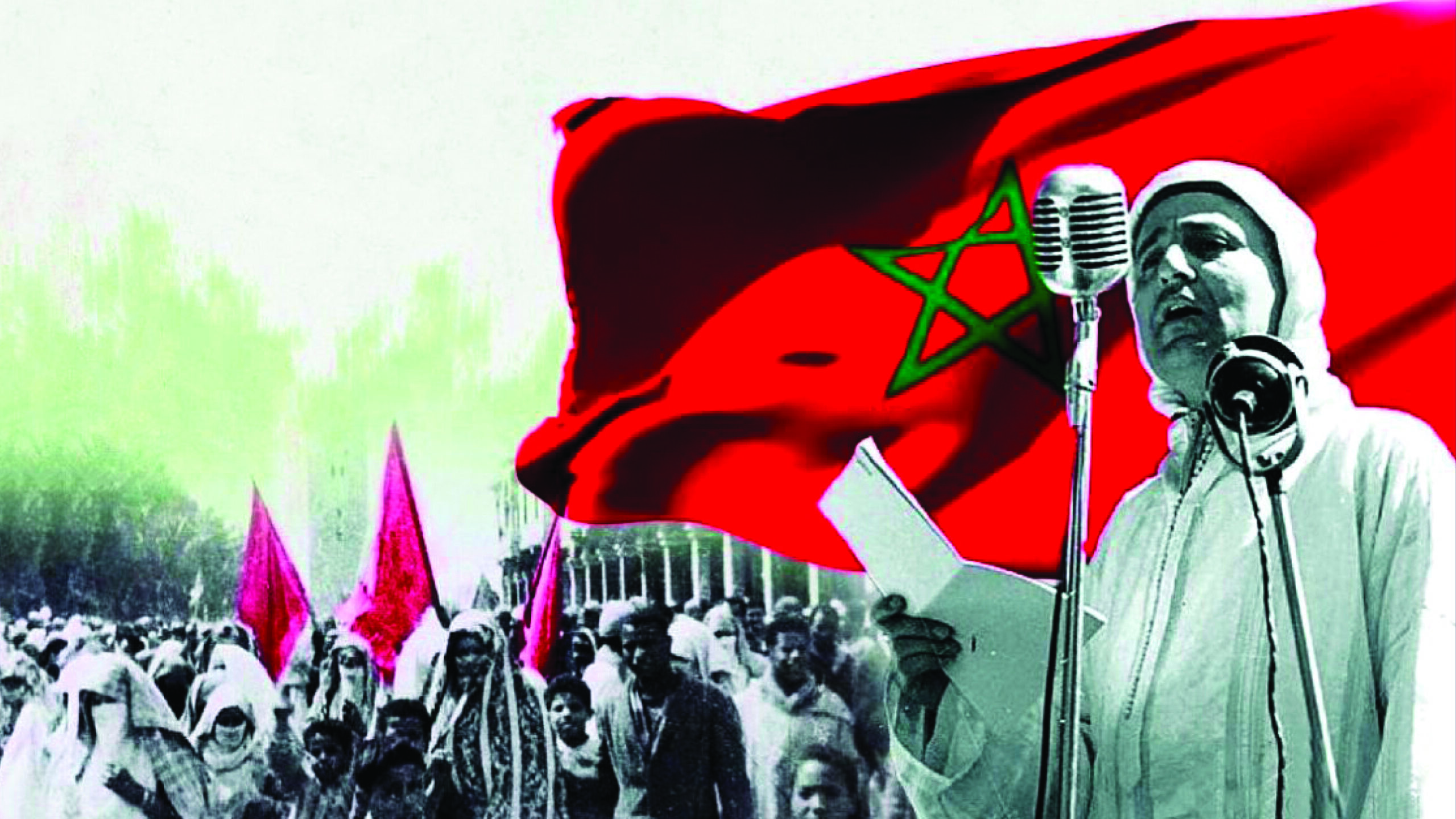
From the Festival of Independence to the Festival of Unity, passing through the commemoration of the Green March, these three historical moments mark the great march of a Kingdom united around its values, cemented by the monarchical institution, and advancing with steady steps on the path of development.
Certainly, one can speak of a multitude of symbols from these three reference dates in the national narrative of Morocco, of which they are the embodiment, but beyond that, they are also and above all the expression of a collective identity set in stone and shaped by the countless struggles that the Kingdom has waged—first to regain its independence under the guidance of the late His Majesty Mohammed V, then to complete its territorial integrity under the leadership of the late His Majesty Hassan II through the epic of the Green March, and finally, to bring this long process to fruition, marked by brilliant diplomatic victories, under the leadership of His Majesty Mohammed VI.
A process crowned by the adoption of the Security Council resolution consecrating the preeminence of the Autonomy Initiative as the sole basis for any solution and Moroccan sovereignty as the legal framework.
Yet, if there is one historical constant in this march of the Moroccan nation, it is the embodiment of this unbreakable unity between the Monarchy and the Moroccan people. A unity that has proven itself against all the adversities the Kingdom has had to face.
And the celebrations, through historical markers, are, in this sense, the condensed form of a collective memory, combined with an unshakable national cohesion, corollaries of the transmission of common values. All the more so, historians will say, as these moments reinforce the sense of belonging in the same way that they transcend all kinds of differences.
Historical References
In this matrix, we will recall how Moroccans welcomed the triumphant return of the late His Majesty Mohammed V from exile. It was November 16, 1955. A date forever engraved in the memory of an entire people, and one that moreover marked “a decisive turning point in the History of Morocco.”
Two days later, the architect of Independence, with by his side His Royal Highness the Crown Prince, the late His Majesty Hassan II, declared: “We rejoice to be able to announce the end of the trusteeship regime and the protectorate and the advent of an era of freedom and independence,” thereby announcing that the Moroccan people were moving from the battle of the “small jihad” to that of the “great jihad.” Thus, one page was turned and another opened.
That of the construction and edification of modern Morocco. A Morocco resolutely turned toward the future. Thus, as early as 1956, the Kingdom began a major political and administrative transformation, aimed at breaking with the legacy of the protectorate. Three years later, the establishment of a modern administrative system would be witnessed, with its axes being decentralization, deconcentration, and regionalization.
That same year would see the establishment of 800 basic territorial communities, as well as a pluralistic elective system for Municipal Councils and universal suffrage.
On the economic front, Morocco adopted a vision based on development plans to initiate a virtuous dynamic for its economy. These plans notably aimed at the industrialization of the country.
Special emphasis was placed in this regard on the imperative to fructify the activity of the mining sector, the development of the agricultural sector, to ensure food sovereignty, and the training of executives to better manage, with Moroccan brainpower, the affairs of Morocco.
This without overlooking the promotion of the country’s various infrastructures. And one of the flagship examples that historians recall is that of “Tarik Al-Wahda” (the Road of Unity), built between July and September 1957 by 11,000 young people from all regions of the Kingdom following the call to mobilization by the late His Majesty Mohammed V.
This road, it should be recalled, was intended to link the north to the south of the Kingdom. And to give full meaning to this mobilization, the late His Majesty Hassan II, then Crown Prince, was at the head of the volunteers. The ardor of an entire people was at work.
The same popular fervor would also mark minds when the late His Majesty Hassan II launched, on October 16, 1975, his call for the Green March. Here again, the unitary momentum was in play, and the Moroccan people responded with one voice by adhering to the approach of the late Sovereign.
History will remember these words of the late His Majesty Hassan II, in a speech addressed to the nation on November 5, 1975: “Hardly had We announced Our decision to undertake this blessed March than you came forward with a single impulse to respond to Our call. Moreover, this nobility has always been your hallmark.”
The next day, no fewer than 350,000 volunteers—and they could have been more numerous, with the Quran and flags as their only weapons—crossed the imaginary borders between the north and the southern provinces of the Kingdom. Here again, it was a new demonstration of what the unitary momentum is, which has always been a characteristic trait of the Kingdom.
Fifty years later, just days before the celebration of half a century of the Green March, we will witness a new manifestation of this sense of Unity.
On October 31, His Majesty Mohammed VI delivers a new historic speech following the adoption by the UN Security Council of Resolution 2797. Linking the present to History, His Majesty the King emphasizes: “It is a true reason for pride that this historic change occurs at the time when the fiftieth and seventieth anniversaries of the Green March and the Independence of Morocco are respectively commemorated.” Thus, the fabric is woven.