Kingdom
Food‑grade CO₂: A Booming Niche
Invisible yet vital, CO₂ has become a critical link in the food industry. Caught between geopolitical tensions and dependence on imports, Morocco is seeking to produce its own bubbles to prevent the growth of this strategic sector from evaporating in step with shortages of this key gas.

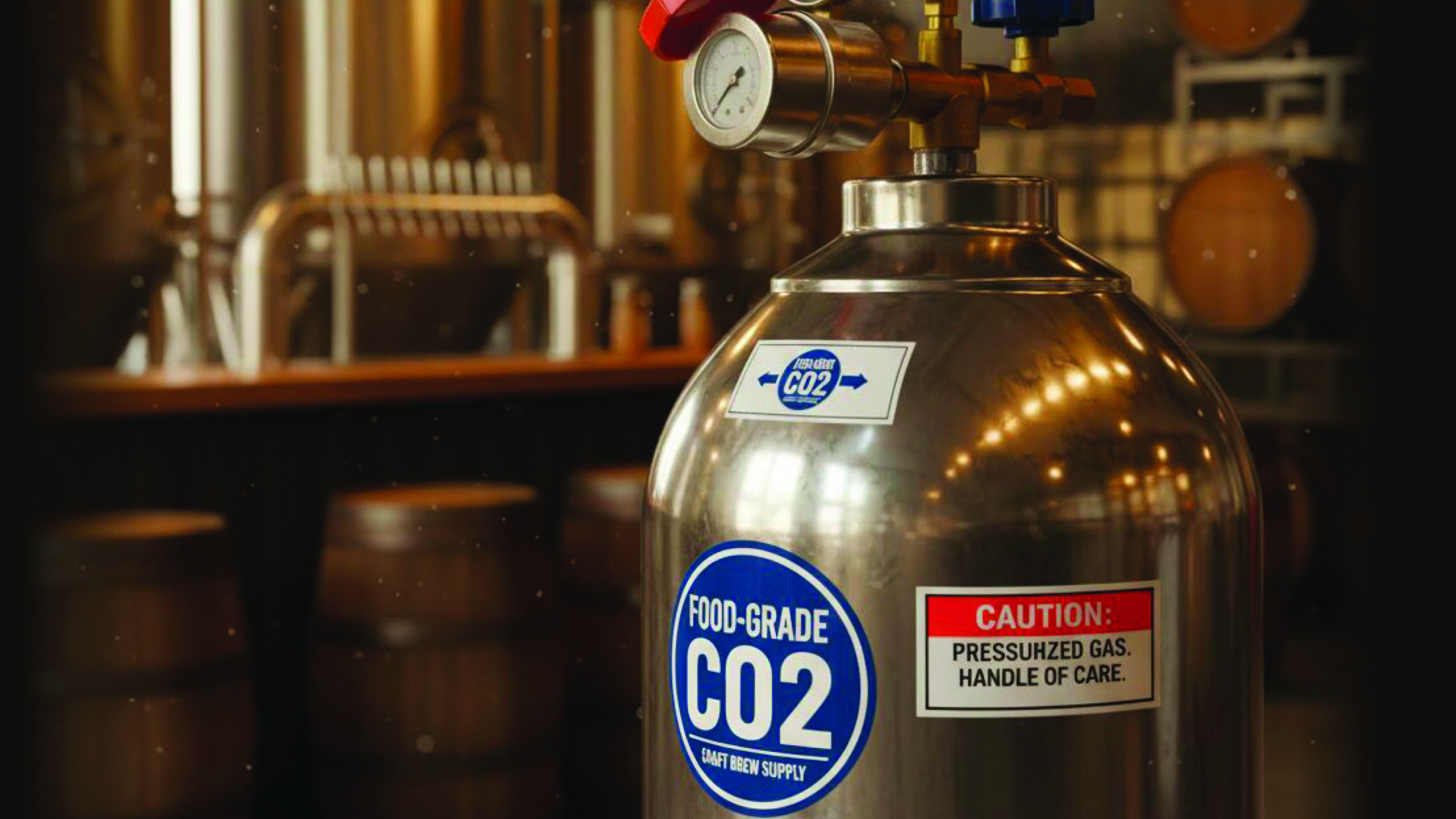
Monitored in laboratories and shunned in carbon accounting, CO₂ has an identity that is far less widely known: that of a strategic input for large segments of the food industry.
Beverages, the cold chain, packaged meats, food processing and packaging… A pollutant to be contained for some, a raw material to be secured for others, CO₂ occupies a singular position in the economy. And when this gas runs short, entire production chains begin to falter.
This industrial paradox, long unnoticed, is now at the heart of supply tensions surrounding food‑grade CO₂, which has become a collateral victim of the conflict between Washington and Tehran.
Derived primarily from ammonia production—an activity itself highly dependent on natural gas, which accounts for up to 80% of fertiliser production costs—this by‑product has been hit hard by the energy price surge.
The spectacular rise in gas prices, particularly in Europe, resulting from military escalation and the closure of the Strait of Hormuz, has squeezed supply and driven up costs. A shockwave that may ultimately reach the price of carbonated drinks and numerous food products.
Amid this highly turbulent context, which threatens to deflate the effervescence of production lines, Morocco is seeking to produce its own bubbles in order to secure supplies for its agri‑food industry.
This is precisely the challenge behind the project led by Cosumar, which plans to set up a liquid food‑grade CO₂ (LCO₂) production unit alongside its Casablanca refinery.
The model is based on the recovery of an existing industrial flow: capturing, purifying and liquefying CO₂ generated by industrial processes in order to achieve a purity level exceeding 99.9%, in line with international standards.
Cosumar, a pioneer of local CO₂ production
With an investment of 500 million dirhams, the project—scheduled to come on stream by the end of 2026—will initially have a capacity of 20,000 tonnes per year.
“The engineering studies have been completed and equipment procurement is already under way, with operations expected to begin before the end of the year. The overall project duration is thirty months, from feasibility study to commissioning,” the group’s management told us.
Asked about the announced initial production capacity, our interlocutor considers the volume consistent with the needs of the national market, particularly the agri‑food sector, the primary outlet for CO₂.
Beyond this, the national leader in the sugar industry is targeting other high‑potential industrial segments, such as cryogenics, agriculture, and seawater desalination. Commercial development will proceed gradually, in line with demand trends and the ramp‑up of the facility.
“This project will significantly reduce Moroccan industrial dependence on imports and position a local player capable of providing reliable, competitive and proximity‑based supply,” the group maintains.
Local production fundamentally reshapes the economic equation for Moroccan industrial players, who will move from a costly and complex import model to an optimised short supply chain—starting with international transport costs.
Importing liquefied gas (between 3,000 and 7,000 dirhams per tonne) entails heavy logistics, including tanker vessels or cryogenic containers, whose rates are indexed to global freight prices and thus vulnerable to geopolitical shocks, not to mention fuel costs and refrigerated truck maintenance.
Any increase in logistics costs—representing between 30% and 50% of the final cost and borne by distributors—is inevitably passed on to industrial clients.
Controlled currency exposure, clearer pricing
Beyond shorter transport distances, Cosumar’s future unit will enable substantial savings, since the average cost of road transport by semi‑trailer tanker—estimated at around 0.44 dirhams per tonne per kilometre in Morocco—is far removed from international maritime freight costs and port charges.
Local purchasing also eliminates customs duties and import taxes, which represent a substantial expense for operators such as Maghreb Oxygène or Air Liquid Maroc. Logistics costs are, moreover, one of the core pillars of the National Logistics Competitiveness Development Strategy, which aims to reduce their weight from 20% to 8% of GDP by 2030.
Another major advantage lies in currency‑risk control. Transactions denominated in dirhams will shield industrial clients from currency volatility—particularly fluctuations in the dollar and the euro—which heavily impact import bills.
They will also reduce the need to build up large safety stocks to hedge against global logistical uncertainties, thereby improving price visibility, procurement planning and working capital management.
“The development of local production gives industrial players greater responsiveness, guaranteed availability and security of supply. It also reduces import‑related logistical constraints and enables the provision of a competitive offering adapted to the evolving needs of the national market,” our source summarises.
In the medium term, Cosumar plans to roll out this model—“developed using internal resources”—at other industrial sites, capitalising on internal synergies and available CO₂ streams.
Over the longer term, the group aims to develop biogenic LCO₂ derived from biomass, paving the way for greener production less dependent on ammonia cycles. This shift could disrupt a sector historically dominated by fertiliser production, while strengthening the national decarbonisation strategy and opening up regional—and even export—opportunities.
By investing in food‑grade CO₂ sovereignty, the Kingdom is not merely carbonating its beverages: it is injecting resilience into its industrial base to better absorb geopolitical shocks and secure value chains that have become critical.
Carbonated beverages: a structuring outlet
The local carbonated beverages market is a key driver for LCO₂ demand. Valued at between 5.5 and 6 billion dirhams in annual turnover, it is dominated by Coca‑Cola Maroc, which holds nearly 50% market share and sells more than 400 million units each year.
Production is carried out locally through bottlers such as North Africa Bottling Company (NBC) in Casablanca, Société des Boissons Gazeuses du Souss (SBGS) in Agadir, and Atlas Bottling Company (ABC) in Tangier. Other players, including Varun Beverages Morocco (Pepsi bottler), Société des Boissons du Maroc, and Les Eaux Minérales d’Oulmès, complete the landscape.
In 2025, Equatorial Coca‑Cola Bottling Company (ECCBC), a major bottling partner of The Coca‑Cola Company in Morocco, invested 715 million dirhams in two new production lines in Nouaceur, enabling a 40% increase in site capacity. Driven by the momentum of major upcoming events, including the 2030 World Cup, demand is expected to continue rising.