Business
Fatim-Zahra Ammor: “The results are the outcome of a proactive and ambitious government policy”
Achievements of the sector, progress of the roadmap, impact of the 2030 World Cup…, the Minister of Tourism presents a record-rich assessment.

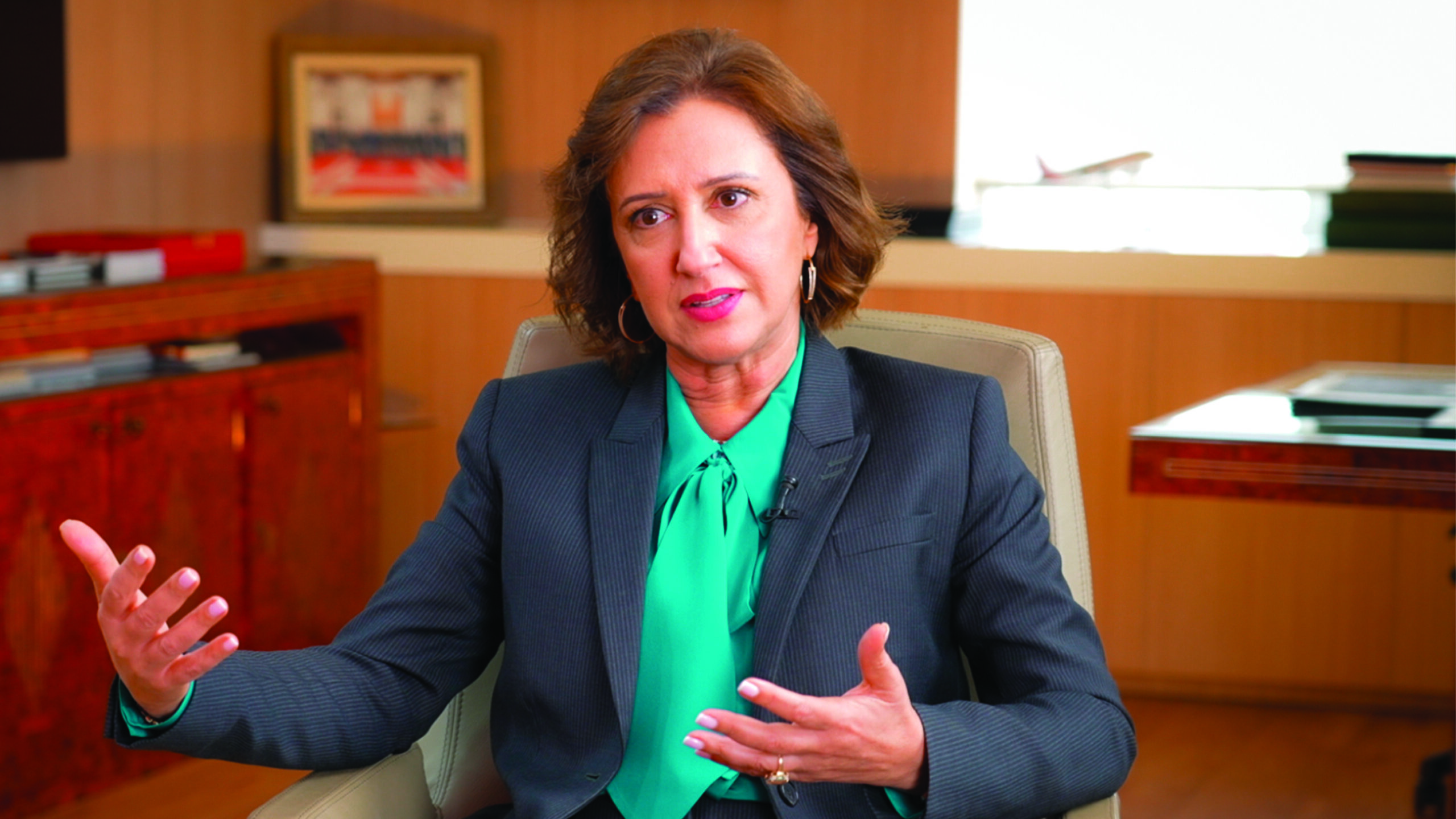
After managing the aftermath of the Covid crisis, the government has drawn up an ambitious roadmap for 2023–2026. Today, its objectives have been achieved—even surpassed—and no component has been left behind. Even better, aspirations remain strong for 2030 and beyond, as Fatim-Zahra Ammor emphasizes. Interview.
All indicators in the tourism sector are breaking record after record, even exceeding the ambitions of the roadmap. Is an update being considered for more ambitious goals?
Indeed, under the enlightened leadership of His Majesty King Mohammed VI, may God assist him, Morocco is achieving exceptional performance in the tourism sector. To provide some key figures: by the end of October, we have already welcomed 16.6 million tourists, a 14% growth compared to last year, with projections to close the year with 19 to 20 million tourists.
Travel receipts have also reached a historic level, exceeding 100 billion dirhams by the end of September. Behind these results, it is important to recall the major social impact of the sector. Tourism currently employs more than 800,000 people directly and nearly 3 million indirectly.
In 2023 alone, the sector’s momentum created 25,000 jobs. We are awaiting the final figures for 2024, but they are expected to be of a similar magnitude. It is important to emphasize that these achievements are no accident. They are the result of a determined and ambitious government policy.
Since the beginning of the term, 8 billion dirhams have been injected into the sector, including 2 billion through the post-Covid emergency plan and 6 billion dedicated to implementing the tourism roadmap.
The deployment of this roadmap continues. Are there any projects advancing more quickly than others?
First, let’s recall that this roadmap is built around a tourism offering centered on experience. It is structured around six major levers: air travel, promotion, investment in accommodation, investment in entertainment, human capital, and the repositioning of the Tourism Observatory.
Among the levers advancing most rapidly, I would mention air travel, which benefits from significant investment efforts—nearly one-third of the roadmap’s total budget is dedicated to it. Next, promotion: these are actions we can accelerate faster through structured partnerships with international operators.
For example, the ONMT (National Tourism Office) now secures 60% of overnight stays. We have also made significant progress in the accommodation and entertainment components, thanks to ambitious programs such as Go Siyaha, Cap Hospitality, and the Investment Charter, which strongly stimulate investment momentum and the upscaling of the offering.
You place greater emphasis on the customer experience than on the simple notion of a destination. Is this experience better mastered?
The notion of “mastery” is difficult to measure in absolute terms. I prefer to highlight concrete performance indicators.
We therefore closely monitor several metrics, including satisfaction surveys we regularly conduct through ratings on online booking platforms, international rankings in which Morocco now features among the most recommended destinations for travel in 2026, and finally, the UN Tourism ranking where the Kingdom ranks first in Africa and 13th globally in terms of growth.
These are, in my view, the true indicators that demonstrate that even if the customer experience may not be “perfectly mastered” in the strict sense, it is clearly appreciated and makes visitors want to come.
And to probably return as well… So what is the tourist return rate?
Currently, the return rate is around 36%, while it was 32 to 33% in 2019. However, this figure must be interpreted with caution. A return rate that is too high certainly means that visitors are returning, but it can also indicate that we are essentially operating with the same clientele, without successfully attracting new ones.
Conversely, a low return rate could reveal that visitors are not returning to the country. It’s important to note, however, that some destinations are simply not designed to record high return rates. Take Japan, for example. In that country, the return rate remains relatively low because travelers often go there once and return ten years later.
In our case, given our proximity to Europe, a return rate of 36% is quite honorable and reflects a loyal clientele that returns regularly. Our goal is to retain this clientele, but also to expand our visitor base and attract new ones.
Returning to the tourism roadmap, why focus efforts on the nine designated sectors when there are others just as interesting, such as sustainable, sports, and medical tourism?
When we worked on the roadmap, we first identified a much broader range of sectors. In reality, Morocco has tourism potential in about thirty segments, and many of them meet real expectations of the international market. But then a strategic choice had to be made.
We therefore decided to focus initially on the sectors most in demand globally and in which Morocco already has a sufficient level of maturity to scale up quickly. It should be recalled that our roadmap covers a four-year period.
We therefore considered that these nine sectors offered the best chances to quickly structure the offering and generate immediate growth. It is also important to put things into context. The launch of the roadmap coincided with the recovery from the Covid crisis, when our country was barely welcoming 3 million tourists.
The priority was to quickly revive the sector by focusing on sectors capable of attracting a significant volume of visitors in a short timeframe. This absolutely does not mean that we are excluding other segments. We are fully aware of the potential, for example, of medical tourism, which is highly anticipated, and nothing prevents us from expanding the scope and integrating new strategic sectors in the next roadmap.
Among the six levers you mentioned, air travel is a major focus. What has been achieved in this sector over the past three years?
We have made air travel a strategic priority, knowing that 70% of tourists arrive by air. This is why we allocated 2 of the 6 billion dirhams from the roadmap to this single component. Thanks to this investment effort, we have been able to consolidate our traditional markets and achieve significant progress.
We have opened nearly 200 new routes and increased seat capacity by 20% in 2023 and by 20% in 2024. Our strategy is now bearing fruit. It has allowed us to both diversify the number of partner airlines and expand our base of source markets.
For example, we have opened new connections, such as the Marrakech-Atlanta route, Atlanta being the largest hub in the world. As a result, Marrakech is now connected to over 100 American cities. We have also launched routes to China, and others are in preparation. The goal is clear: strengthen our nearby markets, particularly European ones, while opening up to new high-potential markets.
Maritime travel is also taking on great importance, especially with the recent opening of the Casablanca cruise terminal…
The new Casablanca cruise terminal offers a great opportunity to position the city as a gateway to the Atlantic. Until now, Morocco welcomes about 300,000 cruise passengers per year, nearly 60% of whom transit through the port of Tangier.
Before the opening of the new terminal, Casablanca received only 40,000 cruise passengers per year. However, since its launch—that is, in just two months—Casablanca has already welcomed 56,000 cruise passengers. This shows that the port of Casablanca alone could reach 400,000 cruise passengers per year.
On a national scale, this paves the way for a completely realistic goal of one million cruise passengers.
It is necessary to clarify one point, however. This is a market that generates significant local economic activity and contributes to tourism revenue, but it is not included in the official tourism statistics because the visitors do not spend the night in Morocco.
Is this also a segment that requires a specific offering?
Yes, the CRTs (Regional Tourism Councils) are working extremely seriously, whether in Tangier or Casablanca, precisely to develop tailored and attractive tourist circuits for this type of traveler—who, it should be noted, have expectations and behaviors very different from those of the typical tourist.
On a completely different note, lodging capacity seems to be increasing more slowly than overnight stays. How can more investment be attracted to support growth?
Tourist accommodation capacity is currently growing at a particularly strong pace, with a 17% increase in the number of beds, compared to a 22% increase in overnight stays. This gap is logical, as investment cycles in accommodation are longer compared to demand.
Between 2021 and 2025, we managed to create 43,000 beds, while our roadmap had planned for 40,000. This was achieved thanks to the implementation of several structuring mechanisms, such as the new Investment Charter, which offers a highly competitive framework that can provide up to a 30% subsidy on capital; the Mohammed VI Fund, which includes a sub-fund dedicated exclusively to tourism; and the Cap Hospitality program, which financed the renovation of 14,000 rooms in a single year across more than 90 establishments.
Our approach has been very proactive, as it was essential to support the increase in arrivals with a modernized and suitable accommodation offering to meet the demand of increasingly discerning tourists.
Alongside this, human capital remains crucial in the sector. Does the existing offering meet the needs?
It is essential to train more, train better, and above all, in line with the real needs of the market. In this context, several programs are already being deployed, including Cap Excellence, which aims to establish twelve centers of excellence across several regions with public-private governance to ensure that training precisely meets the sector’s needs.
Some facilities are already operational, while others are in the process of being set up. A middle management training program is also being rolled out. We are targeting mid-level managers, who serve as the link between top management and operational teams.
Since 2023, nearly 5,000 people have already been trained. A continuous training program accompanies this initiative to ensure consistent quality throughout the value chain. Additionally, the professional experience validation program, “Kafaa,” allows professionals in the sector without formal qualifications to have their experience recognized.
Last year, over 1,000 people were certified, 5,000 more will be certified this year, and the goal is to reach 7,500 certifications over three years. These initiatives are complemented by the continuous adaptation of training programs to meet new professions and market needs, such as digital marketing skills and other emerging specialties.
We are fully aware of the strategic importance of human resources. Moreover, the sector plans to create 150,000 to 200,000 jobs by 2030, and our training institutions will be able to supply over 150,000 qualified professionals during this period.
The entertainment sector sometimes remains somewhat neglected. Is it the poor relation of the industry?
When we took office, one of the major observations was the glaring lack of tourist entertainment. It is in this context that we launched the Go Siyaha program, endowed with 720 million dirhams, which aims to support 1,700 tourist entertainment companies. This program provides subsidies of up to 35% of invested capital.
To date, around 1,300 companies have already benefited from the program, and new creations are expected in the coming months. Although some results are not yet fully visible—as investment cycles are naturally long—the prospects are very promising.
Focus on 2030. How can the World Cup act as an accelerator for the tourism sector?
Our goal for 2030 is to welcome 26 million tourists. This comes with requirements to strengthen the entire tourism ecosystem—accommodation, entertainment, services, transport—which we are currently consolidating. Obviously, the World Cup plays a catalytic role.
It contributes to Morocco’s international visibility. But we are not working solely for this event. The World Cup is a pretext and an opportunity to equip our country with the infrastructure and organization necessary for the development of sustainable tourism, not only in the host cities.
Our ambition is for visitors, who come for the matches, to discover all of Morocco, beyond the six host cities. The ultimate goal is to build lasting tourism that creates jobs and benefits the entire Moroccan population, while consolidating Morocco’s position on the global tourism stage.
In the meantime, there is the Africa Cup of Nations starting in a few weeks. Is the tourism sector fully ready for this event?
It is not only the tourism sector that is ready. The whole of Morocco is mobilized to make this major football event a success, which will undoubtedly be a great achievement.
Domestic tourism, a fundamental pillar
More than 30% of overnight stays in classified hotel establishments are due to domestic tourism—a statistic that the Minister of Tourism consistently highlights, while remaining aware that the main challenge of national tourism is related to the concentration of flows.
“Everyone travels simultaneously to the same destinations, essentially coastal ones, which creates an imbalance between supply and demand and leads to price increases,” explains Fatim-Zahra Ammor.
The tourism strategy thus aims to diversify the offering across the entire territory. “The nine themes and five transversal sectors of the roadmap were designed so that every region fully participates in tourism development, while respecting its specificities and potential,” emphasizes the Minister.
This work required close collaboration with the regions to define a precise vocation for each. “This way, every region can benefit from the momentum of the tourism sector while enhancing its authenticity and specific strengths. The goal is to enable the entire country to profit from the sector’s growth, while making domestic tourism more attractive and better suited to the needs of Moroccans,” concludes the Minister.