Kingdom
EU Carbon Border Adjustment Mechanism: A Major Challenge for Moroccan Industry
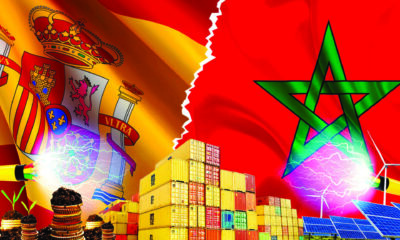
The EU’s Carbon Border Adjustment Mechanism marks a major turning point in trade relations between the European Union and Morocco. While the short-term impact is limited, over the medium term, it will force an accelerated decarbonization of the economy to preserve export competitiveness to the EU.

On January 1, 2026, the European Union’s Carbon Border Adjustment Mechanism (CBAM) entered its operational and financial implementation phase, following a two-year transitional period.
This border carbon tax for the European market is presented by Brussels as a tool to combat “carbon leakage,” aiming to prevent companies from relocating their production to countries with less stringent climate regulations.
In a way, the CBAM aims to establish a level playing field, as European companies are already paying a price for their carbon emissions through the Emissions Trading System.
Consequently, the CBAM imposes an equivalent cost on importers to ensure the carbon price is the same, whether a product is manufactured in Europe or elsewhere.
Since the start of the year, the price of carbon has reached record levels, exceeding 88 euros per ton of CO2, increasing the financial pressure on carbon-intensive industries. Initially, the mechanism applies to the six most carbon-intensive sectors: cement, iron and steel, aluminum, fertilizers, electricity, and hydrogen.
For Morocco, which conducts nearly 65% of its foreign trade with Europe, this new barrier to the common market represents a significant challenge. Indeed, every carbon credit purchased from Brussels now impacts the price competitiveness of Moroccan products in the European market, unless their manufacturing process is decarbonized.
A “Limited” Cost for Now
However, according to a recent report by the Economic, Social and Environmental Council (CESE), the short-term impact of CBAM on Morocco will remain limited. It currently affects only a small portion of Moroccan exports, estimated at 3.7%, primarily concentrated in fertilizers.
Estimates project an additional annual cost for Moroccan exporters between $20 and $34 million. Furthermore, the impact is likely to be further mitigated as affected companies, mainly large groups, are more likely to be engaged in decarbonization efforts or have the means to adapt.
The OCP Group is implementing a massive 130-billion-dirham green investment program, aiming for 100% clean energy by 2027 and carbon neutrality in its operations by 2040. Sonasid, the Moroccan steel leader, is not far behind. The Moroccan steel leader has built a production model that is 100% based on scrap metal recycling and over 90% powered by renewable energy.
This achievement has earned it the valuable Environmental Product Declaration (EPD), providing verified proof of the product’s environmental performance.
Medium-Term Challenges and Opportunities
In the medium term, however, the challenge could intensify. The EU plans to expand the CBAM’s scope from 2027 to include other products, indirect emissions, and downstream products. For CESE, this extension could affect a larger volume of Moroccan exports and, consequently, impact the competitiveness of key national sectors like automotive, agriculture, and aeronautics. This compels the entire value chain of these industries to decarbonize.
Nevertheless, far from being a passive victim, Moroccan authorities have proactively developed a national low-carbon strategy since 2021, aiming to transform this constraint into an opportunity.
This strategy rests on two pillars: accelerating the development of renewable energies, targeting a 96% decarbonized electricity mix by 2050, and the widespread implementation of energy efficiency measures. It must be noted that Morocco holds a significant advantage in renewable energy.
With an increasingly greener energy mix, the Kingdom holds a trump card, being one of the countries that can produce renewable energy at some of the lowest costs in the world. This provides a competitive advantage compared to rival countries.
This decisive advantage, as the CESE Council emphasizes, requires “accelerating” the deployment of wind and solar projects nationwide and ensuring industrial companies have access to green electricity.
In parallel, Morocco is working on the gradual implementation of a national carbon tax and the development of a national carbon market aligned with international standards.
The goal is twofold: reduce the impact of the CBAM on the competitiveness of its exports (since a carbon price already paid domestically can be deducted), while retaining the revenue from the carbon tax domestically to avoid a capital outflow abroad.
According to forecasts from the Administration of Customs and Excise, this national tax could generate between 2.7 and 3 billion dirhams annually for state revenues.
A Complex Compliance Process
In the meantime, while waiting to fully benefit from this strategy, industrial companies, particularly SMEs, are preparing as best they can to decarbonize their production. They can rely on a range of technical and financial support instruments offered by the state.
Among the most used is the “Tatwir croissance verte” program by Maroc PME, which can finance up to 90% of the technical feasibility studies for decarbonization projects and grants a 30% investment subsidy for funding these projects.
The main challenge for Moroccan SMEs is administrative. Proving and calculating a carbon footprint requires technical expertise and certified reporting systems.
Aware of the stakes, the General Confederation of Moroccan Enterprises has intensified information sessions, awareness campaigns, and training, especially through its regional branches, to prepare companies for the mechanism’s requirements.
The employers’ organization has also published a comprehensive guide to corporate decarbonization, while a tool for calculating carbon footprints has been developed by the Mohammed VI Foundation for Environmental Protection. The Moroccan Standards Institute (IMANOR) is at the forefront of supporting companies in this complex and costly compliance process.