Kingdom
Electronic Payments: Make Way For the Multi-Acquirer Model
Since February 1, 55,000 contracts have been transferred to CMI’s seven acquirers. The allocation was made based on the merchant’s account domiciliation IBAN. Attijari Payment, Damane Cash, and M2T account for 70% of the market’s volume.

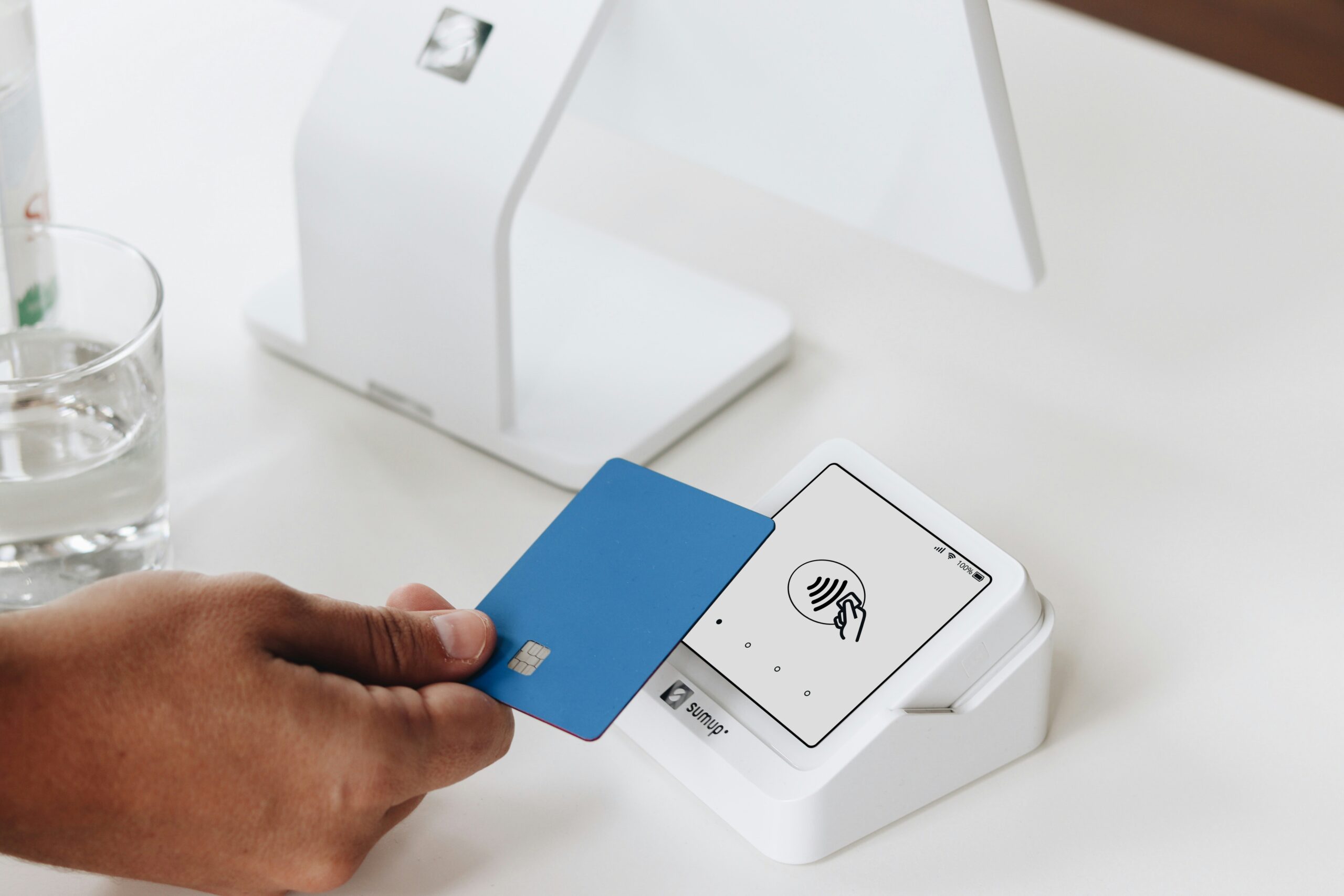
On January 31, CMI finalized the transfer of its card-payment acquiring business. All merchant affiliation contracts for electronic payment terminals (EPTs) and online payments were thus assigned to the new payments acquirers—seven in total—all payment institutions and subsidiaries of CMI’s shareholder banks.
In fact, the shareholder consortium includes eight banks. However, BMCI chose not to launch a payments acquiring business.
It is true that the Competition Council had set November 1, 2025 as the deadline for the definitive switch to the multi-acquirer model.
But, with the organization of AFCON and to avoid any potential disruption to electronic payments, the institution was asked to postpone this full transfer and agreed to grant additional time, setting the new deadline no later than the end of January.
The electronic payments market has therefore, since February 1, 2026, entered a new era, with the watchword being a reshuffling of the deck.
After more than 20 years in a dominant position, CMI is no longer an acquirer, and the market is shared among these seven acquirers, in addition to three other independent acquirers that were already operating directly in the market alongside CMI—Naps, Barid Cash, and VPS (Vantage Payment Systems).
Cash Plus should soon join the race. Thus, since February 1, the receipts generated by EPTs during card payments no longer display the name CMI in the header, but rather that of one of the seven payment institutions (Attijari Payement, M2T, Damane Cash, Lana Cash, Al Filahi Cash, Saham Paiements, and CDM Pay).
Only the most observant will have noticed, since this transfer—with all the technical and technological requirements it entails—was carried out professionally, without disrupting the normal flow of transactions.
55,000 contracts transferred
All the same, a stock of nearly 55,000 contracts was transferred. In fact, CMI hired an investment bank, West Capital Partners, to value this acquiring business, with a view to identifying the value of each client and its portfolio and, therefore, the sale price to the acquirers.
Although the amount was not officially disclosed, acquirers refer to a valuation of more than 500 million dirhams. That said, looking at CMI’s financial statements would yield a valuation in the region of 600 million dirhams.
But before any transfer, CMI sent a letter by registered mail with return receipt, followed by an email, informing merchants of the transfer of their contract to one of the payment institutions. The allocation was not done by auction, at random, or at the request of one of the payment institutions.
After several months of negotiations between CMI and the shareholder banks, the criterion chosen was the merchant’s domiciliation RIB (bank account details). If, for example, a company’s account is domiciled with Attijariwafa bank, the acquirer will then be Attijari Payment.
The case of multi-banked clients arose sharply during the allocation. CMI and its partners deemed it appropriate to transfer the business to the payment institution that is a subsidiary of the domiciliation bank that concentrates the largest share of transactions.
Except that, during this allocation, exceptions were made. First, CMI kept 1,000 merchants, which it transferred to Naps as compensation for the dispute between the two parties, in addition to the initial indemnity of 15 million dirhams. Second, waivers were granted for certain clients.
In fact, CMI allowed very large merchants to choose for themselves the payments acquirer of their choice. Here, the reference is mainly to large-scale retail and petroleum product distributors. By way of example, BIM chose M2T, Carrefour chose Damane Cash, and Marjane chose Attijari Payment.
However, the merchant is fully free to opt for the payment institution of their choice, other than the one effectively assigned to them by CMI. Not only that, nothing prevented the client from switching outright from a CMI successor operator and turning to the long-established players (Naps, VPS, or Barid Cash).
No additional cost
Currently, the market is shared between these seven aforementioned payment institutions and the three independent ones. Be that as it may, more than 70% of the volume is captured by acquirers that are subsidiaries of major banks: Attijari Payment, Damane Cash, and M2T.
Despite the smooth way this operation was carried out, slight disruptions were observed—not for clients transferred to the seven operators that are subsidiaries of CMI’s partner banks, but among the 1,000 merchants that were transferred free of charge to Naps.
And for good reason: while the migration was carried out at no additional cost for CMI’s successor operators, it did entail a cost for the competitor Naps, in the sense that the merchant had to pay for the device, its installation, and everything that followed…
Complications are still being observed among some of these merchants, which CMI and Naps are working to resolve jointly.
What about the cost charged to the merchant? No change has been applied.
Moreover, the agreement between CMI and the buyers provides for the protection of merchants’ acquired rights, both in terms of commission and in other costs, such as EPT rental, servicing, maintenance, and so on.
Let us recall that Bank Al-Maghrib decided in October 2024 to set a maximum cap on the domestic interchange fee at 0.65% of the amount of bank-card transactions in Morocco.
This allowed nearly 30,000 merchants to benefit from lower fees and to contribute, to some extent, to the development of e-commerce, because it must be said that the exorbitant level of commissions was preventing the rollout of electronic commerce… And still, more efforts remain to be made.
A director of a payment institution told us: “Capping interchange fees is a first step in regulating the e-commerce sector. The second, currently under way, is to establish an interchange-fee schedule according to business sectors.”
And he added: “To encourage neighborhood shops—around one million—to adopt this payment method, they would be charged the lowest interchange rate. They will be followed by e-gov services, then other activities that are still in the process of being categorized.”
It is also within this framework that the African Development Bank granted a $510,000 donation to the Acceptance Development Fund for electronic payments set up by Bank Al-Maghrib, with a view to encouraging merchants to adopt electronic payments.
In any case, Morocco’s payments acquiring ecosystem has the ambition to increase transactions from 105 billion dirhams in 2025 to more than 200, or even 300, billion dirhams by 2030.
CMI: From acquirer to payment processor
CMI will continue to exist and to carry out all the activities assigned to it under its status, except for those related to acceptance. Its mission now relates to payment processing on behalf of the new operators or any new entrant to this market.
This includes, among other things, installing EPTs, handling complaints, after-sales service, maintenance, supplying consumables, and processing anti-fraud operations.
Going forward, it is focusing its efforts on expanding the range of innovative services made available to acquirers and their merchants, as well as providing stronger support to merchants to encourage adoption and improve their experience.