Kingdom
El Jadida: Inauguration of the first edition of the International Ports Exhibition
Held from April 1 to 3, SIPORTS 2026 aims to be a strategic platform for exchanges, sharing experiences, and developing partnerships around the major transformations taking place in the port sector on a global scale.

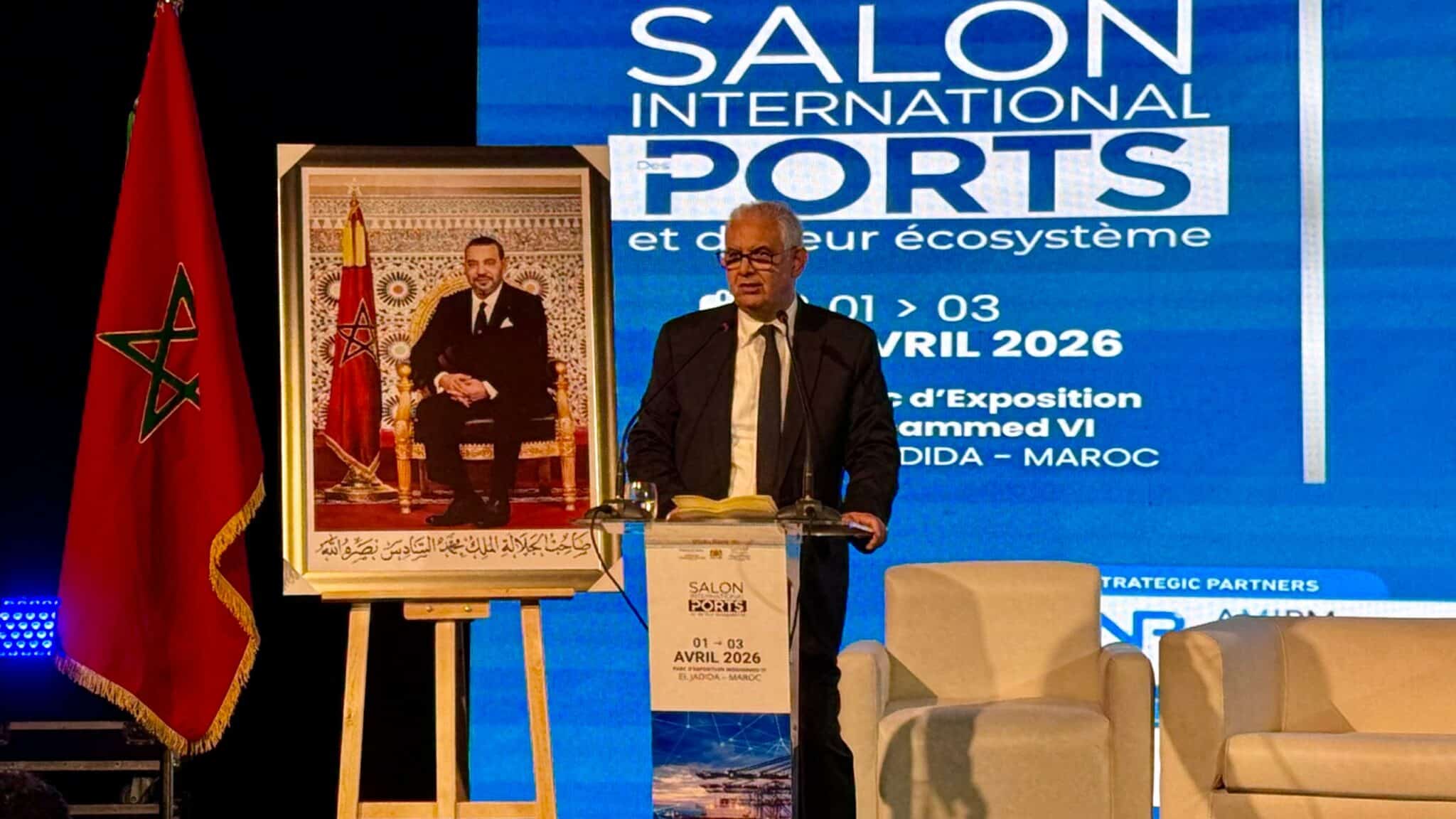
The Minister of Equipment and Water, Nizar Baraka, inaugurated on Wednesday in El Jadida the first edition of the International Ports and Their Ecosystem Exhibition (SIPORTS 2026), a large-scale event bringing together decision-makers, experts, and operators from the maritime and port sector, both national and international.
Held from April 1 to 3 under the auspices of the Ministry of Equipment and Water, the exhibition is intended as a strategic platform for exchanges, sharing experiences, and developing partnerships around the major transformations taking place in the port sector on a global scale.
In a speech delivered on this occasion, Mr. Baraka stressed that the holding of this event reflects “the Kingdom’s constant commitment to the development of its maritime frontage,” highlighting the central role of the port sector in the national economy. He recalled that more than 96% of Morocco’s foreign trade passes through maritime routes, making ports “a fundamental pillar of the country’s logistical sovereignty.”
The minister also highlighted Morocco’s geostrategic advantages, located at the crossroads of major international maritime routes, both along the Mediterranean coast and the Atlantic, with the Strait of Gibraltar serving as a major convergence point for global trade. This position gives the Kingdom a natural role as a logistics hub connecting Europe, Africa, the Middle East, and the Americas.
In an international context marked by profound geopolitical and economic changes, Mr. Baraka emphasized the need to rethink logistics models at the regional and continental levels in order to build more resilient, diversified, and secure value chains.
In this regard, he identified five key priorities for the development of the national port sector: the energy and ecological transition, adaptation to climate change, strengthening port security, digitalization and the integration of artificial intelligence, as well as excellence in infrastructure design.
The minister also recalled that major ongoing port projects, such as Nador West Med, Dakhla Atlantique, as well as the extensions of Tanger Med and the port of Casablanca, are part of the national port strategy looking ahead to 2030, which aims to establish Morocco as an integrated, sustainable, and competitive port platform on the international stage.
This momentum is also part of the royal vision aimed at strengthening African integration, notably through the Atlantic Initiative, which seeks to make the continent’s Atlantic seaboard a strategic area for cooperation and development and to facilitate access for Sahel countries to the Atlantic Ocean.
For her part, the Secretary of State in charge of Maritime Fisheries, Zakia Driouich, highlighted the strategic role of the blue economy in the Kingdom’s development model, emphasizing that Morocco has placed this sector at the heart of its public policies by reconciling economic performance, environmental sustainability, and social inclusion.
She noted that the maritime fisheries sector is a key driver of this dynamic, with more than 1.4 million tonnes of landings in 2024, placing Morocco first in Africa and among the top fifteen producers worldwide. This sector generates nearly 29 billion dirhams in exports and directly employs more than 269,000 people.
Ms. Driouich also stressed the challenges related to preserving marine resources in the face of increasing pressures such as overexploitation, pollution, and climate change. In this regard, she highlighted the Kingdom’s efforts in maritime governance, spatial planning, and sustainable fisheries management, specifying that 97% of landings are now managed sustainably.
She also emphasized the importance of international cooperation, particularly within the framework of South-South partnerships, recalling the projects carried out by Morocco in several African countries to develop fishing infrastructure and improve the socio-economic conditions of local communities.
According to the organizers, SIPORTS 2026 offers a rich scientific program, including thematic conferences, B2B meetings, as well as an exhibition space structured around several areas dedicated to port industries, port operations, training, and scientific research.
The exhibition also features an immersive museum space retracing the evolution of ports in Morocco and internationally, as well as a high-level meeting of port authorities from member countries of the Process of Atlantic African States (PEAA), devoted to issues of maritime connectivity, security, and the blue economy.
Through this event, Morocco reaffirms its ambition to strengthen its position as a strategic port hub and a key player in regional and international cooperation, in support of sustainable, innovative, and competitive port development.