Kingdom
Educational Resilience in Times of Crisis: The CSEFRS Recommendations
In its latest study, the Higher Council for Education, Training and Scientific Research put forward several recommendations to strengthen resilience in the school system and identified priorities to prevent school interruptions.


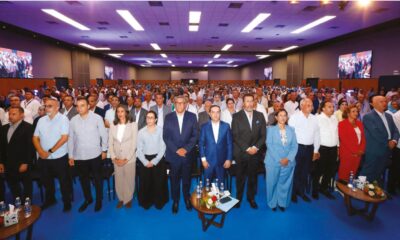
Educational resilience is a fundamental lever for delivering on the transformation initiated by the 2015–2030 Strategic Vision and Framework Law 51.17, according to a report presented Tuesday in Rabat by the Higher Council for Education, Training and Scientific Research (CSEFRS).
Carried out by the Council’s standing committee on curricula, programs, training and teaching tools, the study entitled “Resilience of the Moroccan Education System: Ensuring the Right to Pedagogical Continuity and the Quality of Learning in Times of Crisis—School Education” stresses that educational resilience is not a technical concept, but a strategic choice: that of a school system that protects students today and transforms itself for tomorrow.
The study aims to analyze the resilience capacities mobilized by Morocco’s education system in response to recent crises, as well as their effects on continuity, equity, and the sustainability of the right to education.
It also identifies inspiring practices at the national and international levels and puts forward strategic recommendations aimed at sustainably strengthening the system’s ability to anticipate, absorb, and transform future shocks.
The study’s recommendations, presented by the committee president, Amina Lemrini El Ouahabi, revolve around three requirements: securing students’ learning and pathways today, strengthening tomorrow’s institutional capacities, and sustainably transforming the education system in the face of recurring crises.
The study also identified the structuring levers that enable the education system to act with coherence and continuity, notably strategic governance, knowledge capitalization and educational memory, data and information, as well as research and expertise.
As for the priorities identified to prevent school interruptions from causing cumulative delays that jeopardize educational pathways, the report highlighted a renewed focus on foundational learning, structured and targeted remediation plans, enhanced psychosocial support, dropout-prevention mechanisms, and support for teachers in crisis situations.
This involves embedding resilience at the very heart of the education model, notably through curricular transformation, the structuring of hybrid learning, the territorialization of governance, and the modernization of infrastructure.
On this occasion, Ms. Lemrini noted that the report pointed to several strengths the education system demonstrated during crises, including a rapid transition to new learning modes, a strong capacity for mobilization and stakeholder engagement, as well as program adaptation and the establishment of academic, psychological, and social support.
She added that the study also highlighted a set of vulnerabilities affecting the education system during crises at several levels, specifying that institutionally there is a lack of crisis anticipation, as well as a vulnerability linked to school programs—reflected in overly rigid curricula, a deficit in teacher training, and limited effectiveness of support and reinforcement programs.
For his part, the Council’s Secretary General, Fouad Chafiki, stated that the findings of this report on pedagogical continuity in times of crisis have been made available to the main stakeholders in the school education sector, to students’ fathers and mothers, and to the various components of Moroccan society.
He also noted that Morocco, like other countries around the world, has experienced several crises in recent years that have led to forced class interruptions, which can have consequences for learners if they persist without guaranteeing the right to education.
If studies continue in different formats, their quality should not be lower than that ensured through in-person instruction, he concluded.