Business
Economic Assessment: Growth, Resilience, and Transformation
The Akhannouch government has succeeded in launching an ambitious economic transformation, driven by a strategy grounded in investment, sovereignty, and resilience.

Against a global backdrop marked by instability, successive crises, and profound shifts in economic balances, Morocco is charting a distinctive trajectory.
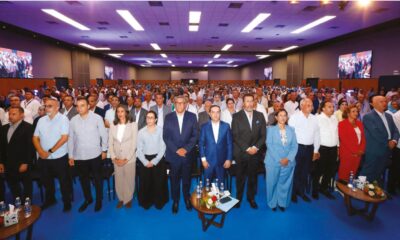
Addressing Parliament, Head of Government Aziz Akhannouch presented an economic record he himself describes as a “structural transformation,” grounded in action, sovereignty, and confidence.
“The world is no longer stable… it now moves to the rhythm of uncertainty,” he stated during his speech, setting the stage for an international environment in which yesterday’s certainties have given way to permanent volatility.
In this context, Morocco has chosen a different course: anticipation rather than inertia.
A Strategy Guided by Sovereignty
At the core of government action—guided by Royal directives—lies a central concept: economic sovereignty.
This is not presented as a political slogan but as a concrete strategic orientation. “The choice was action over hesitation, and foresight over waiting,” the Head of Government emphasized.
This approach is part of a vision driven at the highest level of the State, aimed at making Morocco an active economic player, capable of adapting to crises rather than merely enduring them. The country has thus continued its reforms even amid global turbulence, gradually consolidating what is often referred to as the ‘Moroccan exception.’
One of the key pillars of this record is the overhaul of the investment system. The government introduced a new Investment Charter, conceived as a true contract between the State and economic operators.
“This Charter embodies a strategic partnership and a forward‑looking contract between the State and investors,” Akhannouch explained. The objective is clear: to raise the share of private investment to two‑thirds of total national investment by 2035.
To achieve this goal, substantial incentive mechanisms have been put in place, with subsidies covering up to 30% of project value. The results are already significant.
The National Investment Commission has approved hundreds of projects representing several hundred billion dirhams and hundreds of thousands of anticipated jobs.
This momentum has been accompanied by a rise in foreign direct investment, seen as a strong signal of international confidence. “This sends a clear message of trust from the world in the dynamism of the Moroccan economy,” the Head of Government stated.
At the same time, the State has strengthened its role as a strategic investor. Public investment spending has reached record levels. “We have restored public investment as a strategic lever for economic sovereignty,” Akhannouch affirmed.
A Notable Economic Momentum
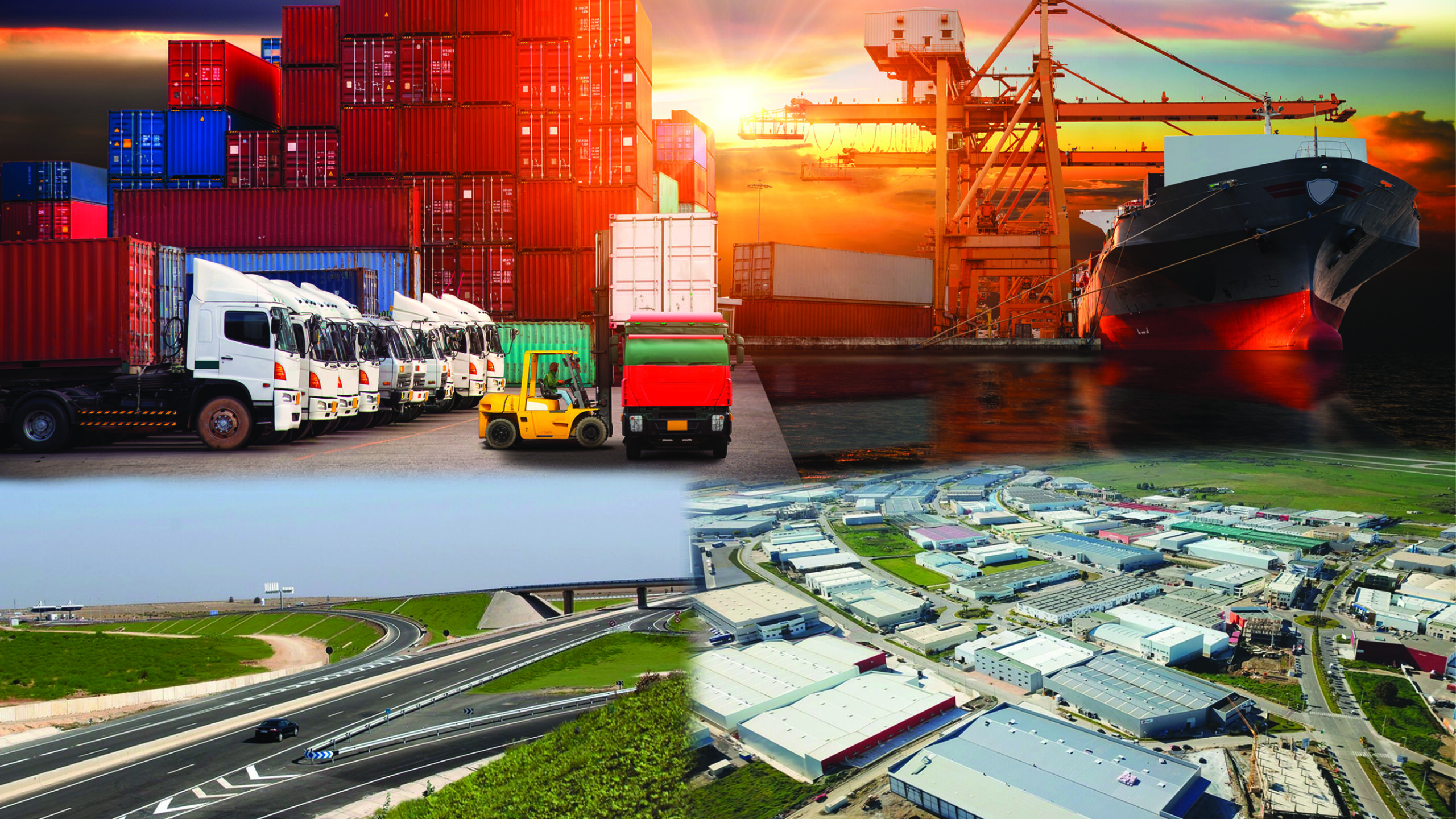
This increase has accelerated infrastructure development, regarded as a fundamental foundation of economic competitiveness. Roads, logistics platforms, and industrial zones are among the structuring projects that enhance territorial attractiveness and improve citizens’ living conditions.
The government has also emphasized industrial sovereignty, aiming to strengthen local production, diversify the economy, and boost export competitiveness.
Massive investments have been made to develop industrial zones and support research and innovation. This strategy is beginning to bear fruit, as reflected in a marked increase in industrial exports.
“Industry has now established itself as a fundamental pillar of the national economy,” the Head of the Executive stressed. The automotive and aeronautics sectors, in particular, illustrate the upgrading of Morocco’s industrial fabric.
Morocco is also accelerating its energy transition. The share of renewable energy in the electricity mix has risen significantly, reflecting a determination to reduce energy dependence. The country has also positioned itself in the emerging green hydrogen market, with projects of international scale.
On the water front, increasing stress has led to reinforced investment in infrastructure: dams, desalination plants, and water transfer systems. “Ensuring water supply is not an option, but a national necessity,” Akhannouch insisted.
To address the effects of climate change, the government has deployed a series of measures to support the agricultural sector. “Food security is not a political slogan, but a concrete policy,” the Head of Government declared.
Farmer support programs, input subsidies, and livestock feed distribution are among initiatives aimed at preserving rural livelihoods and guaranteeing national production.
The Generation Green strategy seeks to modernize agriculture and strengthen its resilience. Results indicate growth in agricultural value added despite difficult climatic conditions.
Sectoral Performance and Job Creation
Across virtually all sectors, momentum has been remarkable over the past five years. Tourism, for example, has delivered one of the most spectacular performances, with record visitor numbers and sharply rising revenues.
“Morocco has now established itself as a leading global destination,” Akhannouch affirmed. The handicrafts sector has also undergone significant transformation, with gradual modernization and better integration into the formal economy.
The social and solidarity economy is likewise expanding, with a growing number of cooperatives and a notable contribution to employment and GDP.
This economic momentum has naturally translated into significant job creation. “This performance made it possible to create approximately 850,000 net jobs,” Akhannouch noted.
This represents double the pace of job creation compared to previous periods, during which annual job creation did not exceed 64,000 positions between 2011 and 2016 and 90,000 between 2016 and 2021.
“Should the momentum recorded in 2025 continue—marked by the creation of 233,000 non‑agricultural jobs—it is expected that total non‑agricultural employment will exceed one million jobs by the end of 2026,” the Head of Government added. This would help offset the challenges posed by successive years of drought and their direct impact on agricultural employment.
He also referenced the new roadmap launched to achieve a lasting reduction in unemployment and support the transformation of the labor market.
Beyond the figures, a qualitative improvement in employment is also evident, notably through a reduction in unpaid work and an increase in formal employment, especially as some lost agricultural jobs were unstable and irregular.
Growth and Fiscal Discipline
Another strength of the government’s record lies in maintaining macroeconomic balance. “We have succeeded in immunizing the country’s macroeconomic fundamentals,” the Head of Government stated.
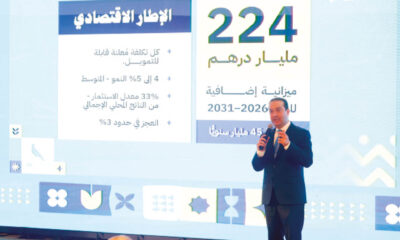
Economic growth has improved significantly, reflecting a structured and progressive recovery. Morocco recorded an average annual GDP growth of around 4.5% between 2021 and 2025, compared to just 2.1% between 2016 and 2021.
The outlook is even more promising, with growth expected to exceed 5% by the end of the current year of the mandate.
Inflation has been contained, helping preserve household purchasing power. The budget deficit has been reduced, while public debt is on a downward trajectory. At the same time, State revenues have increased sharply, notably due to improvements in the tax system.
These economic performances have been widely recognized internationally. Morocco has exited the FATF grey list and regained its investment‑grade status. “These indicators send a strong message of confidence,” Akhannouch affirmed. Credit rating agencies have also improved their outlooks, confirming the credibility of the economic policies pursued.
Ultimately, “these indicators can be seen as the birth certificate of a new phase,” as Akhannouch concluded. His government can legitimately claim to have laid the foundations for a more robust, more diversified economy, better equipped to face future challenges.
Above all, this economic momentum provides the means to finance a far‑reaching overhaul of the social protection system, where considerable work has already been accomplished.