Kingdom
Diagnostic Centers of Akdital : A Stillborn Project !
The private clinic group yields to pressure from private doctors who rallied against this economic model, which carries “a risk of drifting towards a purely commercial logic”. The group’s arguments were not enough to convince…

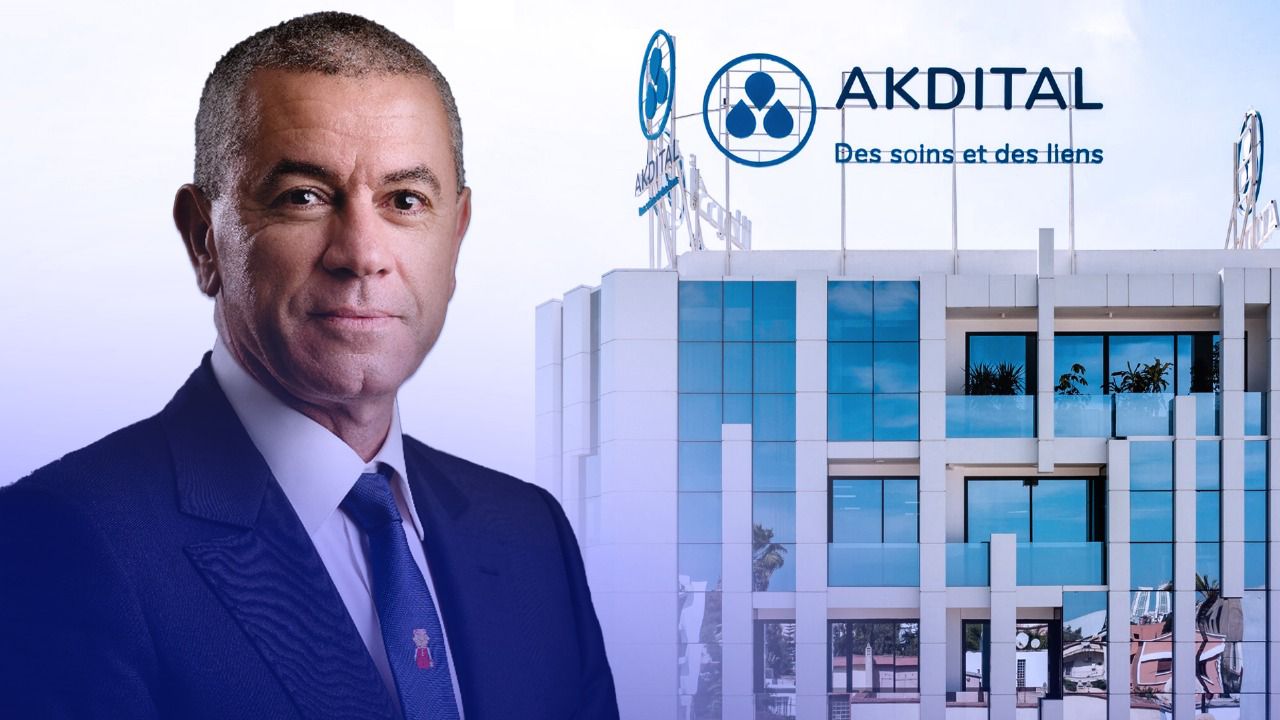
200 diagnostic centers planned by 2030, for an investment of one billion dirhams! The project announced by the Akdital group last April is officially buried. Private sector doctors fiercely opposed this ambition to equip medium-sized cities, located within a 100 km radius of Akdital hospitals, with “smart diagnostic centers open 24/7, connected to a central unit and staffed with a general practitioner-emergency doctor, a technical platform with scanner, even MRI, and a laboratory connected to a remote biologist, as well as a medicalized ambulance”.
No fewer than four unions representing 17,000 doctors (half of the country’s practitioners) united in a coalition to reach out to all the country’s authorities. In their letter addressed to various institutions, including the Ministry of Health, they consider that “management of diagnostic centers by a group whose primary purpose is financial profitability poses a risk of drifting towards a purely commercial logic”. According to a judicial expertise commissioned by this coalition, Akdital’s economic model could “result in performance targets, quotas of acts, call tariffs”. These are tools that belong to the business world but are not very ethical in the health field and would especially undermine the patient’s freedom to choose their practitioner.
Doctor Rochdi Talib, CEO of Akdital, did his best to try to save his project. He sent a letter to his colleagues in which he tried to convince them of the relevance of his model. For him, it is “to fill a deficit of offers rather than to compete with existing structures”. He specifies that these centers “should be limited to first emergency care, provided by general practitioners, as well as examinations allowing to refer patients to the closest specialists or to public or private units in case of hospitalization necessity”.
Already a first attempt…
However, his letter was not enough to defuse the crisis. The Akdital group preferred to withdraw its project on its own initiative, submitted to the Competition Council. It undoubtedly understood that its economic model could not afford to alienate the powerful and influential medical community. Even less to attract the wrath of public authorities, who spare no effort to accelerate this laborious reform of the health sector without conceding an iota to good practices.
The Ministry of Health has been waging a battle for several months to improve the proximity care offer of the public service, while ensuring it relies on a regulated complementarity with the private sector. Last July, the Health Department had not granted authorization for the first diagnostic center desired by Akdital. Minister Amine Tehraoui at the time was sensitive to the arguments of the Order of Doctors (almost the same raised currently by the coalition) and especially noted the legal ambiguity concerning the very definition of a diagnostic center.
By officially withdrawing its project on November 20, Akdital gives up an investment of about one billion dirhams (5 million per center) planned for 2030, whose financing was almost finalized. Last week, the Mediterranea Capital Partners fund announced a stake acquisition in the subsidiary Rachaktalim, dedicated to carrying this development vehicle that diagnostic centers represent. A windfall that the Akdital group now intends to redirect toward its expansion projects in the Gulf countries.