Kingdom
Copyright: Morocco Listens Intently, But Pays Poorly
In Morocco, music is no longer sold: it is streamed, shared, and monetized, sometimes poorly. While YouTube and Spotify now dictate the country’s hits, artists themselves are fighting to reclaim their fair share of a digital pie that remains poorly sliced. Behind the millions of views of ElGrande Toto and the meteoric rise of Moroccan rap, a burning question echoes: who really gets paid when Morocco listens?


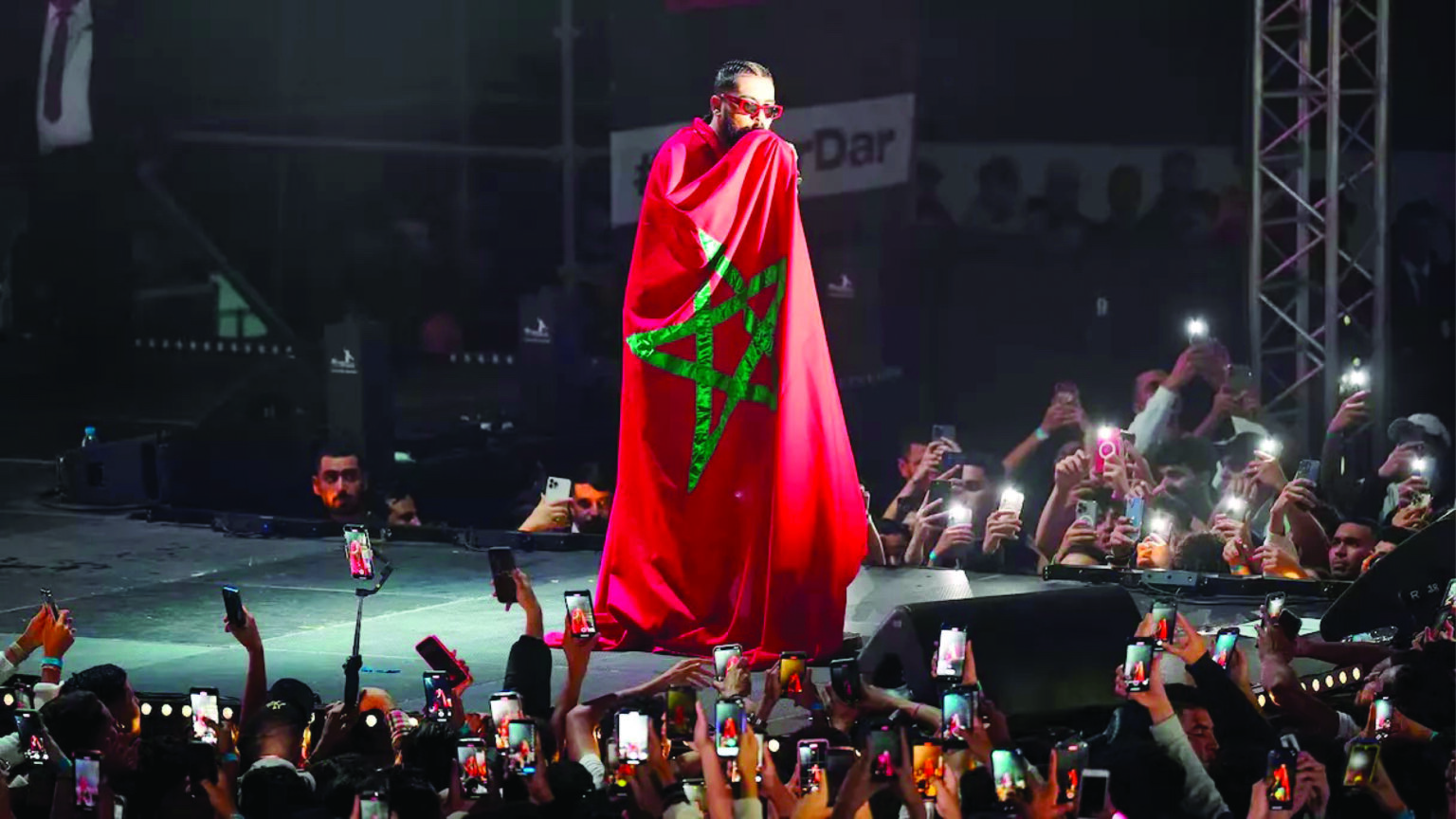
We thought the CD wasn’t quite dead yet. Wrong. In Morocco, music is no longer bought, it is listened to. It is scrolled, liked, streamed. And in this battle for ears, YouTube reigns as the boss, Spotify as the ambitious challenger, and rappers as the true ministers of the national sound.
More than 21 million Moroccans have visited YouTube this year, over half the country, confirming its status as much more than a platform, but a national music stage. Spotify, meanwhile, has a narrower but more stylish reach: about 1.1 million followers, mostly young and tuned into urban music, convinced that music can only come from the future.
And in this new digital kingdom, one man keeps the crown.
ElGrande Toto, again and always
In the “he comes back every year” category: ElGrande Toto, still the number one streamer in Morocco. Fifth consecutive crown. The reign is solid, the audience loyal, the competition stunned. At this level, it’s no longer success, it’s modern heritage.
Behind him, Stormy clings to the flow, followed by Shaw, Draganov, Inkonnu, Lferda, Morad… A clear statement: rap is no longer a trend, but the official language of Moroccan streaming. Gone are the sugary choruses: the country raps, the country rolls its r’s, the country asserts itself. But who gets what? The party is not free. It generates rights, royalties, contracts, and a long line to the cash register.
The principle: the more you are streamed, the more you are paid. Because every listen, yes, earns something, in theory. In practice, it’s a labyrinth: platforms, distributors, publishers, collective management societies – the dirham gets diluted before it even reaches the artist’s pocket. Because in reality, we’re talking about pennies, even millicents. And this is where the BMDA (the local copyright engine) must fight to get the money to the artists.
Its mission: track listening reports, negotiate with platforms, and fairly distribute a rather thin pie. But who truly monitors the numbers? Who proves that a million streams actually existed? Who guarantees that the artist will receive what they deserve? Today, no one completely.
We inhale millions of streams. We exhale… crumbs. The industry moves forward and Morocco must invent its model. An artist-centric model, not a platform-centric one.
French major labels denounce between 1 and 3 billion fraudulent streams per year. In Morocco too, some clicks smell of bots. Popularity can be bought. And remuneration can be diverted.
Enough to sink all artistic credibility if nothing changes. This is how honest artists lose the race to such an extent that the industry is built on digital sand. So who will put a policeman behind every stream?
Streaming: How much does it really earn?
In the collective imagination, a million listens sounds like a consecration. In reality, it’s mostly an accounting headache that, paradoxically, enriches the platforms more than the artists themselves.
On Spotify, for example, the average remuneration per listen ranges between $0.003 and $0.005 per stream. In other words, one million streams (which constitutes a very flattering score in digital music culture) only brings the source the equivalent of 27,360 to 45,600 DH gross.
At 500,000 listens, it drops to about 13,680 to 22,800 DH, and at 100,000 streams, barely 2,736 to 4,560 DH. Figures that may seem generous on an Excel sheet, but which quickly dilute once they enter the industrial machinery of music.
But these sums remain what Spotify pays to the rights holders, meaning usually to the label, distributor, or publisher of the track, before any distribution. And here, reality becomes less glamorous.
In a classic major label scenario, the artist often receives around 20% of the net revenue: for a million streams, this translates to barely about 5,472 DH in their pocket.
For an independent artist, signed to a label that negotiates a larger share, this percentage can rise to about 50%, or about 13,680 DH. In direct distribution, when the artist manages their rights alone and collects a large portion, the amount can reach about 23,256 DH. And in the best-case scenario, with no-fee distribution, up to 27,360 DH.
These scenarios show that, even for an impressive streaming score, the effective income often remains symbolic, especially for local or independent artists. The dream of digital glory then collides with a harsh economic reality: a million streams does not guarantee a million dirhams in the artist’s pocket.
Streaming is the new cultural agriculture of Morocco. We are in full harvest season: listens grow, artists reap (more or less), institutions must irrigate the field or watch the harvest burn.
Because at its core, Morocco has its stars, its hits, and its scene. What it still lacks is a solid, transparent, national system. A BMDA that would no longer be a muddled counter, but a true success meter, capable of saying: “Here are the most listened. Here’s what they earn. And most importantly… here’s why.”
And now? The artists have streamed. The audience has decided. The figures speak. It remains for Morocco to write its score: protect its creators, count for real, monetize without blushing, and transform clicks into culture.
Imagine a Morocco where every year, we publish the most listened-to artists, we publish what they received, we publish where the music money goes… That day, streams will no longer be abstract numbers, but a tool of cultural dignity.
Until then, Toto can keep his crown. But the real revolution won’t be in his punchlines. It will be in the accounting of the beat. And that’s not rap. That’s justice.
The Bling Return of Certified Glory
In a world where streams pile up faster than a TikTok thread, music awards continue to thrill egos and Excel spreadsheets. Gold, platinum, or diamond records: these flashy plaques, born in the era of vinyl and Elvis’s hip rolls, remain the ultimate fantasy for the ascendant rapper as much as for the established pop star.
We no longer dream of castles, but of a golden frame to post on Instagram because it’s good for the image, and even better for business. A certification is the equivalent of a “validated by the people” stamp.
Fans marvel, managers uncork a financial advance, and labels restart the promotional machine: surprise reissues, XXL tours, and extended social media campaigns. In urban music, the attachment is even more visceral: when you come from a neighborhood where everything is counted, a platinum plaque is a very real revenge.
Reminder: there was a time when to get a gold record, you had to sell 100,000 CDs, period. Then the industry plunged. The CD got hit head-on by streaming. Result: the thresholds melted like snow in Marrakech in July. Today? 100,000 sales equate to a platinum album (compared to 300,000 twenty years ago). 75,000 sales for a gold single (e.g., 500,000 in the 80s).
But the most violent adjustment is the entry of streaming into the equation. Since 2016 (in France), physical sales are added to digital streams. This is called “sales equivalents”: 1,500 streams are counted as one album sale (only paid streams, to filter out the “it’s free so I listen” factor).
More calculator than guitar, the industry adapts. The consequence: iconic artists (hello Michael Jackson) earn certifications posthumously… digitally.
Streaming has exploded the counters… but in only one direction: urban music. The most streamed win, the others watch. Result: we see artists where every track on an album earns its own certification.
Majors love it, independents tremble. On the more “variety” producer side, there is concern: “And rock in all this?” It’s waiting. In 2019, Nirvana’s “Come As You Are” had just gone gold (27 years after its release, delayed joy indeed).
Faced with this hyper-concentration, voices call for classification by genre: a matter of cultural survival. Otherwise, the market will look like nothing but an eternal top charts playlist.
The platforms, however the market’s locomotives, don’t always appreciate rule changes. Spotify, Deezer, or Qobuz have already verbally slammed the door on meetings: Streams are the lungs of the industry, why underweight them? Tense atmosphere. To calm minds, a working group brings together labels, platforms, and independent producers. Goal: so everyone can have their share of the pie… and if possible a plaque with it.
Ultimately, what is a certification in 2025? A matter of: algorithms, influence, business… and still XXL ego. Glory is dematerialized, but consecration remains physical.
Golden frame in hand, smile plastered on social media, caption in caps lock: “We did it! Thanks team!” As long as the trophies shine, no one pays too much attention to the calculation rule. And as long as streams rise, certifications will rain down. Amen.