Influences
COP30: Morocco’s Experience in Water Management Highlighted in Brazil
The national strategy for reusing treated wastewater, integrated into the National Program for Shared Sanitation and Wastewater Reuse (PNAM), aims to mobilize 100 million m³ of treated water by 2027 and 573 million m³ by 2040, for golf course and green space irrigation, agricultural irrigation, and certain industrial activities.

Morocco’s experience in managing water resources, through projects for reusing treated wastewater carried out by local authorities, was highlighted on Tuesday at COP30 in Belém, in the Brazilian Amazon.
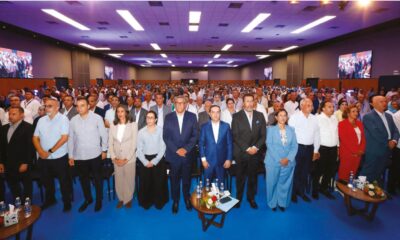
A side event organized on the second day of the UN Climate Conference by the Moroccan Association of Presidents of Municipal Councils (AMPCC) and the General Directorate of Local Authorities (DGCT), under the theme “Wastewater Reuse: An Innovative Alternative for the Circular Economy in Urban Spaces,” provided an opportunity to discuss the challenges related to this practice, seen as a sustainable response to water stress and in line with the High Royal Guidelines.
Officials and experts emphasized that pressure on freshwater resources is intensifying due to the combined effects of urban development, agricultural and industrial demand, and persistent rainfall deficits. The reuse of treated wastewater thus appears as a “win-win” solution: it reduces the consumption of drinking water while preventing pollution of ecosystems.
Facing seven consecutive seasons of drought and a lasting rainfall deficit, Morocco has embarked on a proactive strategy to secure its water resources, recalled Jaouad Elkharraz, founder of the Water-Energy-Climate Experts Network. According to him, overexploitation of aquifers, saltwater intrusion, and the scarcity of surface water necessitate the use of “non-conventional” sources, including desalination and wastewater reuse.
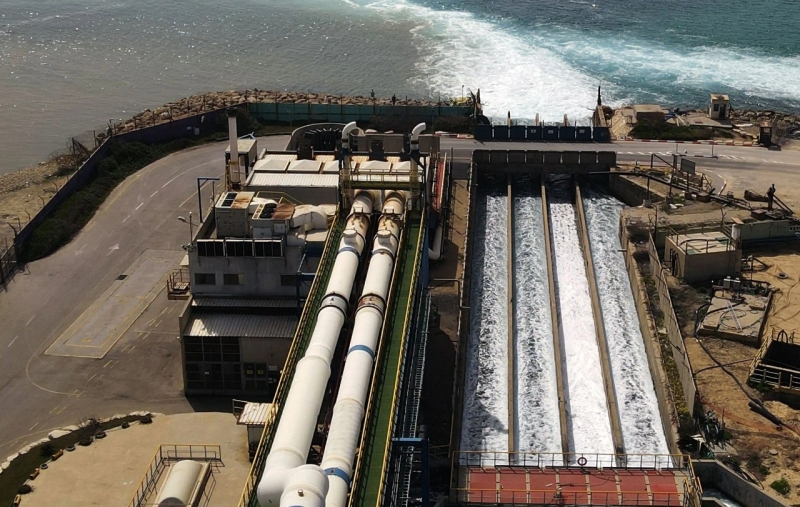
Discussing the potential of desalination, Mr. Elkharraz recalled that an ambitious national program aims to produce 1.7 billion m³ of freshwater per year by 2030, thanks to reverse osmosis technology and the increasing use of renewable energy to power the country’s major plants.
Reuse is also progressing, he noted, with some wastewater treatment plants producing biogas and supplying treated water for irrigation and green spaces. “The example of Agadir, whose plant irrigates nearly 15,000 agricultural hectares, illustrates this circular economy approach,” he specified.
Building on these advances, Morocco positions itself, according to him, among the most active African countries in mobilizing climate finance, particularly from the Green Climate Fund, while exploring the valorization of desalination brine for industrial and biotechnological purposes.
El Hassan Zoubir Idrissi, head of environment at the Directorate of Public Local Networks of the DGCT, detailed the national strategy for reusing treated wastewater, integrated into the National Program for Shared Sanitation and Wastewater Reuse (PNAM). This program, he explained, aims to mobilize 100 million m³ of treated water by 2027 and 573 million m³ by 2040, for golf course and green space irrigation, agricultural irrigation, and certain industrial activities.
He reported that to date, 30 golf courses, 16 green spaces, and six industrial uses consume approximately 53 million m³ of treated water per year, citing flagship projects in Marrakech (670 ha), Rabat-Salé-Témara (1,200 ha), Tangier, Tetouan, and Agadir, which demonstrate the effectiveness and diversity of urban and agricultural uses.
Mr. Idrissi added that the 2025–2034 program plans to extend to 90 municipalities and 14 new agricultural projects, noting that the private sector is also contributing, with the OCP Group having valorized over 20 million m³ for phosphate washing in 2024.
For his part, Karim Bouamrane, mayor of Saint-Ouen-sur-Seine and vice-president of Plaine Commune (France), praised Morocco’s leadership in Africa in sustainable development and advocated for cooperation based on sharing expertise and training younger generations.
He insisted on the need for a new generation of politicians aware of ecological challenges, capable of promoting adaptability and resource preservation, both in Europe and Africa.
Finally, Rachid El Batah, president of the Sidi Ifni municipality, presented the local experience of the town, which has a wastewater treatment and reuse plant covering nearly 20% of the city’s water needs, emphasizing that this initiative has mitigated shortages and secured water supply for residents and local activities.
At the same time, he indicated, the municipality valorizes treated water for irrigating green spaces and maintaining parks, limiting waste and integrating these practices into urban planning.
According to Mr. El Batah, these actions, in line with the vision of His Majesty King Mohammed VI, concretely illustrate the national effort to promote sustainable water management by mobilizing non-conventional resources and developing local solutions adapted to growing water stress.