Business
Construction Materials: Major Infrastructure Drives Activity
While waiting for the real estate sector to revive, large-scale projects are sustaining the production and sales activity of construction materials. Analysis.

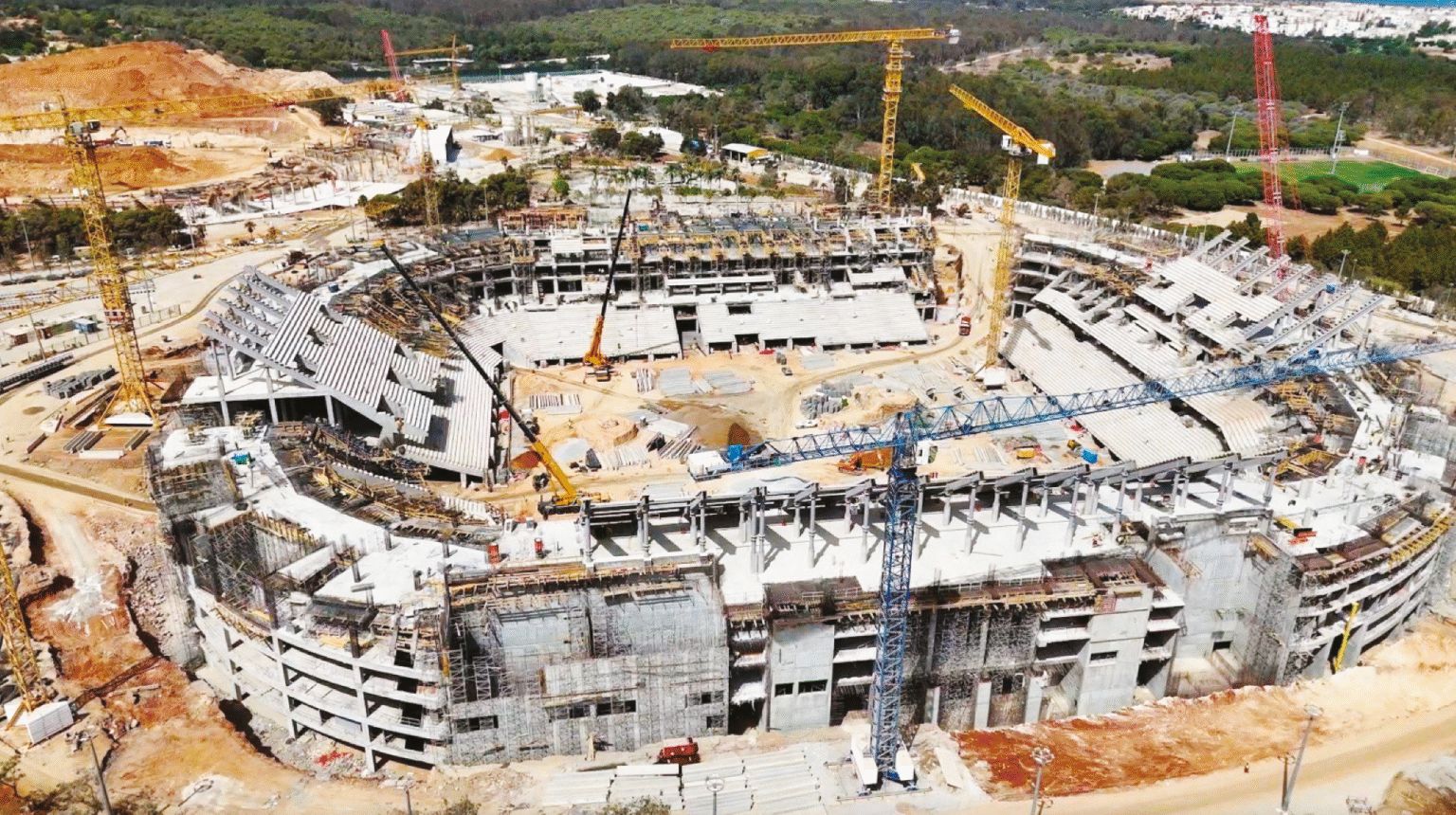
The scrutiny of the construction materials sector is even more justified given the surge of major construction projects related to the organization of CAN 2025 and the 2030 World Cup by Morocco, across several cities in the Kingdom. Hence, it is important to understand the impact of the construction boom on this market.
David Toledano, president of the Federation of Construction Materials Industries (FMC), is clear: with Morocco currently resembling an open construction site, the construction materials market is doing well.
The sector is driven by demand from numerous infrastructure projects (ports, airports, stadiums, high-speed rail, highways, expressways…), though there is less dynamism in the building segment.
In fact, the latest official figures on cement sales confirm the good health of the construction materials branch. These sales rose by 9.5% at the end of May 2025 (compared to an increase of 7.3% a year earlier). Moreover, in the first two months of the second quarter of 2025, these sales grew by 16.4% (versus +4.5% in the first quarter of 2025).
Another major piece of information revealed by our source: regarding main materials in demand, price changes have not been drastic. “So far, price changes have been fairly soft,” commented the influential CGEM member, who is pleased about on-time project deliveries without delays.
“Reasonable” and stable prices
The availability of construction materials in sufficient quantities despite rising demand has inevitably contributed to what is more like price stabilization. That said, the geopolitical situation (conflict between Israel and Iran) at one point caused some concerns and uncertainties among professionals about the risk of a possible sharp rise in prices. But with the announcement of the end of the Israeli-Iranian conflict, these fears have subsided, following a drop in oil barrel prices.
“Today, no one is complaining about price increases. Complaints about price hikes were mostly from certain property developers, who used the excuse of rising construction material costs not to follow the social housing policy,” our source assures.
Tighter demand
According to the FMC head, construction material players anticipate, with government support, a more pronounced demand for certain aggregates, namely crushed stone, sand, and gravel. These materials are in high demand by concrete producers working on key infrastructure sites in the country. The professionals’ proactive approach aims both to ease tension on aggregates and avoid supply difficulties or a significant price increase. “We are fully committed to meeting delivery deadlines, because the infrastructure for CAN 2025 and the 2030 World Cup must be delivered on time, without delay,” says Toledano.
Broad coverage of local demand
With major infrastructure projects underway for the two international sporting events, FMC members—who aim to increase their export turnover by at least 5% by 2027—are currently working to increase and optimize their production capacity. It should be recalled that the sector has the ability to meet more than 95% of Morocco’s construction demand.
In other words, this industrial sector can almost fully meet local production needs across all construction material categories (cement, bricks, concrete, ready-mix, tiles, sanitary ware, roofing tiles, steel, etc.).
In aiming to improve the integration rate and industrial sovereignty, companies realize the need to develop production of glass, aluminum, and high-end finishing products (which are currently imported).
To this end, the FMC president suggests two approaches: bringing in new specialized players, or urging established operators to invest and aim for more diversity and high quality (custom niche products).
Waiting for a real estate revival
Marked by a drop in transactions and falling asset price index, the real estate market showed signs of weakness in the first quarter of 2025. Asked about the expectations of construction material producers, our contact says: “We are still waiting for real estate to pick back up. Especially since there are about 150,000 beneficiaries of state support following His Majesty the King’s decision to provide 100,000 DH for buyers of social housing.”
Given the beneficiaries of this state boost, prospects for recovery in the social housing segment seem promising—but only if the major obstacle of land to be mobilized for the program is resolved.
“I believe the demand is there, as are support and financing. Banks have improved their situation with a number of developers who were previously in trouble, and their financial situation has since improved. Nowadays, we systematically see that once the land issue is sorted, there’s an explosion in construction,” explains the FMC head.
He cites the example of Casa Finance City as an illustration, emphasizing the urgency of resolving land and zoning problems and curbing speculative impulses, which could undermine all efforts to ensure the success of the new social housing program.