Kingdom
Construction (BTP): Order Books Are Surging
Reaching more than 71 billion dirhams, the combined order books of the three construction companies listed on the Casablanca Stock Exchange are hitting record highs. Massive investments are being made in production capacity to keep up with the pace.

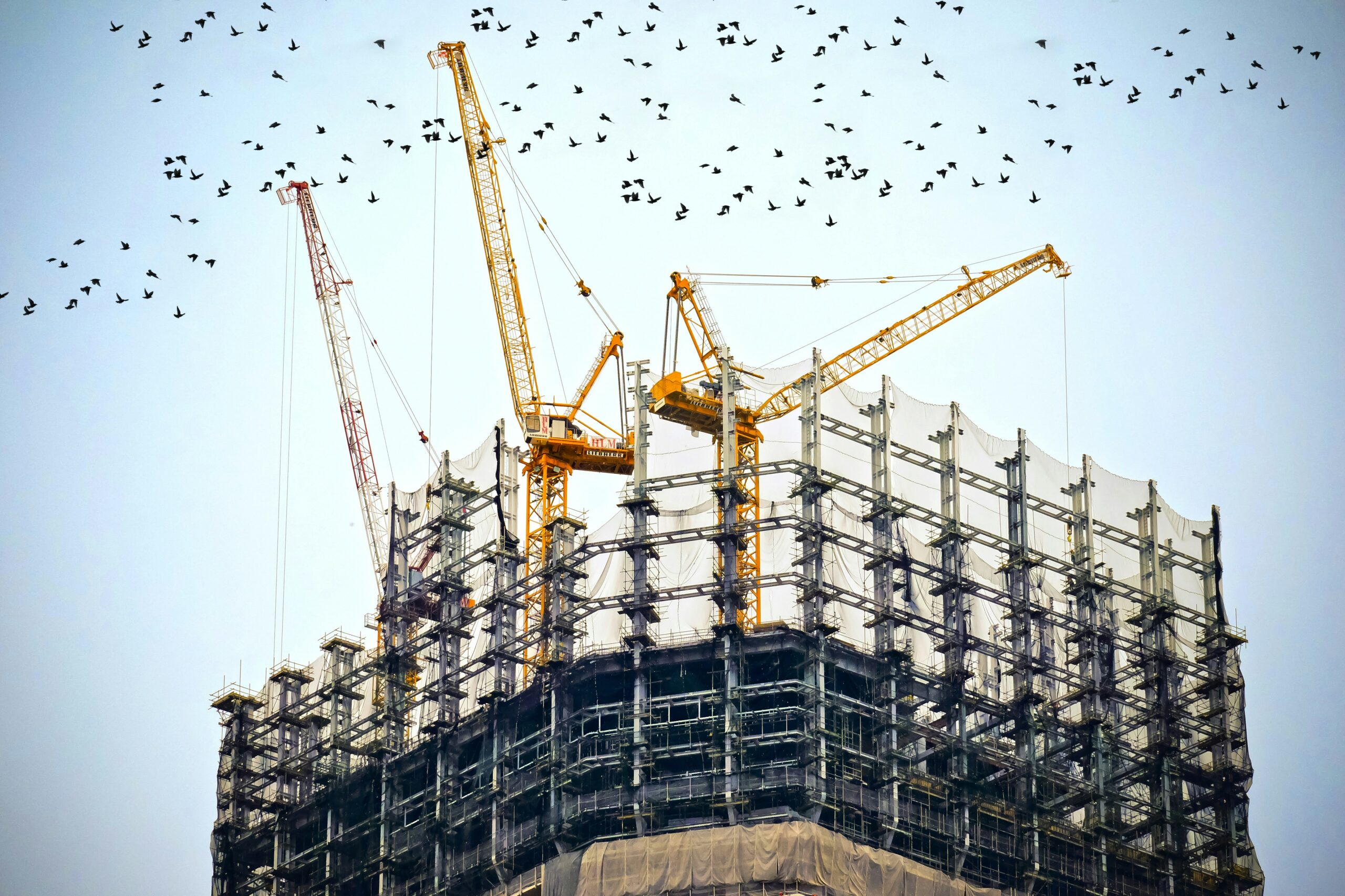
Spectacular stock market listing, record public procurement, colossal construction sites, mergers between heavyweights, sharply rising revenues… in many respects, 2025 was a standout year for Morocco’s leading construction companies. The shift in scale and stature of the sector’s main players is real.
The latest financial disclosures from the three construction firms listed on the Casablanca Stock Exchange reflect this rise in power—first and foremost in terms of revenue.
The SGTM group, which made a strong impression with the most popular IPO ever carried out, reported consolidated revenue of 15.2 billion dirhams, up 36.6% compared to 2024.
For TGCC, which acquired 60% of its competitor STAM-VIAS in July 2025, operating revenue reached 12.4 billion dirhams, an increase of 53.9% compared to 2024. Jet Contractors, for its part, closed the year with revenue of 3.66 billion dirhams, up 17.3% over the same period.
The combined revenue of the three companies thus exceeds 31 billion dirhams, representing nearly 9 billion dirhams in additional revenue in just one year. In terms of contribution to revenue growth on the stock exchange in 2025, the construction sector ranks well ahead, accounting for 37% of this growth, followed by mining (17.1%), banking (15.2%), retail (7%), and healthcare (6.9%).
Overall, the three sector leaders account for nearly 8% of the total revenue of all listed companies.
The change in scale of construction leaders is also reflected in the impressive growth of their order books—against a macroeconomic backdrop marked by intensified large-scale infrastructure projects and record public investment.
A flood of contracts driven by the public sector
At TGCC, the order book is described as “exceptional, the highest ever recorded,” reaching 25.6 billion dirhams at the end of December 2025, compared to 10.2 billion dirhams at the end of 2024.
This order book includes several large-scale projects with strong strategic impact at the national level, notably the largest airport construction project ever undertaken in Morocco: the extension and modernization of Casablanca’s Mohammed V Airport, awarded in the fourth quarter of 2025.
It also includes the structural works contract for the Grand Stade Hassan II in Benslimane. With costs of 12.8 billion and 3.3 billion dirhams respectively, these two projects share the distinction of being carried out jointly with TGCC’s main competitor, SGTM.
The Kabbaj family’s group has likewise experienced an explosion in its order book, which more than doubled in one year—from 16.5 billion dirhams in 2024 to 35.1 billion dirhams in 2025 (+113%).
“This level reflects renewed confidence from clients in the group’s execution capabilities and confirms its positioning as a leading multi-specialist player in Morocco’s construction sector,” the group stated in its financial communication.
In addition to the Grand Stade Hassan II in Benslimane and the new hub terminal at Casablanca’s Mohammed V Airport, the portfolio includes the Bou Ahmed dam in the Chefchaouen province, carried out in partnership with STAM for more than 2.2 billion dirhams. Industrial projects (cement plants, factories, etc.) under EPC contracts are also contributing increasingly to SGTM’s business.
This positioning represents a differentiating strategic axis, opening new growth prospects in Morocco and internationally.
Jet Contractors’ order book reached 11.1 billion dirhams in 2025, up 25% year-on-year. Export activities account for 27% of the portfolio.
It must be said that the group founded by Mohamed Adil Rtabi secured a large number of contracts in 2025. In August, Jet Contractors was selected by ONDA to carry out expansion and redevelopment works at Marrakech-Menara Airport’s terminal facilities for 2.2 billion dirhams.
The group also won the final section of the Rabat-Casablanca continental highway for 600 million dirhams. More recently, it secured the contract to rebuild the Errazi psychiatric hospital in Berrechid for 214 million dirhams.
Massive investments in production capacity
Managing these large-scale, sometimes complex projects simultaneously—requiring significant resources—has compelled the construction leaders to invest heavily in their production capacity to maintain project timelines.
Moreover, to secure new contracts, the three groups are acquiring additional heavy equipment (cranes, concrete batching plants, industrial formwork, machinery fleets, etc.). These investment efforts are also aimed at positioning Moroccan sector leaders in higher value-added markets that require greater technical expertise, integrated engineering, and specialized equipment.
SGTM alone invested 783 million dirhams in 2025, 15% more than in 2024. This effort is aimed at renewing and expanding its equipment fleet and strengthening the technical capabilities needed to execute projects.
TGCC also accelerated its investments, with capital expenditures totaling 684 million dirhams in 2025, compared to 175 million in 2024, to strengthen and modernize its industrial and technical resources required for managing large-scale projects.
Jet Contractors, for its part, quadrupled its CapEx in one year. The group invested more than 516 million dirhams in 2025 in its production facilities, compared to 175 million dirhams in 2024.
These investments reflect a clearly aggressive strategy: anticipating an infrastructure supercycle, securing margins, and positioning themselves as regional champions capable of competing with major international, Turkish, Chinese, or European firms.
As one industry professional sums it up, “Moroccan construction is truly entering a phase of consolidation where size, financial capacity, and technical mastery are becoming decisive strategic advantages.”