Kingdom
Citizen Forces, a Party on Life Support
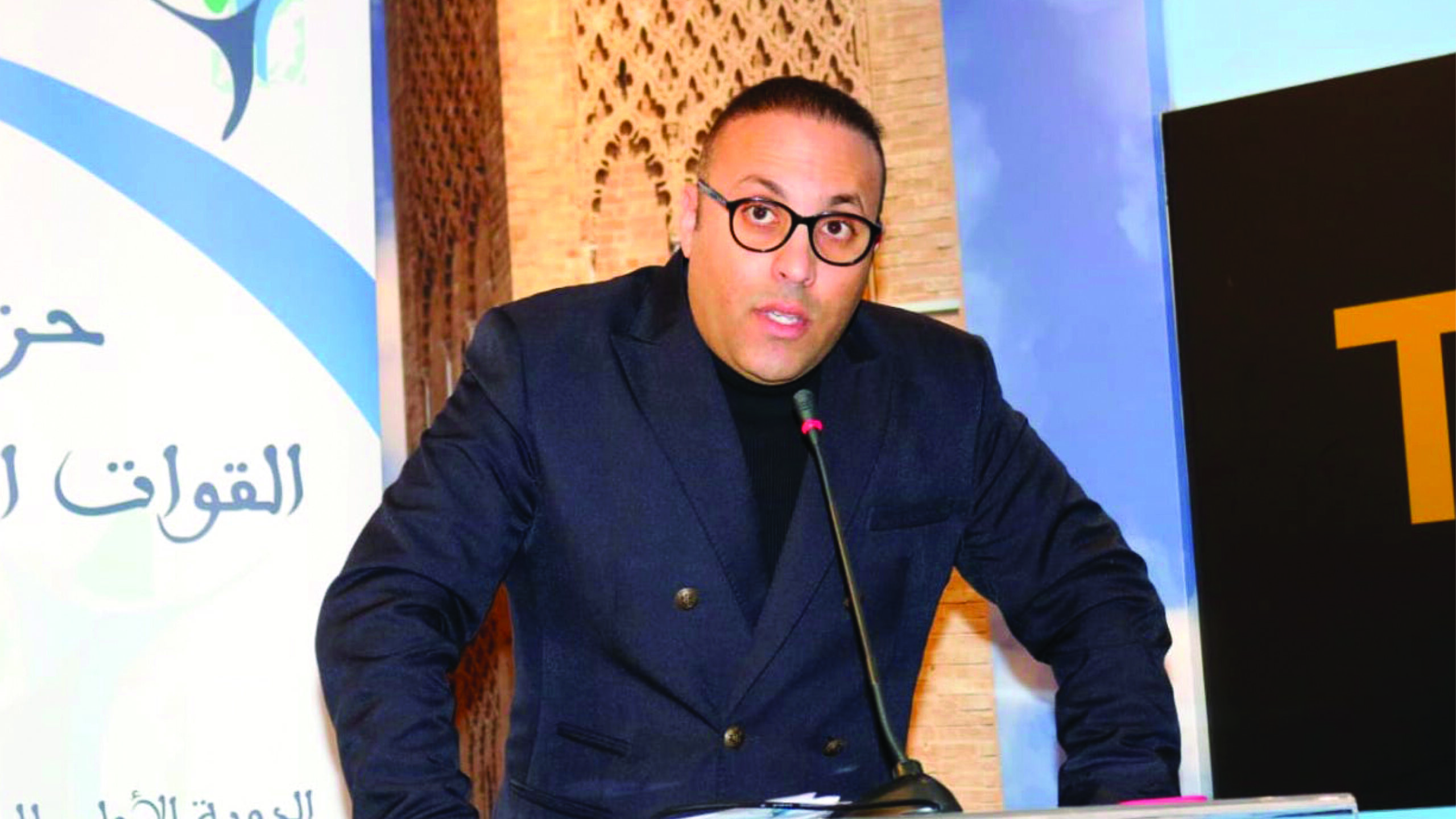
After a long period of hibernation, the Citizen Forces party is trying to turn a new page. Under the leadership of its young president, Wael Mohamed Aouad, the party founded by Abderrahim Lahjouji is still searching for a place within the Moroccan political landscape. Overview.

Since the death of Abderrahim Lahjouji, founder of the Citizen Forces party (PFC), in 2021, hardly anything had been heard about this political formation created in 2001—except sporadically. After a long wait, it took until two moments in the third quarter of 2025.
First, in September, when a plan for a “dilution” into the ranks of another party that was also losing momentum—the Moroccan Liberal Party—surfaced. A project that was opened but left on hold. A few weeks later, the PFC called an extraordinary congress. It was October. Some 650 delegates gathered far from the Casablanca and Rabat spotlight, meeting instead in Saïdia.
The idea behind it, as recounted, was to “bring back to life” a “political project” that had been considered “moribund.” In principle, the extraordinary congress was supposed to confirm the “dilution” into Isaac Charia’s Moroccan Liberal Party, as announced during the national council held in September 2025. But that did not happen.
Indeed, reading the statement issued after the Saïdia meeting, there is no trace of any decision to bury a partisan experiment that had generated “a semblance of enthusiasm” at its inception.
All the more so since Lahjouji and his associates were driven by the ambition to “cast the widest net possible,” in an approach reminiscent of the British-style “third way” that gained traction in the 1990s–2000s, embodied by the “New Labour” project led by a certain Tony Blair.
The objective of the founders—coming from different corners of the Moroccan political scene and who had gathered more than 2,700 delegates in Casablanca—was to carry a project aiming to transcend the left-right divide.
This, even as some, referring to the background of the former employers’ leader and businessman Lahjouji, viewed this “party label” as “a showcase for the business world.”
An interpretation quickly dismissed by the project’s own proponents, among whom were outspoken “liberals” as well as figures who had declared their affiliation with “socialist” circles.
From alliance to alliance…
As for the party’s “ideological” foundation, the initiators of Citizen Forces spoke of a “socially-oriented liberalism.” Moreover, the party initially sought to be “representative of the middle classes, entrepreneurs, and executives.”
However, despite this “openness,” its impact at the ballot box was not forthcoming in the various elections—especially legislative ones—in which the party participated.
The proof lies in the results: two seats in the 2002 legislative elections, and a lone token seat five years later. What followed reflected the gradual loss of momentum over the years. Indeed, Lahjouji’s party won no seats in 2011, 2016, or 2021. Without a real electoral base, Citizen Forces could hardly hope for better.
“And it’s not for lack of trying to break out of this cycle of accumulated disappointments,” says this observer of the twists and turns of the political scene, particularly among “small parties.” In fact, in an effort to establish itself within Moroccan politics, Citizen Forces tried “the alliance recipe,” which did not yield the expected results.
The first attempt took place in 2007. That year, the party announced a merger with Ali Belhaj’s “Alliance of Liberties.” Under the label “Alliance of Citizenship,” the two parties, through a “founding congress,” adopted the statutes of this new formation.
These statutes were distinctive in that they established a central committee, backed by a presidential council headed by Abderrahim Lahjouji, who served as president, while Ali Belhaj took on the role of secretary-general.
For the project’s promoters, this merger represented “a historic step” and heralded “the first union between liberal parties in political life after the adoption of the new electoral code,” as stated in documents from the time.
As can be understood, the main concern was electoral deadlines, where both parties aimed for “better positioning by pooling their strengths.” However, subsequent events did not turn in their favor, despite their claims of shared values.
After that, neither the alliance nor its two components were heard from again.
It would take years before the Citizen Forces party returned to the spotlight—with “a major surprise to boot.” Indeed, in 2005, the party of the former president of the General Confederation of Moroccan Enterprises and the Justice and Development Party (PJD) announced, in November of that year, a form of rapprochement.
Those who followed this “saga” speak of at least three years of discussions between the two parties, which, in principle, had nothing in common.
Particularly in terms of “ideological references,” between a party grounded in a religious and fundamentally conservative base and another advocating liberalism and modernity. But clearly, the PJD seemed more driven by the ambition to carve out a place within the business community. The outcome of this “honeymoon,” which received significant media coverage, ultimately fizzled out.
That said, what is the fate of a party that seems to have tried more than one formula to find its place on a political stage where some “small formations” continue to stake their survival on upcoming elections?
A young man at the head of the party
Wael Mohamed Aouad is a man in his forties whose political trajectory has been marked by several twists and turns under different party banners. Because of family ties, the very young Wael was torn between associative activism and the youth wing of the Istiqlal Party, where he rose to become a member of its central committee.
Feeling constrained, Aouad opted in 2015 for the youth wing of the Popular Movement. Three years later, he became a member of the national council of a youth organization that did not meet his aspirations. As a result, despite “a rather promising position” within the national council of the “Ear of Grain” party, the young man attempted to create a new political party that would be “up to his ambitions and those of his companions.”
The request was rejected. In the process, Wael Aouad left the ranks of the Popular Movement in January 2025. A twist of fate led him to join Citizen Forces, where he was offered the chance to take the helm of the party of the “House.” This choice was confirmed at the end of the extraordinary congress of October 2025.