Kingdom
Casablanca: Where to Find Authentic Craftsmanship, Far from Tourist Clichés
In Casablanca’s old medina, between the Espace de l’Artisan and the Fondouk at Place Centrale, Moroccan craftsmanship reveals itself (and can be bought) without folklore or frozen decor. A living heritage, passed down and shaped in the present, far from tourist clichés. A wandering exploration.

In the heart of Casablanca’s old medina, far from the flashy Art Deco boulevards and air-conditioned malls on life support, there’s a discreet place that stands as a stubborn bastion of Moroccan heritage. A place that doesn’t sell folklore, but reality. At 65 Mohammed El Hansali Street, the Espace de l’Artisan feels like an island of resistance. Modern and understated. And yet inside, it pulses. No staging here for hurried tourists. People work. Truly.
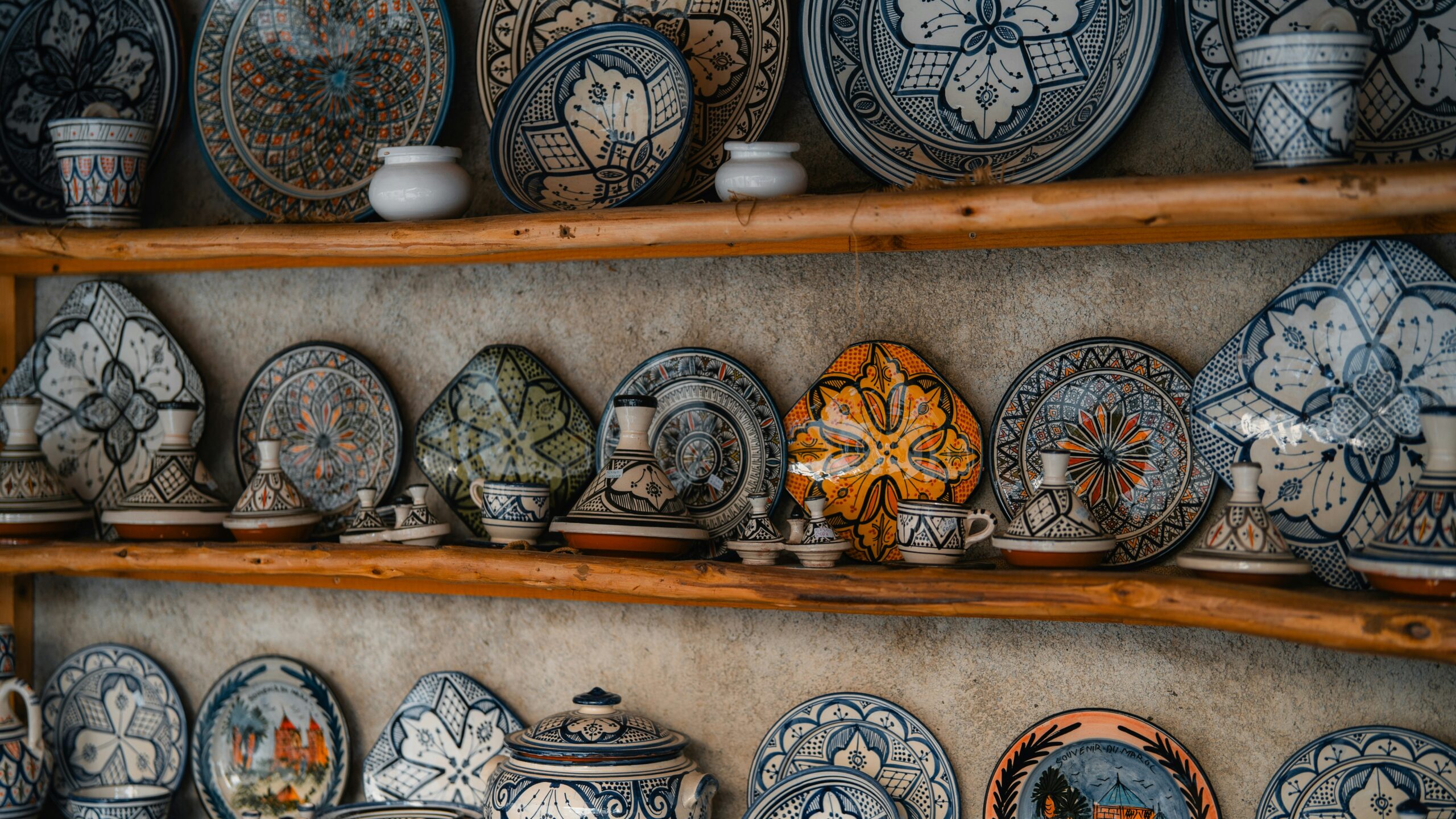
From the ground floor, the tone is set. Abdellatif Daakilo carves wood with a monk’s patience and the stubborn slowness of those who know the gesture matters more than the result. Wood shavings fall, patterns emerge. Nearby, Hajar Noureddin, from the Fakhar Bladi cooperative, pulls still-burning pieces from the kiln: dishes, vases, glazes that catch the light. Further along, Aziz Ghannami paints intricate floral and geometric zouaq motifs on trays and frames with astonishing finesse. Bright turquoise, warm saffron, deep indigo… the colors burst against the artisan’s quiet concentration.
Zouhair and his cooperative, Ibdae Wadicor Nabati, bring in plant-based elements and a contemporary touch, like a breath of fresh air in this ballet of heritage. And then there’s Younes Lkrafi, master saddler, focused on a saddle the way one tunes an instrument. “A millimeter off and everything is ruined,” he says. The smell of leather hits you hard. You’re inside it. Completely.
Upstairs, the tempo slows. The atmosphere softens. Houda Agounine lines up her oils, soaps, and bottles. “We don’t sell cosmetics, we sell Moroccan well-being,” she says. And it rings true.
Textiles command respect. Jamila Dghoughi embroiders with a goldsmith’s precision. Hasna adjusts her patterns like an architect of fabric. Khadija Zahir revives traditional men’s wardrobes with sharply tailored pieces. Noura Aboutayeb unfurls her Berber rugs with hypnotic geometric motifs. In one corner, Khalid Chihab makes an oud and a bendir resonate—and suddenly, the place breathes differently. Bouchaib Belkoualya chisels silver with almost silent delicacy.
On the second floor, the light filters in. Everything becomes more precise, more meditative. Rachid Zouhairi paints on glass, turning light into material. Safouan Hanin masters metal, creating pierced chandeliers and intricate decorative pieces. Abderahim Brik sculpts wood as if reviving a memory…
Created to keep artisans in the heart of the medina while offering them достойные working conditions, the space embodies a genuine commitment to active preservation. Here, you buy at the source. No middlemen, no fake storytelling. Just hands, time, and know-how. The cooperatives (Kounouz Hala, Fakhar Bladi, Tafaol al Khayr al Maghribi, Ibdae Wadicor Nabati) add a layer of solidarity that anchors the place even more firmly in reality. Here, heritage isn’t something you look at. It’s something being made.
Tradition and resistance
As you leave, still carrying the scents (leather, sawdust, oils), an artisan calls out: “Go to the Place Centrale. There, you’ll see something else.” Twenty steps. A change of scene.
Place Centrale (or Place Ahmed El Bidaoui to regulars) is anything but polished. It’s organized chaos. Scooters, voices, children, unpredictable paths. It lives, it overflows, it doesn’t pose. And right next to it: the Fondouk Place Centrale.
A former caravanserai, now converted into a series of tiny workshop-shops. 16 to 20 square meters. No more. Here, there’s no distance between producing and selling. Everything happens before your eyes. Tailors cut, adjust, and chat. Djellabas, burnouses, caftans: made-to-measure, precise, everyday wear. Embroidery (tarz) runs across fabrics like living script. Jewelers work silver, pieces glinting. Not frozen luxury, but accessible shine, detail that catches the eye.
Slippers line up in tight rows. Leather goods stack into piles of bags and belts. The smell of leather is everywhere, almost invasive. Zellige, blown glass, copper… each material has its voice, its sound, its rhythm. Metalwork rings out. Weaving hypnotizes. And local products (argan, couscous, goufio) remind you that craftsmanship here isn’t just aesthetic; it feeds and sustains.
This fondouk isn’t contemplative. It’s alive, noisy, direct. People talk, negotiate, share tea. No filter, no explanations. Just life, raw.
Stepping back out onto Place Centrale, you carry with you that rare and precious feeling of having touched, in a single morning, two sides of the same coin. On one side, a structured, supported, almost protected craft scene. On the other, raw, spontaneous energy. Two fondouks, two breaths. But one single reality: a body of know-how that refuses to become mere decoration.
The Casablanca medina simply goes on existing. And that, by itself, is more than enough.