Kingdom
Casablanca-Settat: Craftsmanship, a Dynamic Economic Driver
In the region, craftsmanship is not a relic of the past, but a vibrant force oriented toward the future. Thanks to the commitment of the Regional Directorate of Handicrafts, the sector is becoming more structured, modernizing, and opening up new opportunities.

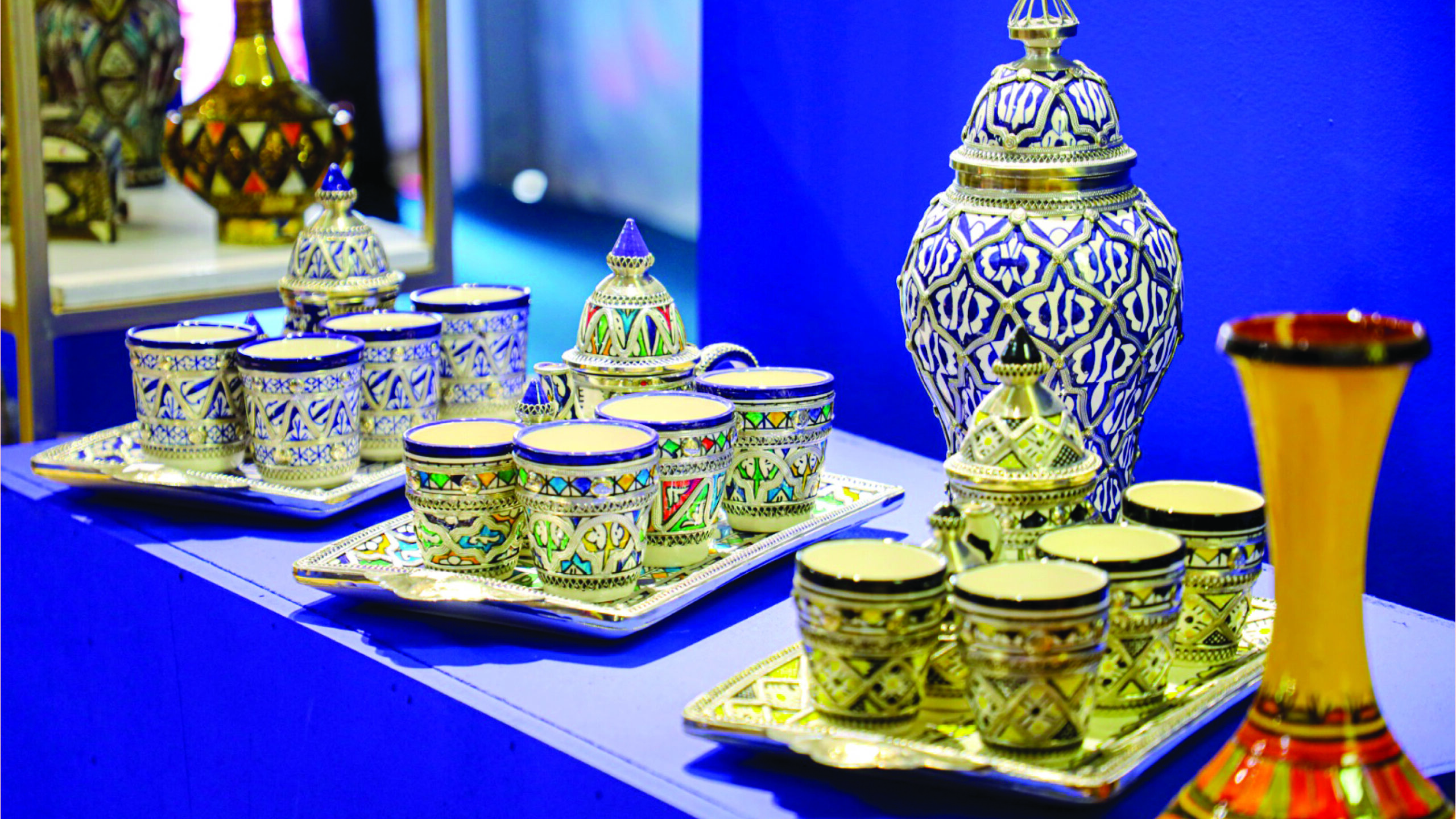
In a region as strategic as Casablanca-Settat, craftsmanship today stands as far more than a simple cultural heritage. It represents a genuine economic, social, and identity-driven engine.
At the heart of this dynamic, the Regional Delegation of Handicrafts plays a structuring role, supporting a sector undergoing profound transformation, at the crossroads of tradition and modernity.
Infrastructure serving artisans
With nearly 100,000 artisans registered in the National Register of Handicrafts, the region confirms its considerable weight in the national economy. This large body of actors, spread across traditional trades and modern activities, reflects the richness and diversity of local know-how.
Beyond the figures, an entire local economy is developing: workshops, cooperatives, micro-enterprises, and organized structures, all contributing to job creation and the promotion of local products. In a context marked by economic challenges, craftsmanship appears as a resilient sector, capable of adapting and innovating.
To support this momentum, the Regional Delegation of Handicrafts has established a structured network of dedicated infrastructure.
In total, 19 spaces for production and promotion of handicrafts are spread across the territory, offering artisans improved working conditions and marketing opportunities.
In the Casablanca metropolis, six emblematic fondouks reflect this organizational effort: Dar Nassij, Espace Artisan, Place Centrale, Safi, Tijara, and El Mellah. These places, both historical and functional, allow artisans to produce and sell in suitable environments.
In addition, there are four modern craft complexes, notably in Médiouna and Zenata, as well as craft clusters in Casablanca and Settat. The Dar Sanaa centers, located in Ouled Aissa, Azemmour, and Settat, also play a vital role in transmitting know-how.
Finally, artisan villages and a specialized activity zone in Zemamra complete this ecosystem, fostering a concentration of skills and synergy among professionals.
International cooperation
The Regional Directorate of Handicrafts is part of a dynamic of openness at both continental and international levels through the establishment of strategic partnerships aimed at strengthening cooperation and exchanges between various stakeholders in the handicraft sector.
These collaborations aim to promote artisanal know-how, encourage skills transfer, stimulate innovation, attract investment, and facilitate artisans’ access to international markets. This approach is notably reflected in the hosting of foreign delegations.
The Directorate also organizes visits to emblematic heritage sites, such as the fondouks located in the old medina, as well as the Hassan II Mosque and its associated institutions, enabling delegations to discover the richness of Moroccan artisanal and architectural heritage within a framework of shared experiences and best practices.
Within the same framework, the Directorate has opened a one-stop service desk dedicated to guiding legally residing African migrants in Morocco, supporting and informing them about training opportunities in handicraft trades, thus contributing to their socio-economic integration and to the promotion of the sector.
An export-oriented ambition
One of the most telling indicators of the sector’s vitality remains its openness to international markets. In 2025, the region’s handicraft exports reached nearly 379 million dirhams, representing 31% of national exports.
Although this share has declined compared to 2022, when the region dominated with 58%, it nonetheless confirms the strategic position of Casablanca-Settat, now ranked second nationally. This evolution reflects a restructuring of the market, as well as a diversification of actors across the country.
The Regional Delegation supports this export orientation by promoting product quality, certification, and adaptation to international standards. The objective is clear: to strengthen the competitiveness of local artisans in foreign markets.
Training, the cornerstone of artisanal succession
One of the major challenges facing the handicraft sector remains the transmission of skills. To address this, the region has a network of specialized training institutions located in Casablanca, Settat, Mohammedia, and El Jadida.
The Specialized Institutes of Traditional Arts (ISAT), Professional Qualification Centers (CQPAT), and Apprenticeship Training Centers (CFA) offer a diverse range of training programs. The diplomas awarded range from specialization certificates to specialized technician levels, covering a wide array of trades.
Jewelry-making, pottery, leatherwork, artistic woodworking, metalwork, upholstery, and traditional sewing: these fields reflect both the richness of artisanal heritage and its capacity to evolve.
By training a new generation of qualified artisans, the Regional Delegation ensures the sustainability of the sector while meeting market demands.
Thus, as part of strengthening vocational training in the handicraft sector, the Regional Directorate of Handicrafts has established several strategic partnerships aimed at expanding access to training for different beneficiary groups.
To this end, a partnership agreement has been concluded with the Ministry of Defense, allowing conscripts to benefit from qualifying training in handicraft trades, in order to facilitate their professional integration after completing their service.
Moreover, a partnership with the General Delegation for Prison Administration and Reintegration offers inmates the opportunity to access training in handicraft trades, thereby contributing to their rehabilitation and socio-economic reintegration.
These initiatives reflect the Directorate’s commitment to promoting an inclusive and accessible handicraft sector, serving human and social development.
Between tradition and innovation
The handicraft sector of Casablanca-Settat stands out for its ability to combine heritage and innovation. While ancestral techniques remain at the core of practices, they are now enriched by new approaches: contemporary design, digitalization of sales, and participation in international trade fairs.
The Regional Delegation encourages this evolution by supporting artisans in their transformation. Training programs, support for business creation, and access to financing are among the tools mobilized to foster a new generation of artisanal entrepreneurs.
Faced with economic and social changes, the Regional Delegation of Handicrafts operates within a long-term vision. Its action is not limited to regulating the sector; it aims to make it a lever for territorial development.
By promoting local know-how, creating jobs, and strengthening the region’s attractiveness, craftsmanship fully contributes to the momentum of Casablanca-Settat. It also plays a role in preserving cultural identity in an increasingly globalized world.
With dedicated infrastructure, quality training, professional structuring, and export ambition, all the ingredients are in place to make handicrafts a sustainable pillar of regional development.
In this constantly evolving region, artisans are no longer merely guardians of tradition; they are becoming full-fledged economic actors, bearers of innovation and hope.
Structuring for greater professionalization
Aware of the challenges of modernization under Law 50.17, the Regional Directorate has launched a broad initiative for professional structuring.
An initial phase saw the creation of five professional corporations covering key sectors: hairdressing and beauty, earth and stone trades, jewelry-making, transport repair trades, and products based on plant materials.
This initiative aims to organize trades, strengthen artisans’ representation, and improve their working conditions. It also helps better regulate practices and encourages the emergence of professional standards.
Ultimately, this structuring should contribute to better recognition of the sector and its integration into regional economic policies.