Business
Casablanca: His Majesty the King Launches Structuring Railway Projects for 20 Billion Dirhams
These projects, financed 70% by the National Railways Office and 30% by the Region, include the construction of three major next-generation stations, the development of 10 new suburban commuter train (TMP) stations, the refurbishment and adaptation of 5 stations for these local trains, and the establishment of 260 km of new railway lines.

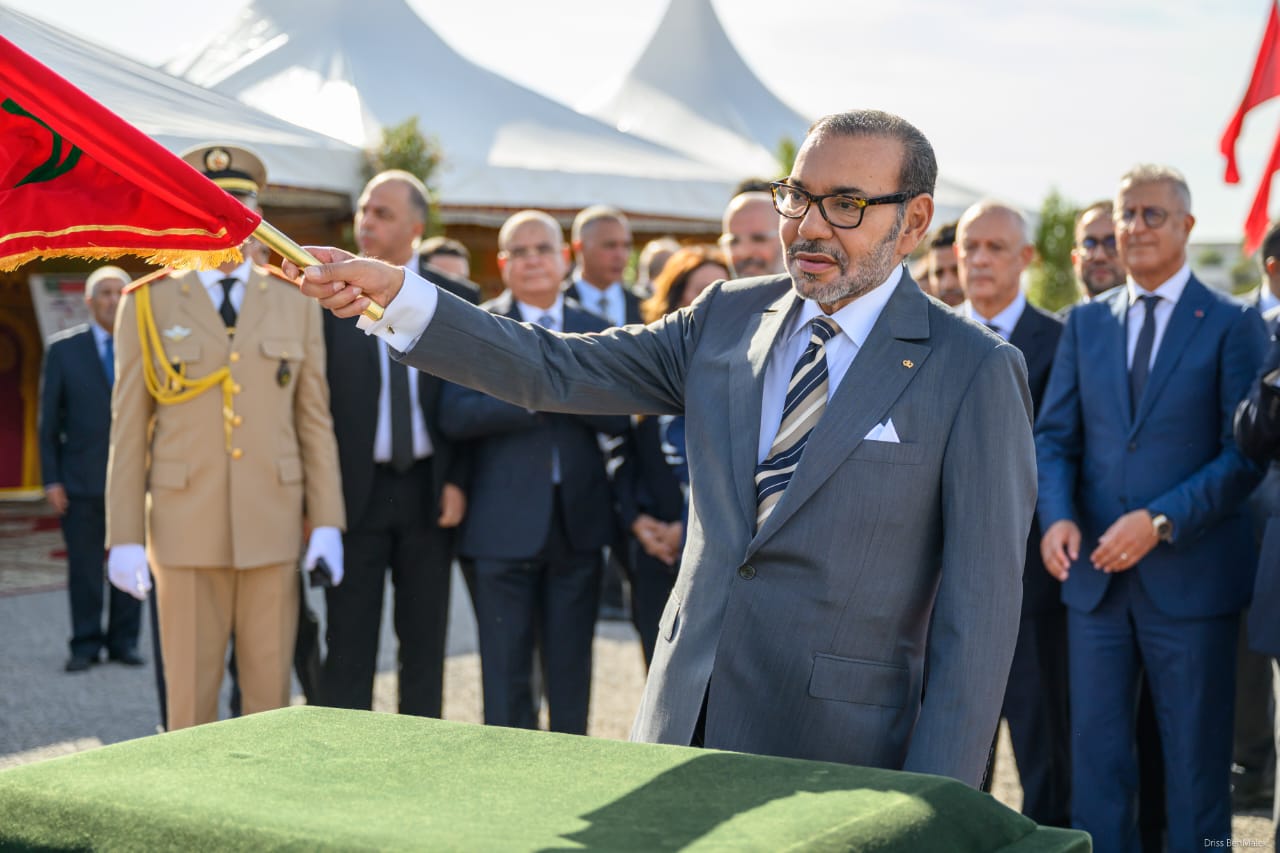
His Majesty King Mohammed VI launched, this Wednesday at the Hay Hassani district prefecture in Casablanca, structuring railway projects with a strong impact on mobility in the Casablanca metropolitan area, valued at 20 billion dirhams. These structuring projects, which address the future challenges of urban mobility within this metropolis, are an integral part of a comprehensive program with a budget of 96 billion dirhams.
This program aims in particular to support the sustained development of the railway sector, with the launch by His Majesty the King last April of the Kenitra-Marrakesh high-speed line (430 km), to develop regional connections between Kenitra and Casablanca, to improve mobility conditions in the urban areas of Casablanca, Rabat, and Marrakesh, and to develop a new national railway industry ecosystem.
This integrated program reflects the Sovereign’s enlightened vision for improving the national railway offering and is part of the Kingdom’s strategic orientations, under the impetus of His Majesty the King, regarding sustainable development, particularly the promotion of collective mobility solutions with a low carbon footprint.
These projects, financed 70% by the National Railways Office and 30% by the Region, include the construction of three major next-generation stations, the development of 10 new suburban commuter train (TMP) stations, the refurbishment and adaptation of 5 stations for these local trains, the establishment of 260 km of new railway lines, the construction and widening of 50 engineering structures, the construction of 2 technical centers (Zenata and Nouaceur) and 5 maintenance workshops, in addition to the acquisition of 48 new trains for suburban and regional services.
Strengthen the daily mobility of users
They thus aim to develop a sustainable regional transport system, strengthen the daily mobility of users, contribute to socio-economic development and urban planning, and support national milestones by 2030.
Regarding the three major next-generation stations, they will be integrated and high-performance structures, serving better territorial connectivity. This is the case for the “Casablanca-Sud” Station, for which His Majesty the King gave the start of construction works this Wednesday in the Hay Hassani district.
Mobilizing investments of around 700 million dirhams, this project will involve the construction of a new building equipped with cutting-edge technological facilities meeting international standards for safety, security, and service quality.
With an annual capacity of 12 million passengers, the future “Casablanca-Sud” station will include 6 platforms, 10 railway tracks to accommodate Al Boraq high-speed trains, mainline trains, suburban commuter trains, regional trains, and the “aéro-express” train that will serve Mohammed V Airport from Casa-Port station with a frequency of 15 minutes, outdoor developments spanning 20,000 m², and a 700-space parking lot.
Designed to absorb growing passenger flows and promote the emergence of a dynamic business district, the “Casablanca-Sud” Station will provide seamless connections with the tramway, bus rapid transit, buses, and taxis, making it a strategic intermodal hub.
450 million dirhams for the Benslimane station
The second next-generation station is the “Hassan II” Grand Stadium station in Benslimane, which, mobilizing investments of around 450 million dirhams, will be able to accommodate up to 12 million passengers per year during the operational phase.
This also includes the new Mohammed V International Airport Station in Casablanca, which will require a total budget of 300 million dirhams, with an annual capacity of 5 million passengers. These three major next-generation stations will be completed within 24 months.
As for the new suburban commuter train stations, they will contribute to strengthening mobility in Casablanca and its region through the new suburban rail service to be launched by 2030, offering a frequency of up to one train every 7.5 minutes.
Three main lines, spanning a total of 92 km, will be developed and will efficiently connect major urban and peri-urban hubs, while providing access to strategic sites such as the Hassan II Grand Stadium and Mohammed V International Airport.
625 million dirhams for 10 suburban commuter train stations
In this context, ten new stations will be developed within 20 months and will require a budget of 625 million dirhams, following a harmonious and fluid architectural charter, ensuring comfort, accessibility, and efficiency for passengers. These are: “Mohammedia – Les Facultés”, “Zenata”, “Sidi Bernoussi”, “Ain Sbâa”, “Hay Mohammadi”, “Ville Nouvelle”, “Mers Sultan”, “l’Oasis”, “Sidi Maârouf”, and “Nouaceur”.
Existing stations will also be modernized to fully integrate the suburban commuter train. It should be noted that, once the suburban trains are operational, 150,000 passengers will be transported daily on the three lines.
In addition to the three suburban commuter train lines, an airport express service will directly connect Casa-Port station to Mohammed V International Airport with shuttles every 15 minutes. Similarly, the regional train service will be strengthened on the El Jadida and Settat routes with shuttles every 30 minutes.
Thus, to cover the needs for Regional and Suburban Mobility, the acquisition of 48 self-propelled trainsets with a capacity of over 1,000 seats and a operating speed of 160 km/h is planned, at a cost of 7 billion dirhams (excluding tax).
The South Korean manufacturer Hyundai Rotem, selected to supply these trains, will establish a factory on national territory, which will be one of the components of the railway ecosystem and a reference site intended to cover future national needs and thus contribute to realizing a medium-term export ambition.
All these coherent, compatible, and integrated projects generate spillover effects for communities in terms of job creation, safety, and environmental preservation, while contributing to improving citizens’ living conditions and creating added value.