Business
Casablanca by 2030: The Transformation Accelerates
The new edition of the La Vie Éco Cycle of conferences-debates spotlighted major ongoing transformations in the metropolis and its region. The projects are expanding and progressing rapidly, with the organization of the World Cup acting as a catalyst. Report.

The people of Casablanca have undoubtedly noticed: their city is transforming at high speed. Mobility, sustainability, water management, roadways, connectivity, hospitality… major projects abound and are emerging across the metropolis and its surroundings. The prospect of hosting major international events, culminating with the 2030 World Cup, clearly acts as a catalyst for these changes that promise a notable improvement in the living environment of Casablanca’s residents.
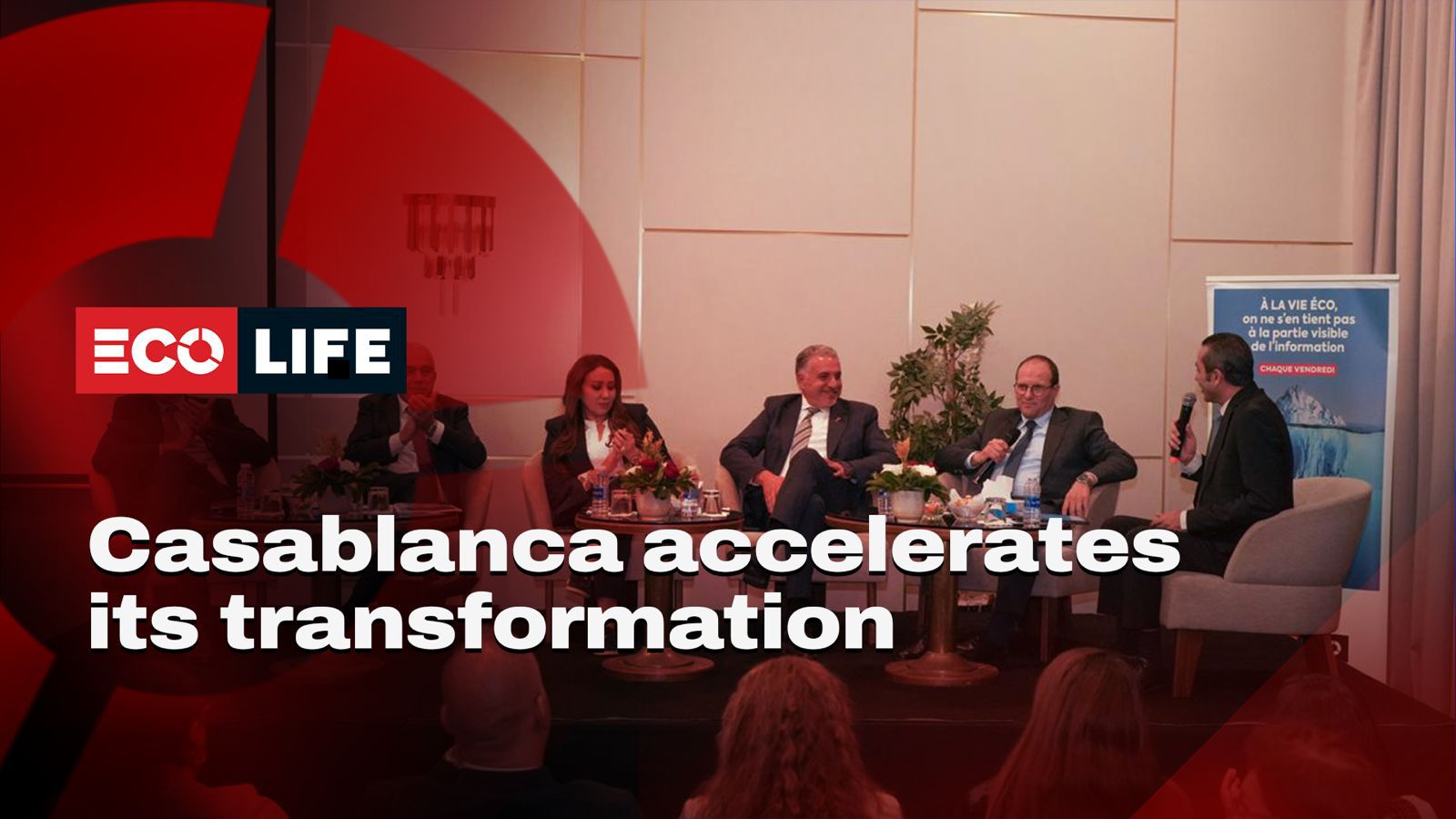
Almost a year after hosting a first conference on the topic, La Vie Éco again brought together decision-makers and economic actors from Greater Casablanca and the entire region to take stock of current or upcoming transformations and their stakes. Distinguished figures at the heart of these changes participated in the conference: Abdellatif Maâzouz, president of the Casablanca-Settat Regional Council; Nabila Rmili, president of Casablanca City Council; Hamid Bentahar, president of the National Confederation of Tourism (CNT); Mohamed Chouh, director of expertise and innovation at Autoroutes du Maroc; and Mohamed Benali, Chief Technology & Information Officer at Orange Morocco.
The first observation: 2025 saw a clear acceleration in the execution of structural projects. “Huge efforts have been deployed to ensure the well-being of citizens in Greater Casablanca and its region”, Abdellatif Maâzouz emphasized upfront, affirming the city’s “continental ambitions”. According to the president of the Casablanca-Settat region, these transformations follow a dual logic. On one hand, improving the living environment through numerous projects related to the environment, green spaces, and water management. On this front, Maâzouz praised the marked improvement in air quality over the past two years, with a significant reduction in pollution. Black spots of pollution have completely disappeared. “This has been made possible thanks to projects linked to urban mobility, the tramway, the renewal of buses and taxis… but also green spaces that have appeared everywhere. It should also be noted that polluting industries are no longer allowed within the urban perimeter”, he specified. On the other hand, local authorities work to strengthen the region’s leadership at the continental level. The official cited recent royal projects such as the new port complex, the high-speed train (LGV) and the regional express train (RER), with Casa-Sud station as a flagship, as well as the launch of the new Mohammed V airport terminal, the Grand Stade Hassan II, and the future Congress Palace. Additionally, the RER project will radically change mobility in the region. “The RER will be the backbone of the region’s mobility with its 18 new stations, including 8 inside Casablanca. Casa-Sud station will be a regional hub”.
“Many things have already changed in Casablanca. Residents and visitors can already notice an acceleration of works, whether in mobility, connectivity, or sustainability. It is palpable”, said Nabila Rmili. The mayor of Casablanca highlighted urban infrastructure projects (underpasses, roadworks, etc.) completed in record time. A particular focus was placed on sustainability, with numerous projects involving wastewater reuse, creation of green spaces, and a new waste treatment plant. Regarding mobility, she mentioned Casablanca has 100 km of tramway (compared to 27 km in Rabat), 26 km of BHNS (Bus with High Level of Service), and 700 E6 buses. “750,000 passengers are transported daily. The city of Casablanca chose to bear a deficit of 300 million dirhams to offer complete and multimodal mobility for citizens”, she shared.
Several other major projects are underway. “A new urban project is being prepared around Casa-Voyageurs station. This project will transform the neighborhoods of Hay Mohammadi and Aïn Sbaâ. A new development plan for these two zones will be adopted at the next City Council session”, the president revealed. The metropolis will also host Africa’s largest agri-food platform. This three-year project will be located in Ouled Hriz on a 309-hectare site. Moreover, three large parking garages have been built in Casablanca over the past two years. The latest, called Hyper Centre and adjacent to the Hyatt hotel, will have 700 spaces and open very soon. It is also the departure point of the future fully pedestrian Royal Avenue, which will completely change this area of the old medina.
In this stimulating context, tourism professionals are preparing. “Beyond infrastructure, we must work on hospitality, product quality, and service excellence”, affirmed Hamid Bentahar. The CNT president underlined the considerable investment efforts in the hotel sector. “New prestigious establishments are settling or are in the process of doing so in Casablanca. We may not realize it, but Casablanca is an extraordinary brand”, he stressed.
Highway infrastructure is also booming to ease access to the metropolis. Structural projects like the tripling of the Mohammedia-Berrechid highway are already completed. Others, of strategic importance, are about to open, revealed Mohamed Chouh, director of expertise and innovation at Autoroutes du Maroc: “The Sidi Maârouf interchange will open on November 18 during Independence Day. It is a nerve center that registers 140,000 vehicles daily. The Tit Mellil-Berrechid highway will also launch the same day. The Aïn Harrouda interchange will open by the end of November”. He also highlighted the strategic importance of the future 60 km Casablanca–Rabat continental highway, expected to be delivered in 2028 and mostly built by Moroccan companies. Furthermore, ADM is working on a strategy to deploy charging stations on the highway network to support the rise of electric vehicles.
Connectivity is no exception. The city has made a big leap forward here too, notably with the very recent launch of 5G. “The essential connectivity infrastructure is usually buried and little visible. We don’t always realize the transformations that have been underway for years, which now allow fiber optics and 5G, the latter opening new horizons for Casablanca residents, companies, and visitors”, said Mohamed Benali of Orange Morocco. “Casablanca will be Morocco’s flagship as an innovative and smart city”, he predicted.
Amid this unprecedented momentum, the question remains about the resources needed to sustain it. On this point, Nabila Rmili indicated that the city’s revenues hover around 5 billion dirhams, with a goal to reach 5.2 billion by 2025. Fixed expenses amount to about 4.7 billion dirhams. She concluded: “Casablanca’s challenge is to find the necessary funding to manage citizens’ daily lives”.