Influences
Cannabis: A Deep Dive into the Transformation Process of Green Gold
From cultivated plots to processing plants…, an immersion into the industrialization stages of Somacan company’s legal cannabis. A meticulous process where control and quality are the watchwords. In-depth report.

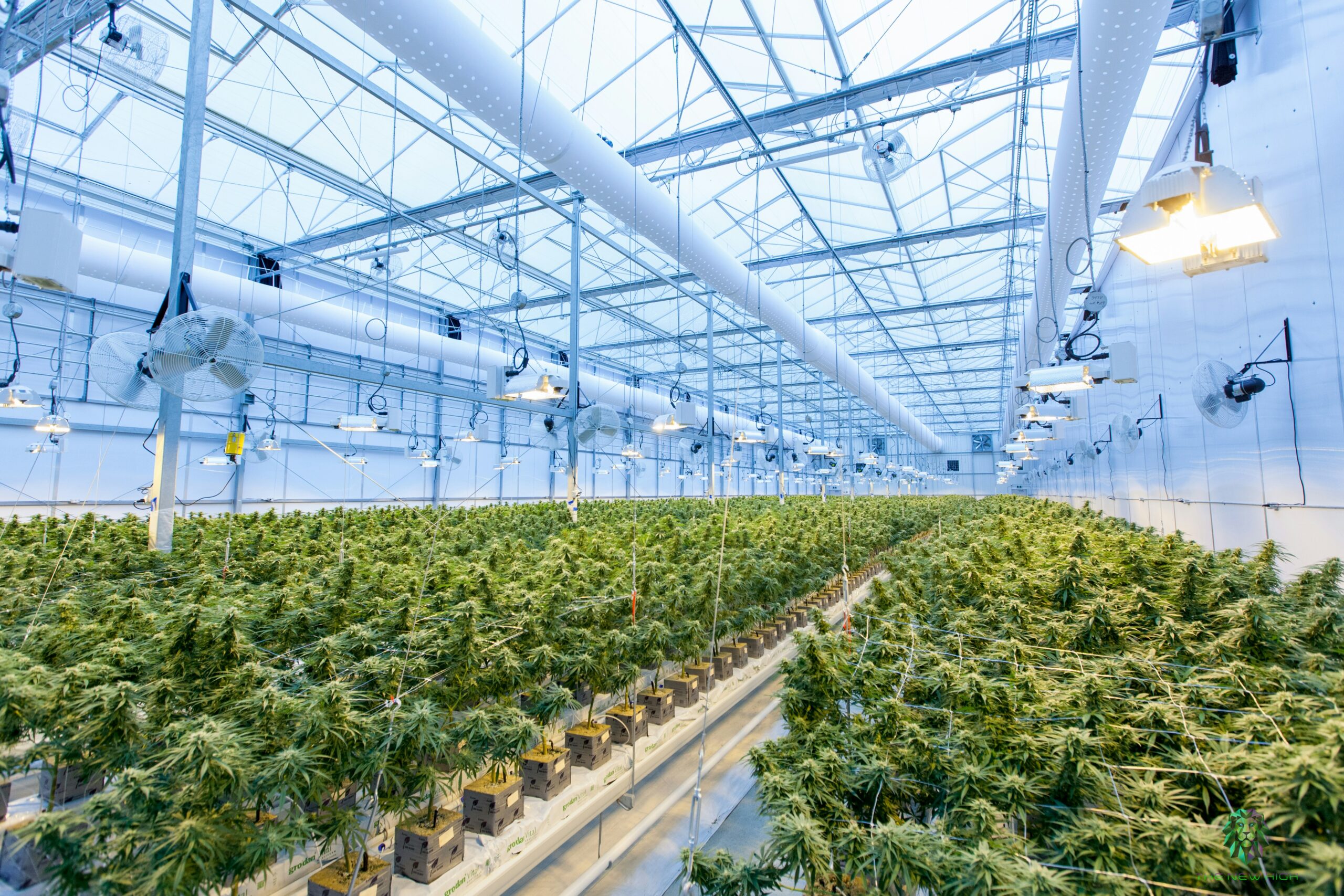
Sidi El Mokhfi, a small town in the province of Taounate. This summer, Somacan’s teams visit the small plot of “Beldia” cultivated by Ahmed Louatny, a farmer belonging to a local cooperative partnered with the company. The plants have nearly reached their full size and will soon be harvested, dried, and transported to Somacan’s factory. There, they will be processed and transformed into extracts intended for therapeutic use—all in strict compliance with legal standards and the requirements of foreign clients, who are highly vigilant about product conformity and quality.
The farmer benefits from customized support and rigorous agronomic monitoring throughout the entire production cycle, from the careful selection of seeds to harvest, including germination and planting. New cultivation techniques are being implemented, breaking away from traditional practices, as explained by Mustapha Chentouf, Head of Cultivation and Cooperative Monitoring at Somacan: “In our model plots, we have applied new cultivation techniques with a dual objective: first, in terms of yield, to enable the farmer to produce the largest possible quantity, and second, to ensure quality that meets client requirements and allows us, as a company, to market our products without issues.” These new techniques, he explains, notably include row planting. Seeds are planted in evenly spaced lines, whereas farmers previously scattered seeds haphazardly, a less efficient method. A drip irrigation system is implemented, and nutrients are administered through fertigation.
In total, 33 cooperatives comprising approximately 600 farmers, covering an area of 445 hectares (31 hectares of CBD and 414 hectares of Beldia), collaborate with the company. Membership requires adherence to a range of strict measures, but the socioeconomic impact is already palpable according to the farmers themselves (see inset).
Extraction, Refining, and Distillation
Once dried, the farmer’s production is transported to Somacan’s industrial unit. There, it undergoes multiple transformations detailed by Yahya Abid, Head of Processing: “After these stages, the cannabis plant goes through several operations, including grinding and decarboxylation, to produce a powder used for extraction.” Somacan has invested in a supercritical CO₂ extraction machine, a more modern and efficient method used to isolate cannabinoids.
Following this step comes refining. The extract is mixed with ethanol and placed in freezers at -46°C. After 48 hours, the mixture is transferred to a vacuum filter to remove lipids. Next is the evaporation phase to separate the ethanol and obtain a product called “crude oil,” followed by distillation to isolate components of the crude oil and produce a distillate with a CBD concentration of 75–85%. This distillate finally undergoes a last step: crystallization, which purifies the product.
“The result of these operations is 99% pure CBD. This CBD is used to produce dietary supplements,” states Nabil Sabti, Head of Quality at Somacan. In line with client requirements, particularly European ones, these products meet multiple quality standards. “Our factory is already ISO 22000 certified, meaning all our operations follow strict quality processes aligned with international requirements, validated by the European Pharmacopoeia,” explains our interlocutor. The company has also obtained GACP certification (Good Agricultural and Collection Practices), an international standard for medicinal plant quality.
Notably, a portion of CBD flowers is used for on-site tea production. A dedicated packaging workshop has been set up for this purpose within the Sahel Boutaher industrial unit. Somacan also focuses on innovation in research and development, partnering with ANRAC to improve crop quality and yield.
Socioeconomic Impacts
Somacan’s commitment to agricultural cooperatives and local stakeholders has already demonstrated the initial impacts of organizing the cannabis sector in affected areas, particularly in the Taounate region. Somacan’s management highlights at least four key outcomes:
- Creation of sustainable jobs: Launching agricultural projects, processing initiatives, and value-added cannabis-based products has generated direct and indirect employment, particularly for rural youth and women.
- Increased farmer income: Transitioning from informal cultivation to a legal, regulated sector has improved farmers’ incomes through fair contracts, better traceability, and enhanced crop valuation.
- Stabilization of the local population: By offering viable, structured economic opportunities, the sector helps retain populations in their home regions, reducing pressures linked to emigration or instability. From this perspective, the cannabis sector serves as a strategic lever to curb rural exodus, especially among younger generations.
- Gradual exit from the informal economy: Legal structuring of cannabis cultivation and processing provides a concrete alternative to the parallel economy, ensuring legal security, income transparency, and inclusion in the national economic framework.